Grading Card Surface vs Corners: The Ultimate Comparison Guide
Understand how card surface vs corners impact grading. Compare PSA, BGS, CGC criteria and learn which defects matter most for Gem Mint, Pristine, and Black Label.

Estimated reading time: 13 min
Key Takeaways
- Both surface and corners are critical in card grading, but surface flaws are often harder to detect and can cap a grade even when corners are sharp.
- For Gem Mint (PSA 10, BGS 9.5/10, CGC 10) and Pristine/Black Label grades, surface condition is as important as corners.
- Modern cards are generally graded to stricter surface and corner standards than vintage cards.
- Grading companies like PSA, BGS, and CGC differ in how they weigh surface vs corners—BGS Black Label is considered among the strictest for both.
- Bottom line: Even a single tiny flaw in surface or corners can keep a card from a top grade—pre-screening with tools like Midpoint can help maximize value.
When deciding whether to submit a card for grading, collectors often ask: Which is more important—grading card surface vs corners? The quick answer: Both are essential, but surface defects are frequently overlooked and can cap your grade, even if the corners look perfect. In this guide, we’ll break down how PSA, BGS, and CGC treat card surface and corners, what defects matter most, and how to give your cards the best chance at a Gem Mint, Pristine, or Black Label grade.
Quick Comparison
| Grading Factor | Surface | Corners |
|---|---|---|
| Major Defects | Scratches, print lines, dents, stains, residue, gloss loss | Whitening, fraying, rounding, blunting, bends, trimming |
| Detection Difficulty | Often hidden, needs angled light/loupe | Usually visible to naked eye |
| Impact on Eye Appeal | Subtle flaws can affect grade | Obvious flaws, quickly drop value |
| Modern Card Standards | Zero surface flaws for top grades | Zero wear or whitening for top grades |
| Vintage Card Flexibility | Some allowance for print defects | Tiny wear may be forgiven |
| Grade Limiting? | One flaw can cap entire grade | One flaw can cap entire grade |
| Inspection Tools | Loupe, flashlight, low-angle lighting | Magnifier, direct examination |
| Company Subgrades (BGS/CGC) | Separate surface subgrade, weighs heavily | Separate corners subgrade, weighs heavily |
Surface Defects: Identification & Grading Impact
Surface is the most overlooked but one of the most punishing grading factors. Even cards pulled straight from packs can have factory print lines, roller marks, or gloss loss. Graders inspect the surface under magnification and angled light to spot:
- Scratches (surface-level or deep marks)
- Print lines (factory streaks, especially common on modern cards)
- Dents (pinprick impressions, often from handling or packaging)
- Stains & residue (fingerprints, glue, wax, ink)
- Scuffs & gloss loss (from sliding in sleeves or binders)
For a PSA 10 or BGS/CGC Pristine 10, the surface is expected to be flawless. Even a faint scratch or print line can drop the grade. BGS Black Label and CGC Pristine 10 are especially strict—many cards miss out due to near-invisible surface flaws. For a deeper look at how surface scores affect insurance value, see Card Grade Impact on Insurance Value: The Ultimate Guide.
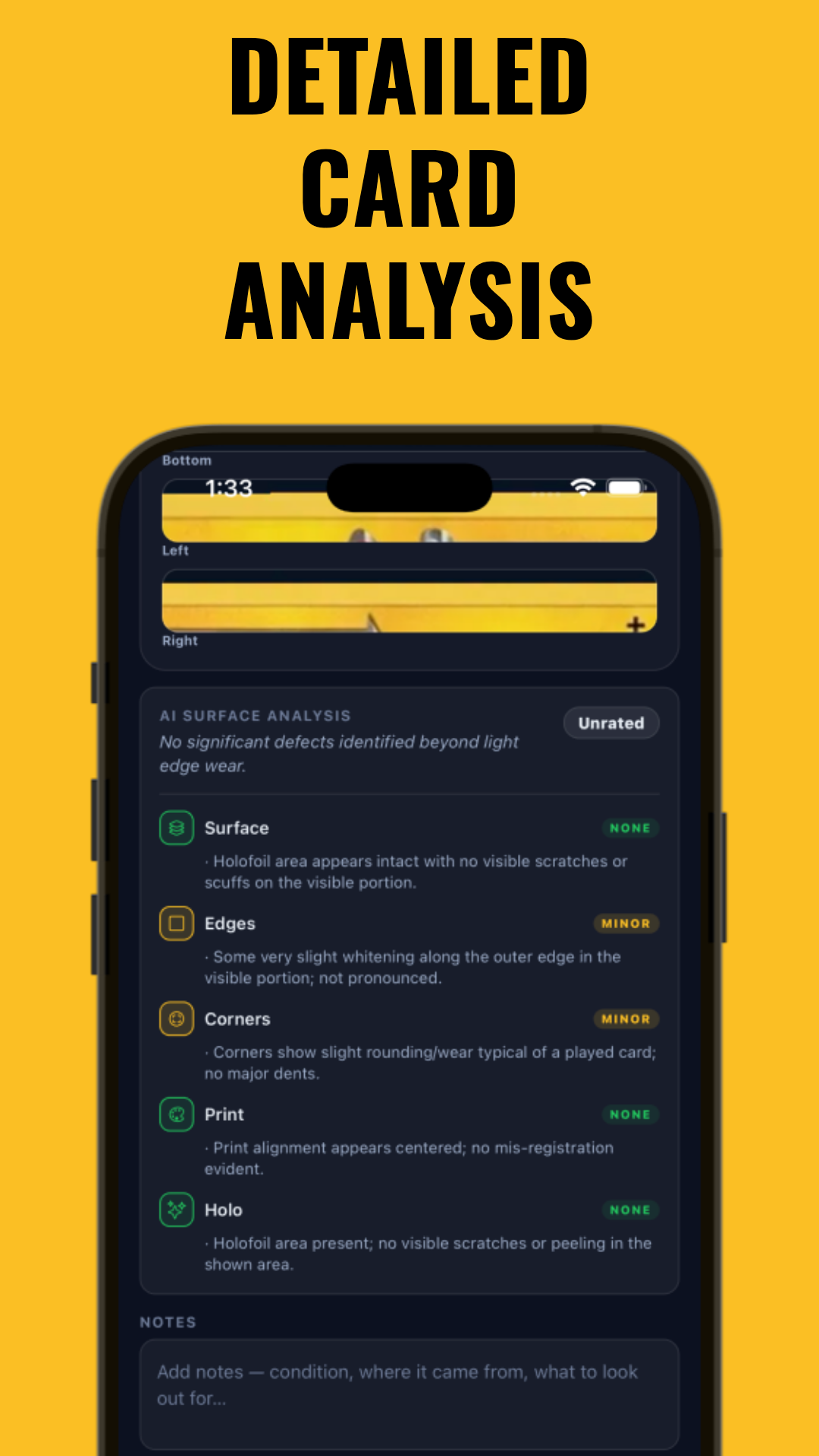
Surface inspection is where digital tools like Midpoint can help, using AI to flag subtle defects before you submit.
Corner Wear: Types, Detection & Grade Effect
Corner damage is the most visible and instantly value-dropping flaw. Graders look for:
- Whitening (tiny flecks of white on corners, especially on dark-bordered cards)
- Fraying (fibers sticking out, often from handling)
- Rounding/Blunting (corners lose their sharp 90-degree angle)
- Bends (creases or folds at the corners)
- Trimming Signs (unnatural sharpness, irregular cut)
While corner flaws are easy to spot, even a minuscule nick can knock a card from Gem Mint to Mint (PSA 9, BGS 9, CGC 9). For Pristine or BGS Black Label, all four corners must be absolutely untouched. For a detailed breakdown of PSA 10 vs PSA 9 and what typically separates them, check out Grading Scale Differences by Company.
Surface vs Corners: Detection & Pre-Grading Techniques
Surface flaws are notoriously difficult to spot and often missed during casual inspection. Successful collectors use:
- 10x-20x loupe or magnifier to reveal scratches and print lines
- Low-angle flashlight to catch dents or gloss loss
- High-contrast backgrounds for spotting corner whitening
Pre-grading checklists should always include a careful scan for surface defects, not just corners. For a hands-on process, see How to Pre-Grade Your Card: A Step-by-Step Guide. Digital tools like Midpoint’s Free Centering Calculator and AI surface analysis can help catch problems before you pay for grading.
Grading Standards: PSA vs BGS vs CGC
Each grading company weighs surface and corners slightly differently—especially at the highest levels:
- PSA: No subgrades; a single flaw in surface or corners can preclude a 10. Slightly more lenient on centering than BGS/CGC.
- BGS: Subgrades for surface, corners, centering, and edges. Black Label (all 10s) requires perfection in every subcategory. Surface and corners are equally weighted. Centering is often the tiebreaker.
- CGC: Similar to BGS, with separate subgrades. Pristine 10 is extremely rare; surface flaws are common grade-killers. CGC is somewhat more forgiving on vintage surface, stricter on modern.
For a full breakdown of gem mint vs pristine and PSA 10 vs BGS 10, see Grading Scale Differences by Company.
Vintage vs Modern: How Expectations Differ
Modern cards (post-1980s) are expected to be factory perfect. Graders are extremely strict on both surface and corners. For vintage cards, minor print marks on the surface or modest corner rounding may be allowed due to manufacturing limitations. However, significant damage will still drop grades sharply. The standards for BGS Black Label vs Gold Label or CGC Pristine 10 vs Gem Mint 10 are extremely difficult to achieve for vintage.
- Modern: Zero tolerance for any flaw at the top grade
- Vintage: Small allowances, but surface and corners still cap the grade
For rare, low-population cards, these nuances can dramatically affect value; see Card Grading for Low Population Cards.
Which Should You Choose?
When prepping cards for grading, neither surface nor corners can be ignored. Here’s how to prioritize:
- Modern cards, aiming for Gem Mint/Pristine: Both must be flawless. Missed surface flaw = wasted grading fee.
- Vintage cards: Minor corner/print issues may be forgiven, but major defects in either will cap grade.
- If eye appeal matters most: Surface flaws are harder to "unsee" once spotted; prioritize clean surfaces.
- If you’re new to grading: Use a tool like Midpoint or follow this step-by-step pre-grade guide to avoid common mistakes.
Verdict: One flaw in surface or corners can cap your grade—don’t submit unless both are near-perfect for the grade you want. Centering is often the tiebreaker at the very top, so measure it precisely.
FAQ
- Is surface or corners more important when grading a card?
Both are important and generally equally weighted by major grading companies. A single flaw in either can cap the grade, but surface flaws are often harder to spot and thus more likely to surprise submitters. - What surface defects lower a card grade the most?
Scratches, print lines, dents, stains, residue, and gloss loss are among the most common grade-killers, especially on modern cards. - What counts as corner damage on a graded card?
Whitening, fraying, rounding, blunting, bends, and evidence of trimming are all considered corner defects. - Can a card still get a high grade with bad corners but a clean surface?
Generally, no. For top grades like PSA 10, BGS 10, or CGC Pristine 10, both corners and surface must be flawless. Any clear corner damage will cap the grade. - How do graders check for surface flaws on sports cards?
By using magnification, angled lighting, and sometimes digital tools or AI to reveal scratches, print lines, and gloss loss invisible to the naked eye. - Do grading companies punish print lines more on modern cards than vintage cards?
Modern cards are typically held to higher standards—print lines or roller marks almost always lower the grade, while minor print defects may be tolerated on vintage cards.
Free to start
Try the Midpoint app
Grade any card from a photo, see its raw and PSA 10 value, and track what your collection is worth — free.
Get it on iPhoneGet it on Android