
Hockey Card Prices Dropping November 2026: 9 Dip Plays
Hockey card prices dropping November 2026: why falling hockey card prices happen, how to verify sold comps, and how to play the dip, including grading smart.

Estimated reading time: 9 min
Key Takeaways
- Hockey card prices dropping in November 2026 may be a market-wide pattern, but verify it card by card with sold comps, not asking prices.
- Rookie hype fading, heavy supply and new Upper Deck releases are the usual reasons hockey cards lose value in the fall.
- Raw-versus-PSA 10 spreads matter more during a dip, because grading costs stay fixed while card values move.
- Marquee names like Connor Bedard, Macklin Celebrini and Ivan Demidov are the most common buy-the-dip targets, but only at prices you have checked yourself.
- Centering is the cheapest thing to check before you pay to grade a discounted copy (often $30 or more per card all-in).
If you have noticed hockey card prices dropping in November 2026, you may well be right. The hockey card market in November can look like a classic seasonal squeeze: new product lands, early rookie excitement cools, and listings pile up faster than buyers show up.
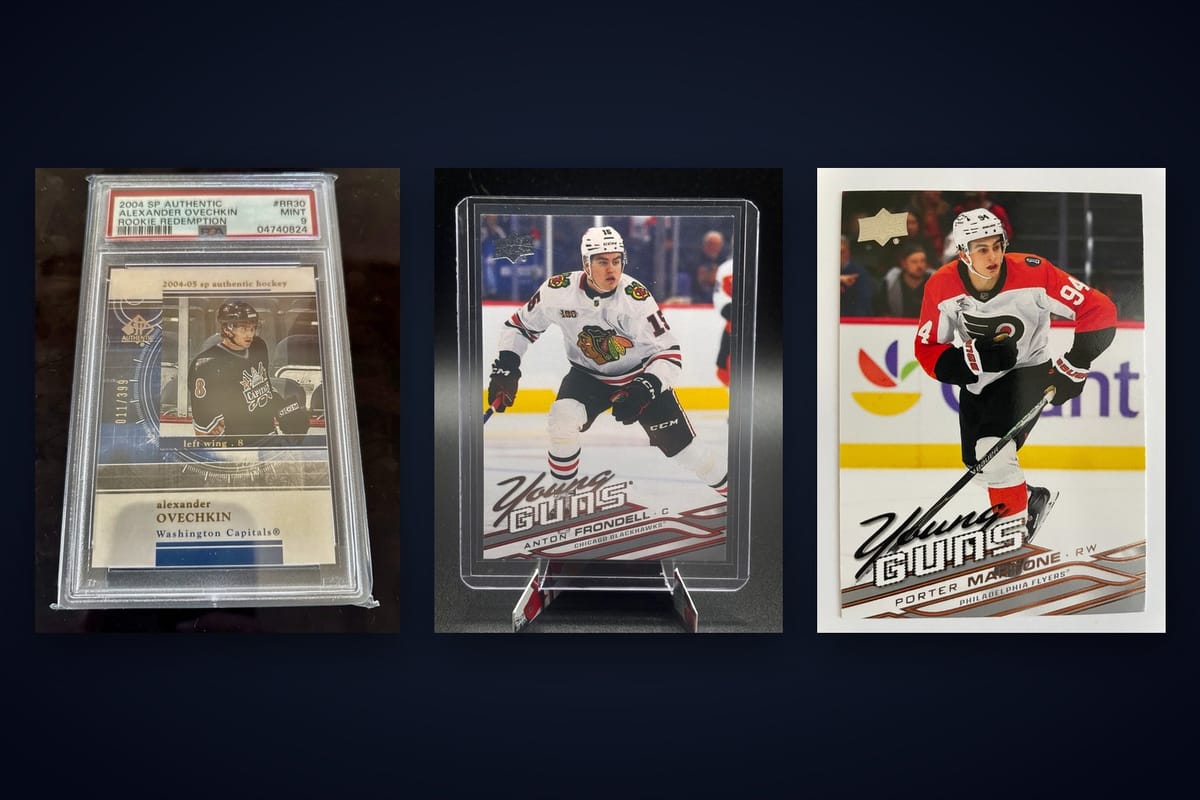
The data table in this post lists the specific cards and their 30-day moves in raw and PSA 10, as recorded in Midpoint's database as of 2026-11-15. This guide does not repeat every row. It explains what may be behind falling hockey card prices, how to check them yourself, and how to use a dip instead of panicking through it.
30-day price movers — live data from Midpoint's card database, as of 2026-11-15. Prices move; Midpoint refreshes these daily.
| Card | Raw | PSA 10 | 30-day | |
|---|---|---|---|---|
 |
Alexander Ovechkin #RR30 2004 SP Authentic Rookie Redemption |
$598.60 | $1,522 | -89.9% |
 |
Anton Frondell #201 2026 Upper Deck |
$22.56 | $141.24 | -51.3% |
 |
Porter Martone #209 2026 Upper Deck |
$32.54 | $182.41 | -46.2% |
 |
Terry Sawchuk #58 1954 Topps |
$102.06 | $23,465 | -37.4% |
 |
Gordie Howe #20 1961 Parkhurst |
$71.38 | $13,809 | -34.3% |
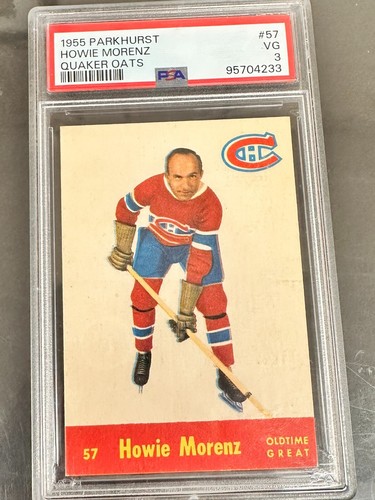 |
Howie Morenz #57 1955 Parkhurst |
$35.14 | $7,838 | -33.2% |
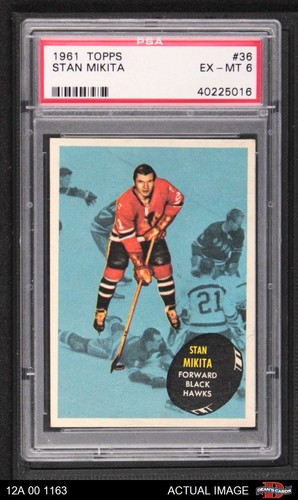 |
Stan Mikita #36 1961 Topps |
$44.94 | $8,222 | -33.2% |
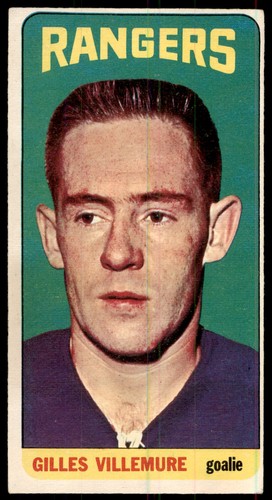 |
Gilles Villemure #74 1964 Topps |
$77.48 | $15,495 | -30.5% |
 |
Maurice Richard #24 1953 Parkhurst |
$121.49 | $30,596 | -29.9% |
 |
Yvon Cournoyer #76 1965 Topps |
$91.62 | $23,388 | -29.8% |
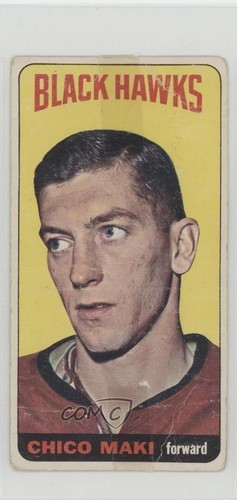 |
Chico Maki #73 1964 Topps |
$116.89 | $18,114 | -29.8% |
 |
Tim Horton #3 1955 Parkhurst |
$68.36 | $15,036 | -29.1% |
Look up any card's current raw and graded value in Midpoint — and get an estimated grade before you pay to submit.
1. Verify the Drop With Sold Comps, Not Asking Prices
Asking prices are wishes. Sold prices are facts. The first step in any hockey card market check is to separate the two, because a listing sitting at a high price for weeks tells you nothing about what the card is worth.
Here is a simple method for confirming that a card is really among the hockey cards losing value:
- Pull the last 5 to 10 completed sales for the exact card: same player, set, parallel, serial number and grade.
- Compare sales from the past 30 days to the 30 days before. A single sale is noise; a cluster is a trend.
- Ignore best-offer listings with no confirmed accepted price.
- Check raw and PSA 10 separately. They often move at different speeds.
Midpoint's card lookup shows raw versus graded values across a large card database, which makes it faster to see whether a slide is happening in the raw market, the graded market, or both. Treat any number you read, including ours, as a starting point and confirm it against recent sales for your exact copy.
2. Fading Rookie Hype: 2026-27 Rookies and Young Guns
New rookies often debut at their most expensive. Early-season excitement, limited early supply and first-look speculation can push prices up before the player has played enough games to justify them. As the weeks pass, that premium tends to deflate.
That is why 2026-27 rookies and Young Guns are often among the first cards to show up on a falling list. Their prices are built on expectations, not results. Veterans have a track record that anchors their prices, but a rookie is priced on hope.
- What to watch: rookies whose raw price has dropped faster than their PSA 10 price, which can signal that sellers are dumping ungraded copies.
- What to avoid: chasing a rookie because it was far more expensive a month ago. A bigger drop does not mean a bargain.
- What to look for: rookies with strong early production, where the dip is more about supply than about performance.
Check the table for the specific 2026-27 rookie and Young Guns entries and their 30-day moves as of 2026-11-15.
3. Supply and Overproduction Pressure
Supply is a major driver behind many falling hockey card prices. When many boxes are opened in a short window, thousands of copies of the same rookie can hit the market at once. Buyers have plenty of choice, so sellers undercut each other.
Modern hockey products are built around chase cards, and many hobby buyers are ripping boxes rather than buying singles. That can mean a flood of base rookies and parallels. A card that looked scarce in a pack tracker can be easy to find once everyone lists their pulls.
- Count active listings and recent sales for the card. Many listings and few sales means the price has more room to fall.
- Look at parallels with low serial numbers. True scarcity tends to hold up better than unnumbered base cards.
- Be careful with cards whose value depends on a single hype moment.
4. New Upper Deck Releases and Release Timing
Release timing matters. Hockey's flagship Upper Deck product has historically arrived in the fall, around the start of the new season. When a new set drops, it can pull collector money away from older cards and puts fresh rookies in front of buyers.
This can have two effects. First, last season's rookies often cool as attention shifts to the new class. Second, the new class itself starts at inflated prices that tend to settle once supply catches up.
For the November 2026 hockey card market, that could mean money is being redirected, not necessarily leaving the hobby. Cards from earlier releases can look cheap simply because buyers are busy elsewhere. Keep a short list of cards you want and watch them weekly instead of reacting to one day's price.
5. Star Veterans: Who Is Sliding and Who Is Holding
Not every card is sinking. Player-by-player performance is mixed, and star veterans behave differently from rookies. Established stars tend to have deeper demand, so their prices often move less when the market cools.
When reviewing veterans in the table, ask:
- Is the drop in raw only, or in PSA 10 as well? A graded price that holds while raw softens can point to temporary seller pressure.
- Is the player still producing? Prices usually follow performance and playing time.
- Is the card an iconic one (rookie, key parallel) or a common one? Iconic cards tend to be more resilient.
Resilient cards are not always the best buys. A card that did not drop has less room to bounce. The best dip plays are quality cards whose price has fallen without the player's story changing.
6. Raw vs. PSA 10: Read the Spread
The gap between a raw copy and a PSA 10 is a useful number during a downturn. If the raw price falls and the PSA 10 holds, the spread widens, and grading a good copy looks more attractive. If both fall together, the whole market is softening.
Grading has fixed costs that do not shrink when card prices fall. Fees vary by company (PSA, SGC, Beckett, CGC and TAG each publish their own tiers and turnaround times), so check current pricing before you submit. As a rough baseline, plan on $30 or more per card once shipping and insurance are included, though this varies by company and service level.
- If the PSA 10 premium over raw is small, grading may not pay for itself.
- If the spread is wide and the card is cheap raw, a clean copy has real upside.
- If your card is likely a PSA 8 or 9, compare those values too, not just the PSA 10.
For a deeper look at how each company defines its top grades, see this guide to grading scale differences by company.
7. Bedard, Celebrini, Demidov: Buy-the-Dip Candidates?
Connor Bedard, Macklin Celebrini and Ivan Demidov are the names most collectors have in mind when they search for hockey cards to buy the dip. They are young stars whose rookie cards have strong demand, which may give them a better chance of recovering than lesser-known players, though that is not guaranteed.
But a famous name does not guarantee a good entry price. Before buying, check:
- Whether the card's recent sold comps have stabilized or are still sliding.
- Whether you are buying a key card (rookie, Young Guns, low-numbered parallel) or a common one.
- How the player is performing this season, and how healthy he is.
- Whether you are comfortable holding for a year or more.
The table shows how specific cards for these players moved as of 2026-11-15. Use that as a guide to where to look, then confirm with your own sold-comp check.
8. Grade a Cheap Copy That Centers Well
A dip can be a good moment to buy a cheaper raw copy with great centering and send it in. Centering is one grading factor you can check before you pay for anything, and it is often a key difference between a PSA 10 and a PSA 9 on modern hockey cards.
Here is a simple process:
- Photograph the front flat, in even light, against a plain background.
- Measure the left/right and top/bottom borders. Look for roughly 55/45 or better on the front for top grades, though standards differ by company.
- Check corners, edges and surface for whitening, dings and print lines.
- Compare the estimated grade to the price spread before you decide to submit.
Midpoint measures centering down to the millimeter and gives estimated PSA, BGS, CGC and TAG grades before you submit. You can also try the free centering calculator, and learn the process in this guide on how to pre-grade your card.

If you want to understand why this matters so much, read how centering impacts card value.
9. Strategies: Buy, Sell or Hold While Prices Fall
There is no single right move. The best choice depends on the card, your budget and your time horizon.
- Buy: pick a short list, set a target price based on sold comps, and buy in small steps instead of all at once. Prefer cards with real demand over the cheapest ones.
- Sell: if you are holding a recent rookie you bought at the peak, decide whether you need the cash. Selling into a slide is a choice, not a failure, but do not sell below recent sold comps out of panic.
- Hold: if you collect the player, a dip costs you nothing unless you sell. Store cards properly so condition does not drop; this guide on how to store valuable cards covers the basics.
Tracking your collection's value over time in a portfolio makes this much less emotional, because you can see the trend rather than guess at it.
10. Dip or Correction? Indicators to Watch
Nobody can say for certain whether the November decline is a short cooldown or a longer correction. What you can do is watch indicators that tend to separate the two.
- Seasonality: if the same pattern showed up in prior falls and recovered, a cooldown is more likely.
- Breadth: if only rookies are falling, it is likely hype fading. If veterans and graded cards fall as well, demand may be weakening more broadly.
- Sell-through: are sold comps still appearing at lower prices, or have they stopped appearing at all?
- Supply: are active listings shrinking? Falling supply can come before a bottom, though it is not a reliable signal on its own.
- Performance: prices tend to recover more readily when players are producing and healthy.
Check these every couple of weeks rather than daily. A real trend shows up over a month or more.
Conclusion
Hockey card prices dropping in November 2026 may reflect a familiar cycle of fading rookie hype, fresh supply and new releases drawing attention away from existing cards. Some cards may be falling hard, others holding, and the only way to know which is to compare sold comps for your exact card.
If you want to play the dip, buy deliberately, check the raw-versus-graded spread, and measure centering before you pay to grade. Midpoint is free on iOS and Android and helps with all three.
FAQ
Q: Why are hockey card prices dropping in November 2026?
A: Common causes are fading rookie hype, increased supply from heavy box-opening, and new Upper Deck releases pulling collector attention away from older cards. Reduced demand can also play a part. Confirm any drop with recent sold sales for your specific card.
Q: Which hockey cards are losing the most value right now?
A: Recent rookies and Young Guns tend to fall fastest because their prices include hype. The data table in this post lists the cards with the biggest 30-day moves in raw and PSA 10 as of 2026-11-15.
Q: Should I buy hockey cards during the November 2026 price dip?
A: It can be a good time if you buy cards you want to hold, at prices backed by sold comps, and in small steps. Do not buy simply because a price is lower than last month.
Q: Are Connor Bedard and Macklin Celebrini cards good buys after the recent decline?
A: They are strong-demand names and common buy-the-dip targets, but a good buy depends on the exact card, the current sold price and your time horizon. Check recent sales and focus on key cards rather than common ones.
Q: Is it better to sell raw hockey cards or grade them during a falling market?
A: Compare the raw price with the PSA 10 and PSA 9 values, and subtract grading costs (often around $30 or more per card all-in, depending on company and service level). Grade only when centering and condition suggest a strong grade and the spread justifies it; otherwise selling raw is simpler.
Q: How can I check the real market value of a hockey card using recent sold sales?
A: Look at completed sales for the exact card, grade and parallel from the past 30 days and compare them with the previous 30 days. Ignore asking prices and unconfirmed best offers. Midpoint's card lookup also shows raw versus graded values to help you cross-check.
Free to start
Try the Midpoint app
Grade any card from a photo, see its raw and PSA 10 value, and track what your collection is worth — free.
Get it on iPhoneGet it on Android


