
Hockey Card Prices Rising November 2026: 9 Cards to Watch
Hockey card prices rising November 2026: the rookies, stars and releases driving the market, plus how to tell a real trend from a spike before you buy or grade.

Estimated reading time: 9 min
Key Takeaways
- Hockey card prices tend to rise most where on-ice performance, rookie status and scarce supply overlap, especially in Young Guns and low-numbered parallels.
- Always compare raw and PSA 10 sold prices. The gap between them decides whether grading is worth the fee.
- A price jump backed by many verified sales is far more trustworthy than one backed by a few sales or by asking prices.
- A new release such as the expected 2026-27 Upper Deck Black Diamond can pull attention and money away from older cards, so plan your buys and sells around it.
If you are searching for hockey card prices rising November 2026, you want one answer: what is actually moving, and what should you do about it? The hockey card market in November 2026 is being shaped by breakout rookies, star players with proven demand and a wave of 2025-26 releases.
This guide ranks the trending hockey cards and categories to watch, explains why each could be moving, and gives you a way to separate real momentum from a short-lived spike. We do not quote specific prices in this post, because hockey prices shift quickly. Check current sold listings (as of the day you read this) for any card you care about.
30-day price movers — live data from Midpoint's card database, as of 2026-11-15. Prices move; Midpoint refreshes these daily.
| Card | Raw | PSA 10 | 30-day | |
|---|---|---|---|---|
 |
Patrick Roy #53 1986 O-Pee-Chee |
$132.41 | $12,791 | +24.3% |
 |
Wayne Gretzky #18 1979 Topps |
$846.62 | $72,623 | +4.4% |
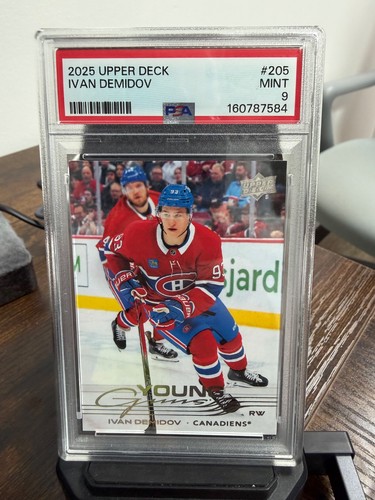 |
Ivan Demidov #205 2025 Upper Deck |
$88.82 | $523.49 | 0% |
 |
Newsy Lalonde #37 1910 C56 |
$179,000 | — | 0% |
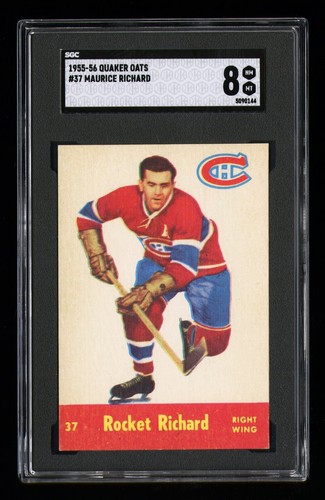 |
Rocket Richard #37 1955 Parkhurst Quaker Oats |
$500,000 | — | 0% |
 |
Connor Bedard [Autograph] #110 2023 SP Authentic |
$2,350 | $8,690 | 0% |
 |
Sidney Crosby #PO-2 2026 Upper Deck Tim Hortons Powerhouse Pillars |
$40.03 | $221.61 | 0% |
 |
Patrick Roy #53 1986 Topps |
$60.00 | $10,155 | 0% |
 |
Nick Suzuki #OR-4 2024 Upper Deck Outburst Retro Young Gun |
$130.57 | $371.23 | 0% |
 |
Kyle Connor #212 2016 Upper Deck |
$15.08 | $80.16 | 0% |
 |
Ed Litzenberger #61 1959 Topps |
$10.50 | $2,075 | 0% |
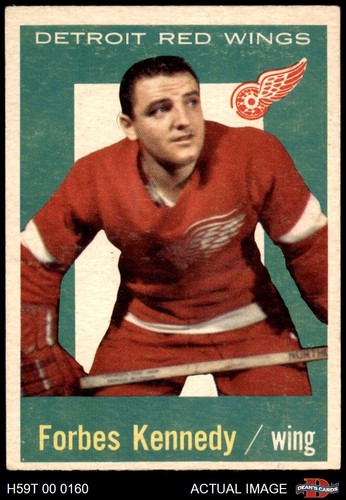 |
Forbes Kennedy #52 1959 Topps |
$14.04 | $2,230 | 0% |
Look up any card's current raw and graded value in Midpoint — and get an estimated grade before you pay to submit.
1. Jacob Fowler Young Guns
Jacob Fowler Young Guns are one example of hockey cards that can move on rookie momentum. Young Guns are Upper Deck's flagship rookie card, found in sets such as Series 1, Series 2 and Extended, so when a young player gets attention, demand often lands there first.
Goalie cards are interesting because a rookie can look very different after a few good games. A strong start, a call-up or a hot streak can pull in new buyers quickly, while the supply of raw copies stays the same.
- Check: the gap between raw and PSA 10 sold prices right now.
- Watch: how many copies are listed right now. Thin supply can amplify any demand surge.
- Risk: rookie hype can fade fast if playing time or performance drops.
2. Other Breakout Rookie Cards
Fowler is not the only name collectors are chasing. Any rookie who gets NHL minutes, scores in a notable game or hits an early milestone can move into the trending hockey cards conversation quickly.
A common pattern is that attention arrives first through highlights and social posts, then raw cards get scarce, then graded copies follow. Buyers who wait for a PSA 10 may pay a premium that has already priced in the hype.
- Search sold listings for the player's Young Guns, plus any rookie parallels.
- Note whether sales are rising in number, not just in price.
- Be cautious with players who have not yet secured a full-time roster spot.
3. Connor Bedard Cards
Connor Bedard is one of the most closely watched young stars in hockey, and his cards are often treated as a bellwether for the market. His Young Guns and low-numbered parallels tend to react to changes in his performance or team success.
Are they still good investments? That depends on your price and your time frame, and no card is guaranteed to hold or gain value. High-profile players attract more buyers, but they also carry more built-in expectation. Entries after a dip in attention are often better than entries at a peak.
- Compare current sold prices against sales from the past 30 days.
- Prefer cards with strong eye appeal. Centering matters on premium rookies, so read how centering impacts card value before you buy raw.
4. Macklin Celebrini Cards
Macklin Celebrini is another name collectors often bring up alongside Bedard. As a top young center, his rookie cards and premium parallels draw demand from both player collectors and investors.
His market is a good example of how strong, visible results and award talk can feed card prices. Sustained performance tends to support a rookie card's value more than hype alone.
- Buy signal: rising sales volume with stable or climbing prices.
- Caution signal: a price jump on just a couple of sales.
- Tip: compare raw and graded prices to see where the premium sits.
5. Connor McDavid Cards
High-end hockey cards that hold value often include Connor McDavid, the sport's established benchmark. His rare parallels, autographs and early Young Guns copies are the type of cards that can hold up better when the broader market gets choppy, though that is never guaranteed.
McDavid cards tend to behave less like hype plays. Their strength comes from long-term demand, small populations at the top grades and collectors who buy and keep. That can make them a steadier part of a portfolio built around more volatile rookies.
- Focus on scarce cards: serial-numbered parallels and top-graded copies.
- Expect slower, steadier moves than with rookies.
- Check grading for low population cards if you are weighing a high-value submission.
6. Upper Deck Extended and O-Pee-Chee Platinum
Among 2025-26 hockey releases, Upper Deck Extended and O-Pee-Chee Platinum are worth watching for rookie-driven demand. Extended carries additional Young Guns, which makes it a natural target when a late-season rookie breaks out. O-Pee-Chee Platinum attracts parallel hunters because of its colorful, collectible rookie variations.
The key habit is to compare a card's set against how the player is performing now. A rookie who surges after a call-up may lift a late-season set faster than an early one.
- Look at rookie cards from these sets first when a player gets hot.
- Track parallels separately from base cards. They often move differently.
- Check supply. Fewer active listings can mean a sharper rise.
7. MVP, Allure, Artifacts and SP Game Used
These lower-profile 2025-26 and 2026 releases can surprise buyers. MVP and Allure offer rookie cards and parallels at entry-level prices. Artifacts and SP Game Used bring in autograph and memorabilia collectors who chase rarer hits.
The opportunity is often in the second tier, where a rising rookie's card in one of these sets has not yet caught up with their Young Guns. The risk is thin sales data, so one buyer can distort the price.
- Use these sets to gain exposure to a rising player at a lower cost.
- Confirm several recent sold listings before trusting a price.
- Do not assume every set follows the Young Guns trend.
8. Raw vs. Graded: The PSA 10 Gap
Raw and graded prices tell different stories. A raw card reflects what buyers will pay for an ungraded copy, while a PSA 10 price reflects the cost, risk and wait of grading. When the gap widens during a surge, grading can look very attractive, but only if your copy truly qualifies.
This is where the decision to buy, hold, sell or grade lives. If your card is near the top grade, a pre-check can save you the fee. Follow our step-by-step pre-grading guide and see how grading scales differ by company.

- Measure centering first. It is the fastest way to rule out a weak candidate.
- Compare the PSA 10 premium against the grading fee and wait time.
- Consider selling raw if the gap is small or your copy is borderline.
The Midpoint app gives you an estimated PSA, BGS, CGC and TAG grade before you pay to submit.
9. Upcoming 2026-27 Upper Deck Black Diamond
New releases shape demand. The expected 2026-27 Upper Deck Black Diamond release may be on many collectors' radar, and anticipation can pull budgets toward sealed product and away from singles. Check Upper Deck's official announcements for the release date.
That can work in two directions. Some collectors sell older cards to fund new purchases, which can soften prices. Others see new hits as a reason to chase the same players, which can lift them.
- Avoid assuming a release means prices will move in one direction.
- Watch sold prices in the weeks before and after launch.
- Avoid buying a rookie at its peak just ahead of new supply.
10. How to Tell a Sustainable Rise From a Short-Term Spike
Every list of trending hockey cards has the same trap: buying after the spike. These checks help you tell a lasting rise from a flash.
- Sales volume: a real trend shows more completed sales, not just higher prices.
- Median, not peak: look at the median of recent verified sales rather than one high result.
- Sold, not asking: asking prices are wishes. Completed sales are facts.
- Scarcity: few active listings can support a rise, but only when buyers are actually transacting.
- Catalyst: a call-up, award or milestone is more likely to have staying power if performance continues. Hype alone often does not.
If a card jumped on a single event and sales are thin, treat it as a spike. If the move comes with steady volume across several weeks, it is more likely a trend.
11. Where to Track Hockey Card Prices
You do not need a paid service to check values. Start with eBay sold listings and filter by the exact card, grade and parallel. Then cross-check with a card-price database to see the longer history.
- Search the full card name, set and grade, such as PSA 10 versus raw.
- Compare at least five recent sales before you decide.
- Record prices on a schedule so you can see the 30-day change.
For collections, Midpoint lets you look up raw and graded values across more than 1.5 million cards and track your portfolio over time. It also includes a free centering calculator for a quick check before you grade.
Conclusion
The hockey card market in November 2026 rewards patience and evidence. Rookies like Jacob Fowler, stars such as Bedard, Celebrini and McDavid, and a slate of 2025-26 releases are all drawing attention, but the smartest moves are based on sold data, not headlines.
Before you buy, compare raw and PSA 10 prices. Before you grade, check centering and condition. Before you chase a spike, confirm that volume backs it. Do that, and you will make calmer decisions in a fast market.
FAQ
Q: Are hockey card prices going up in November 2026?
A: Some may be, mainly rookie cards and scarce parallels of in-demand players. The market is not moving evenly, so check recent sold listings for the specific card you care about.
Q: Which hockey cards are increasing in value right now?
A: Young Guns of breakout rookies such as Jacob Fowler, premium cards of Connor Bedard, Macklin Celebrini and Connor McDavid, and select 2025-26 releases like Upper Deck Extended and O-Pee-Chee Platinum are among the cards collectors are watching. Confirm any price movement with recent sold data.
Q: Why might Jacob Fowler hockey cards be rising in price?
A: Rookie cards respond to performance, call-ups and a surge in collector attention. When demand grows and few copies are listed, prices can climb quickly. Verify that sales volume supports the move.
Q: What hockey cards should I buy in November 2026?
A: Focus on cards with a clear catalyst, steady sales volume and a reasonable gap between raw and graded prices. Consider timing around the 2026-27 Upper Deck Black Diamond release, and avoid chasing a single-sale spike.
Q: Are Connor Bedard and Macklin Celebrini cards still good investments?
A: Both have strong demand, but no card is guaranteed to rise. Their value depends on performance, your entry price and card condition, so compare sold prices and buy with a plan.
Q: How can I check the current value of my hockey cards?
A: Use eBay sold listings and a card-price database to compare raw and graded sales. You can also look up values and track your collection in the Midpoint app.
Free to start
Try the Midpoint app
Grade any card from a photo, see its raw and PSA 10 value, and track what your collection is worth — free.
Get it on iPhoneGet it on Android


