
Hockey Card Prices Rising November 2026: 9 Things to Know
Hockey card prices rising in November 2026? See which names and formats to watch, how raw and PSA 10 compare, and how to decide to buy, sell or grade.

Estimated reading time: 9 min
Key Takeaways
- The hockey card market in November 2026 appears selective: a handful of players and formats may be climbing while much of the wider market looks cooler.
- Completed sales matter far more than asking prices. A real spike shows up across several verified sales and a steady 30-day trend.
- Premium formats (autographs, patches, serial-numbered parallels, short prints) and Young Guns tend to draw the most attention.
- Grading only makes sense when the gap between raw and PSA 10 or BGS 9.5 value covers the fee, the risk of a lower grade, and your time.
- Check centering before you submit. It is the cheapest way to avoid a bad grading result.
If you are tracking hockey card prices rising in November 2026, the useful question is not just which cards are up. It is whether those gains are real, how long they might last, and what you should do about them. This guide covers the hockey card market in November 2026, the trending hockey cards collectors keep talking about, and a practical way to judge hockey cards going up in value.
A note on numbers: the raw and PSA 10 values in the data table in this post come from Midpoint's own database as of 2026-10-26. Everywhere else, this article avoids quoting prices it cannot verify. Use the table for figures and the sections below for context and decision rules.
30-day price movers — live data from Midpoint's card database, as of 2026-10-26. Prices move; Midpoint refreshes these daily.
| Card | Raw | PSA 10 | 30-day | |
|---|---|---|---|---|
 |
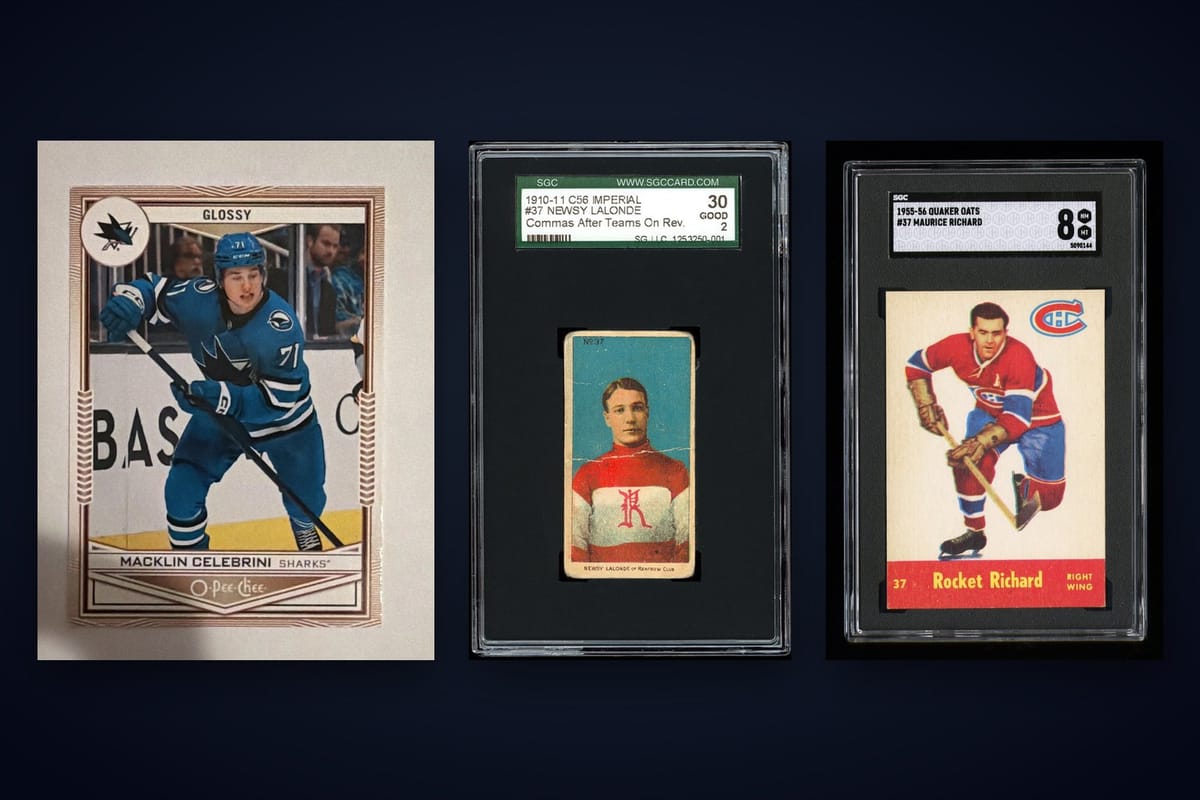
Macklin Celebrini #OPC-34 2024 Upper Deck O-Pee-Chee Glossy |
$12.03 | $174.99 | +3% |
 |
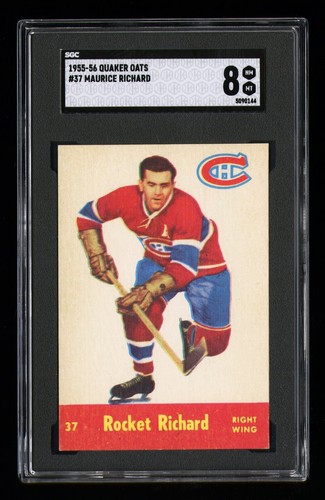
Newsy Lalonde #37 1910 C56 |
$179,000 | — | 0% |
 |
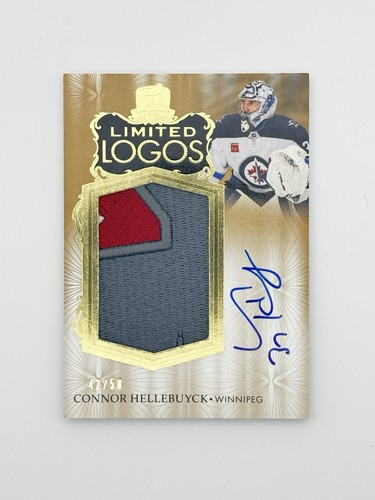
Rocket Richard #37 1955 Parkhurst Quaker Oats |
$500,000 | — | 0% |
 |
Connor Hellebuyck #LL-HE 2023 Upper Deck The Cup Limited Logos Auto Patch |
$248.46 | $947.74 | 0% |
 |
Logan Stankoven #244 2024 Upper Deck Young Guns Jumbo |
$10.94 | $70.51 | 0% |
 |
Connor Bedard [Autograph] #110 2023 SP Authentic |
$2,350 | $8,690 | 0% |
 |
Connor McDavid #CS-CM 2020 Upper Deck Clear Cut Canvas Signatures |
$579.23 | — | 0% |
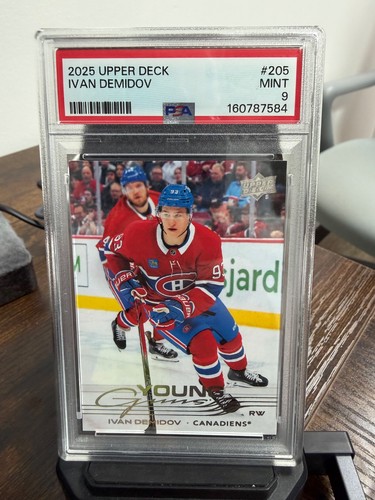 |
Ivan Demidov #205 2025 Upper Deck |
$88.82 | $523.49 | 0% |
 |
Sidney Crosby #PO-2 2026 Upper Deck Tim Hortons Powerhouse Pillars |
$40.03 | $221.61 | 0% |
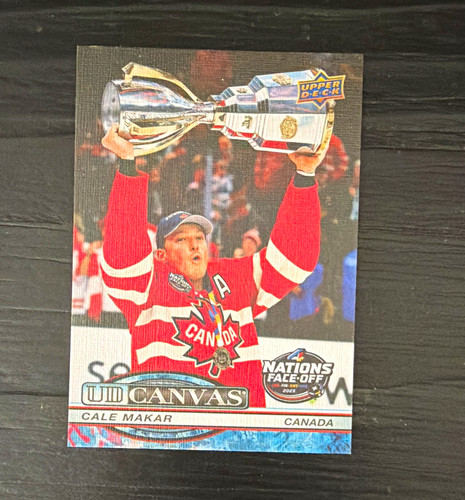 |
Cale Makar #C-409 2025 Upper Deck Extended Series UD Canvas |
$10.86 | $87.24 | 0% |
 |
Macklin Celebrini [Exclusive] #451 2024 Upper Deck |
$3,359 | $4,804 | 0% |
 |
Kyle Connor #212 2016 Upper Deck |
$15.08 | $80.16 | 0% |
Look up any card's current raw and graded value in Midpoint — and get an estimated grade before you pay to submit.
1. A Selective Market: Gains in Pockets, Cooling Elsewhere
The pattern to watch in the November 2026 hockey card market is that gains are not evenly spread. A small group of players, sets and formats appears to attract most of the buying, while many commons, base cards and mid-tier singles may stay flat or drift lower.
That matters because headlines about "rising hockey cards" can make the whole hobby sound hot. It usually is not. When you see a list of risers, ask:
- Is the gain limited to one card, one parallel or one grade?
- Is it based on completed sales or on sellers raising their asking price?
- How many sales sit behind the move?
Treat the table in this post as a snapshot of the last 30 days, not a promise about the next 30.
2. Rising Players to Watch: Fowler, Ovechkin, Cowan, Pastrnak, Caufield, Hutson
Collector discussion this season often returns to a mix of veterans and young talent: Jacob Fowler, Alex Ovechkin, Easton Cowan, David Pastrnak, Cole Caufield and Lane Hutson. Each has a different demand story.
- Ovechkin: long-term legacy and milestone interest tends to support demand for key cards.
- Pastrnak and Caufield: established scorers whose cards can react to scoring streaks and team success.
- Hutson, Cowan and Fowler: younger names where rookie recognition, call-ups and prospect buzz can move prices quickly.
Names alone do not make a card a buy. Look up the specific card, parallel and grade in the data table, then compare raw and PSA 10 values as of 2026-10-26 before deciding anything.
3. Young Guns, Rookie Cards and Prospect Cards
Upper Deck Young Guns remain the benchmark rookie card in hockey, so they are often the first place demand shows up when a player breaks out. Rookie cards and prospect cards (such as early-career issues from other brands) can also move when a player earns a call-up or wins a larger role.
Young Guns carry two kinds of risk:
- Expectation risk: prices can run ahead of performance, especially for prospects who have not yet played a full NHL season.
- Condition risk: Young Guns are often cited for centering and surface issues, so a raw card may not grade as well as the photo suggests.
If you are asking whether Young Guns are a good investment in 2026, the honest answer is that they can be, but only for players whose demand has real support and only at prices you can verify through completed sales.
4. Premium Formats: Autographs, Patches, Numbered Parallels and Short Prints
In a cooling market, scarcity tends to hold up better than volume. That is why premium formats are often where collectors look first.
- Autographs: on-card signatures usually draw more interest than stickers.
- Patch cards: multi-color or game-used patches with clean presentation stand out.
- Serial-numbered parallels: lower print runs, and especially 1-of-1s, create natural scarcity.
- Short prints: harder to find than base cards in the same set.
Scarcity does not guarantee liquidity, though. A rare card with only one or two sales a month can swing wildly on a single buyer. Look at how often a card actually sells, not just how rare it is.
5. Raw vs Graded: How Big Is the PSA 10 and BGS 9.5 Premium?
The gap between a raw card and a PSA 10 or BGS 9.5 is where most grading decisions are won or lost. The data table lists raw and PSA 10 values for each tracked card as of 2026-10-26, so you can see that gap directly.
Keep a few things in mind when you read it:
- A wide gap suggests grading could pay off, but only if your copy truly has gem-mint potential.
- A narrow gap means grading often costs more than it adds.
- BGS 9.5 and PSA 10 are not the same standard, and the premium for each differs by card. See our breakdown of grading scale differences by company.
Remember that the PSA 10 price reflects only cards that earned a 10. Your copy might come back as a 9, which often sells for much less.
6. Completed Sales vs Asking Prices
This is the single most important filter for spotting real hockey cards going up in value. Asking prices show what sellers hope for. Completed sales show what buyers actually paid.
Before you trust a percentage gain, verify it:
- Count the completed sales behind the change. One sale is an anecdote, not a trend.
- Check that the sales are the same card, parallel and grade.
- Compare the percentage change against the sales volume. A big jump on very few sales is weak evidence.
- Ignore listings that have sat unsold for weeks.
A card with a modest rise on many sales is usually a stronger signal than a huge rise on two.
7. Performance Catalysts That Move Hockey Card Prices
Hockey card prices respond to what happens on the ice. The main catalysts are:
- Breakouts: a hot start or a big scoring run.
- Rookie recognition: award buzz, Calder conversation or a standout debut.
- Call-ups: a prospect arriving in the NHL often triggers a quick demand spike.
- Injuries: these can cool prices fast, or create a buying window if the recovery looks short.
- Milestones: career records and round-number achievements lift veterans.
- Playoff expectations: team strength and deep-run odds can lift star cards.
The catch is timing. Catalyst-driven jumps often fade once the news cycle moves on, which is why the 30-day view in the table is worth checking against your own research.
8. 2026-27 Releases: Black Diamond, Extended Series and O-Pee-Chee Platinum
New products shape the market in two ways. They create fresh cards for players already in demand, and they can add supply that softens prices for older cards of the same player. Release dates vary by product, so check which of these have actually shipped.
- Upper Deck Black Diamond: its premium look and tiered diamond designs attract chase-card buyers.
- Upper Deck Extended Series: this release is a key source of additional rookies and Young Guns for players who debut later in the season.
- O-Pee-Chee Platinum: a popular parallel-heavy set for collectors who like color variations and rookies.
Expect attention to shift toward whichever release is newest. If you hold older cards of a player featured heavily in a new set, watch whether demand rotates away from your card.
9. Buy, Sell or Grade: A Simple Decision Framework
Once you have found a rising card, the decision comes down to a few checks.
When to buy: the card has several verified completed sales, a steady 30-day trend, and a catalyst that still has room to run. Avoid chasing a card after a single dramatic sale.
When to sell: the price has jumped on news that may fade, you hold multiple copies, or the card is raw with condition risk and a hot market is rewarding raw copies.
When to grade: use this rough test:
- Take the PSA 10 (or BGS 9.5) value from the table.
- Multiply by your honest chance of getting that grade.
- Add the value of the lower-grade outcomes weighted by their odds.
- Subtract the grading fee (this varies by company and service level), shipping and insurance.
- Compare the result with the raw value. If grading does not clearly win, sell raw.
Your odds depend heavily on centering. Measure it first with our free centering calculator, and see how to pre-grade your card for the full process. Poor centering can cap a card well below a 10, as explained in how centering impacts card value.

Midpoint gives you an estimated PSA, BGS, CGC and TAG grade from centering, corners, edges and surface before you pay to submit, and it shows raw versus graded values so you can run this math quickly.
10. Momentum or Short-Lived Spike? How to Tell
Every rising market produces cards that jump and then retrace. Use these checks to separate the two.
- Look at the 30-day trend, not one day. Gradual gains hold better than vertical ones.
- Require multiple verified sales. Several comparable sales at similar prices confirm a level.
- Check the cause. A season-long breakout is sturdier than a one-game highlight.
- Watch supply. If many sellers list at the new price after a jump, the move may stall.
- Track your own cards. Portfolio tracking shows how your collection's value changes over time, so you can react to data rather than hype.
Store whatever you hold properly while you wait. Our guide on how to store valuable cards helps protect the condition that your grade depends on.
Conclusion
The hockey card market in November 2026 rewards patience and verification. Gains appear concentrated in certain players, Young Guns and premium formats, while the broader market may stay cooler. Use the data table as of 2026-10-26 to compare raw and PSA 10 values, confirm moves with completed sales, and only grade when the math and centering support it.
Ready to check a card before you spend on grading? Try Midpoint free on iOS and Android.
FAQ
Q: Why are hockey card prices going up in November 2026?
A: The gains appear selective rather than market-wide. Player performance, rookie recognition, call-ups, milestones, playoff expectations and new 2026-27 releases can all push demand toward specific cards and formats, while much of the broader market may stay cooler.
Q: Which hockey cards are rising in value right now?
A: Names that come up often in collector discussion include Jacob Fowler, Alex Ovechkin, Easton Cowan, David Pastrnak, Cole Caufield and Lane Hutson. Check the data table in this post for raw and PSA 10 values as of 2026-10-26, and verify any card with completed sales.
Q: Are hockey Young Guns cards a good investment in 2026?
A: They can be, especially for players with real performance backing, but they carry expectation and condition risk. Buy only at prices supported by several completed sales, and check centering and surface before assuming a high grade.
Q: Should I grade a hockey card before selling it?
A: Only if the gap between raw and graded value, weighted by your realistic chance of a top grade, clearly exceeds the grading fee, shipping and insurance. If the gap is narrow or centering is weak, selling raw is often the better choice.
Q: How can I check the current value of my hockey cards?
A: Look up each card by name, set and parallel, and compare raw and graded values using recent completed sales. Midpoint's card lookup can help with this, and its portfolio tracking shows your collection's value over time.
Q: Are hockey card price spikes real or just based on asking prices?
A: Either can happen. Asking prices show seller hopes, while completed sales show what buyers paid. A spike is more credible when several verified sales and a steady 30-day trend support it.
Free to start
Try the Midpoint app
Grade any card from a photo, see its raw and PSA 10 value, and track what your collection is worth — free.
Get it on iPhoneGet it on Android


