How to Grade Pokémon Cards: Centering Guide & Grading Tips
Learn how to grade Pokémon cards at home. Master centering, corners, edges, and surface checks before submitting. Step-by-step grading guide.

Estimated reading time: 12 min
Key Takeaways
- Understand the four main grading criteria: centering, corners, edges, and surface.
- Learn to pre-grade your Pokémon cards before paying submission fees.
- Master the use of tools and lighting for accurate card inspection.
- Know how centering is judged on Pokémon, sports, Magic, Yu-Gi-Oh, One Piece, and vintage cards.
- Get actionable tips for packaging and submitting your cards safely.
Learning how to grade Pokémon cards can help you make informed decisions and potentially maximize your collection's value. Whether you're aiming for a PSA 10 or want to avoid costly grading mistakes, understanding card centering, corners, edges, and surface is crucial. This guide covers centering quirks by card type, what makes a card grade-worthy, and how to prepare your cards for professional grading—plus, how to leverage tools like Midpoint for centering estimates.
Step 1: Understand the Four Grading Criteria
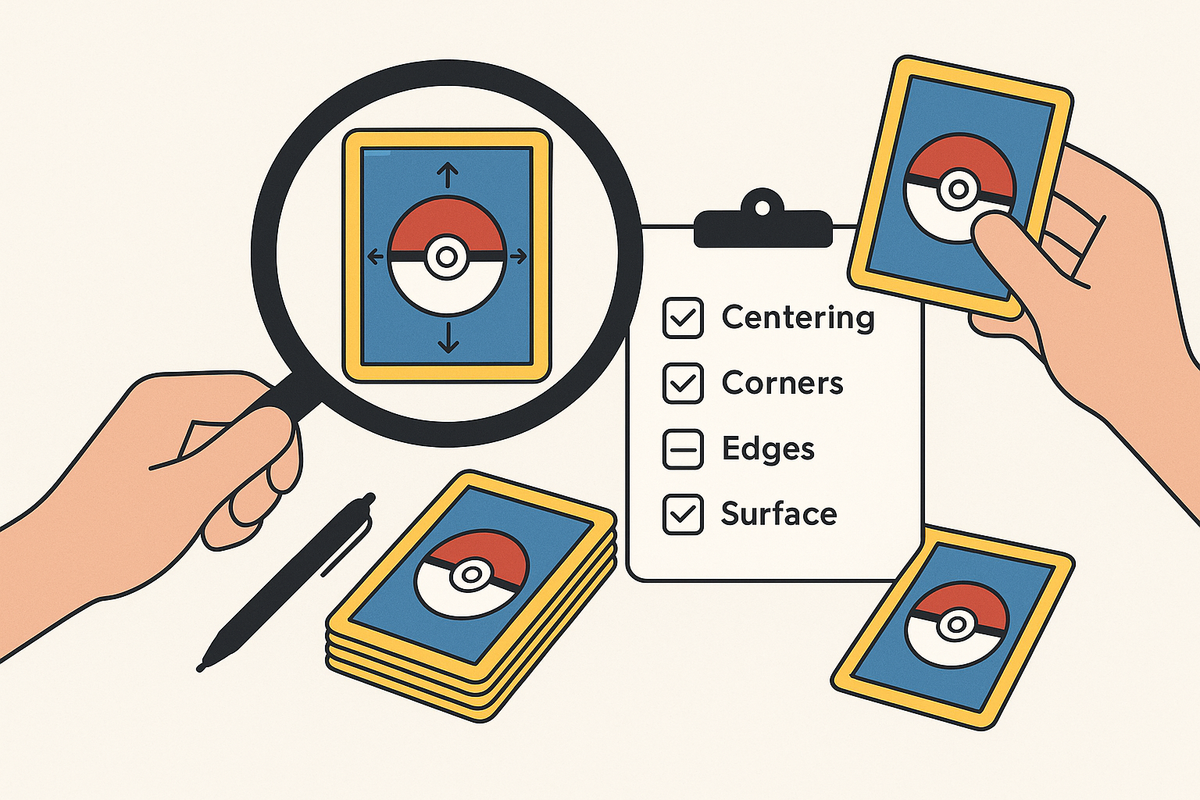
Every grading company—PSA, BGS, CGC—uses four primary criteria to assess a card’s condition:
- Centering: How well the card’s borders are aligned, both front and back.
- Corners: Sharpness and lack of wear or bends at the card’s corners.
- Edges: Cleanliness and absence of whitening, nicks, or chipping along card edges.
- Surface: Lack of scratches, dents, print lines, or stains on the card face and back.
Centering is especially important, as misaligned borders can be the difference between a high and low grade—even if your card is pack-fresh. Read more about the impact of centering in this detailed guide.
Step 2: Gather Tools and Set Up Your Inspection Space
To accurately pre-grade Pokémon cards at home, you’ll need the right tools and lighting. Here’s what most graders recommend:
- LED desk lamp with adjustable brightness
- 10x jeweler’s loupe or magnifying glass
- Microfiber cloth (to remove dust)
- Soft gloves (optional, to avoid fingerprints)
- Card centering tool or ruler (for measuring borders)
- Clean, uncluttered workspace
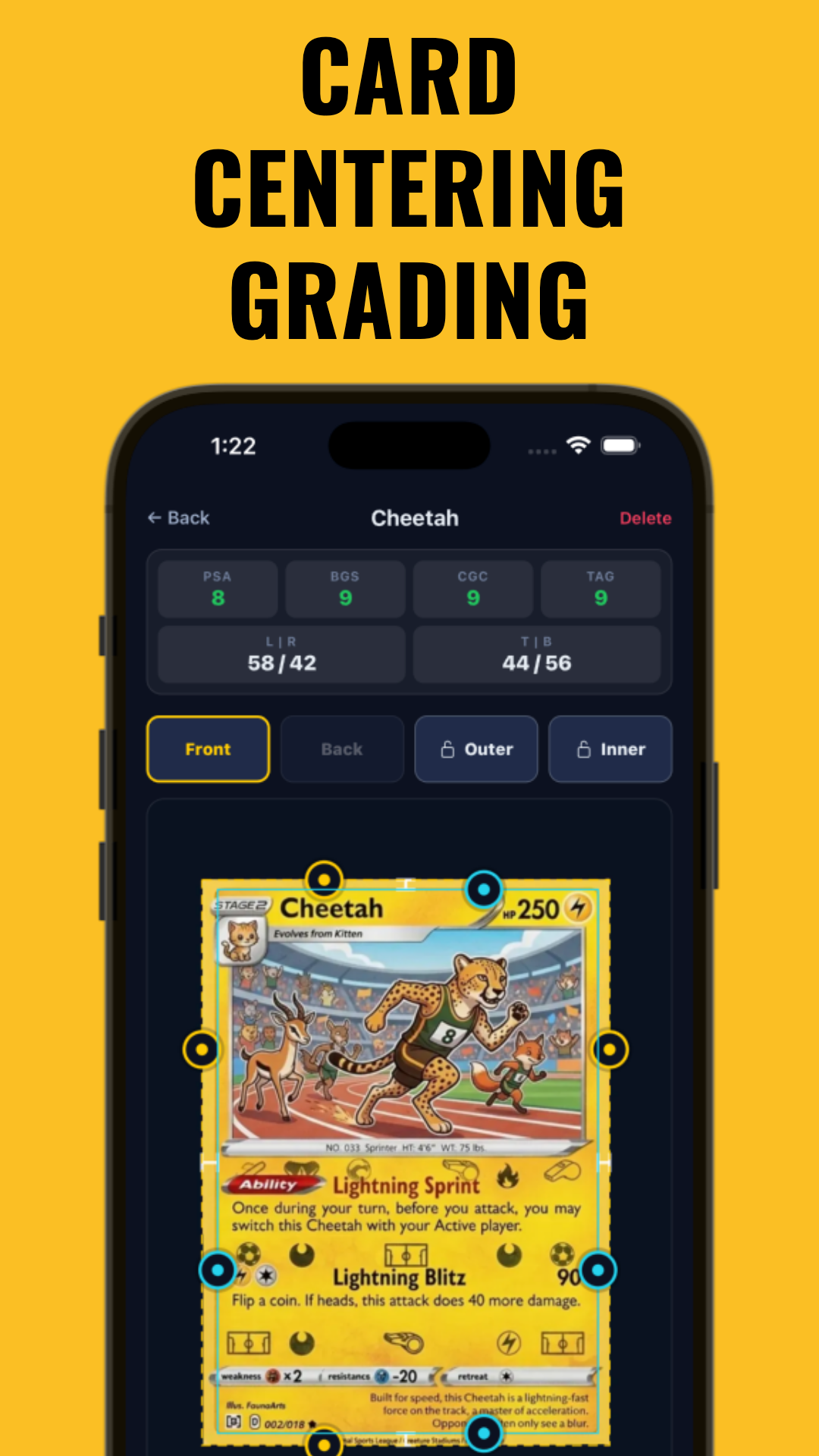
Apps like Midpoint can help measure card centering, assisting you in estimating PSA, BGS, CGC, and TAG grades before submitting. For a hands-on walkthrough, see the precision centering guide.
Step 3: Inspect Centering by Card Type
Centering is judged on both the front and back of the card. Each card game—and even vintage vs modern cards—has distinct quirks:
- Pokémon Cards: PSA typically expects a 60/40 or better centering ratio on the front for a 10, and 75/25 or better on the back. Modern Pokémon cards often have tighter centering than vintage, but always check both sides.
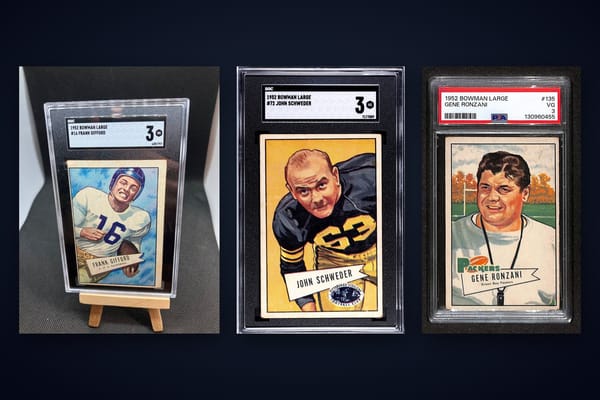
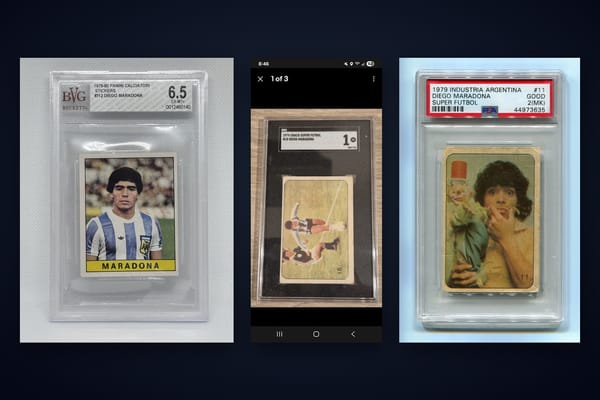
- Sports Cards: Baseball and basketball cards tend to have thicker borders, making off-centering more obvious. Some vintage sports cards are known for poor factory centering.
- MTG (Magic: The Gathering): Centering tolerances are similar to Pokémon, but older sets like Alpha and Beta are prone to heavy miscuts.
- Yu-Gi-Oh: Borders are thinner, so even slight shifts impact centering grades.
- One Piece Cards: Like Pokémon, check both front and back. Centering standards may change as the game matures.
- Vintage Cards: There may be more leniency on older cards, but check for print alignment quirks and manufacturing defects.
For an in-depth comparison by card type, see this guide to card centering standards by type.
Step 4: Check Corners, Edges, and Surface
After centering, inspect corners, edges, and surfaces. Hold the card under bright, diffuse light and tilt it at various angles to spot flaws. Use your loupe to examine:
- Corners: Look for whitening, dings, or bends. Even tiny imperfections can lower a grade.
- Edges: Scan for nicks, chipping, or fraying—especially on colored borders.
- Surface: Check for scratches, print lines, silvering (foil edge wear), stains, or dents. Holographic Pokémon cards are especially prone to surface scratches.
Vintage cards often have factory flaws like print dots or roller marks. Graders may be more lenient if these are common for the set, but always note them.
For a full step-by-step on pre-grading, see this guide to pre-grading your card.
Step 5: Decide If Your Card Is Worth Grading
Before spending money per card on grading, ask yourself:
- What is the card’s raw (ungraded) value?
- What is its potential value as a PSA 9 or 10?
- How much will grading and shipping cost?
- Does the card have strong centering, clean corners, and minimal flaws?
Generally, only cards with a high chance of grading PSA/BGS/CGC 9 or 10 justify the grading cost. Use online price guides to check recent sales. For more on estimating potential value, see this practical guide.
Step 6: Choose Your Grading Company (PSA vs BGS vs CGC)
The three main grading companies each have their strengths:
- PSA: Industry leader, especially for Pokémon and sports cards. Some collectors consider PSA slightly more lenient on centering than BGS, but strict on surface and corners.
- BGS: Known for subgrades (centering, corners, edges, surface), and black label 10s. Often considered stricter on centering than PSA.
- CGC: Fast-growing, especially with trading cards like Pokémon and Magic. Offers subgrades and competitive pricing.
Choose the service that best fits your card type and goals. For a complete breakdown, see their official sites or the Midpoint FAQ.
Step 7: Prepare and Package Your Cards for Submission
Proper packaging helps ensure your cards arrive safely and unaltered:
- Place each card in a penny sleeve, then insert into a semi-rigid card saver (like Card Saver I or II).
- Stack card savers together, and secure with a rubber band (not too tight).
- Wrap the stack in bubble wrap, and place inside a sturdy box.
- Include your submission form and any required paperwork.
Never use tape directly on holders. Double-boxing is recommended for high-value submissions. For more details, check the grading company’s packaging instructions or see the pre-grade guide.
Step 8: Submit and Track Your Cards
Follow the grading company’s online submission process. You’ll typically:
- Create an account and fill out the submission form.
- Select your grading tier (based on card value/turnaround time).
- Print your packing slip and label.
- Ship with tracking and insurance.
Track your order through the grading company’s portal. Processing times can range from weeks to months, depending on service level.
Tips & Common Mistakes
- Don’t submit cards with obvious whitening or deep scratches unless they’re extremely rare or valuable.
- Always check back centering for Pokémon and other TCGs—graders do!
- Use a digital card centering tool like Midpoint to help reduce human error.
- Don’t clean cards with chemicals. Use a dry microfiber cloth if needed.
- Avoid sending cards in top loaders (use semi-rigid holders instead).
- If in doubt, get a second opinion from a trusted collector or use AI-powered grading estimates (see how AI transforms card centering analysis).
Conclusion
Learning how to grade Pokémon cards—especially centering—can help you make informed decisions about your collection. Use the right tools, inspect each card thoroughly, and choose the best grading service for your goals. Try Midpoint to measure card centering before you submit. For more advanced guides and centering tutorials by card type, explore the resources throughout this article or see the definitive guide for grading and collectors.
FAQ
- How do you tell if a Pokémon card is worth grading?
Check its raw value, rarity, and condition (centering, corners, edges, surface). If it’s likely to grade a 9 or 10 and the graded value is much higher than the ungraded price, it may be worth grading. For more, see this guide. - What are the 4 things graders look for on Pokémon cards?
Centering, corners, edges, and surface are the four main grading criteria. All must be near-perfect for a top grade. - How much does it cost to grade Pokémon cards?
Grading fees can start around $15–$30 per card, but may be higher for faster turnaround or high-value cards. Always factor in shipping and insurance costs. - Which grading company is best for Pokémon cards: PSA, BGS, or CGC?
PSA is widely recognized for Pokémon, but BGS and CGC are respected and offer subgrades. Choice depends on your goals and card type. - How do you package Pokémon cards for grading?
Use a penny sleeve, semi-rigid card saver, secure with bubble wrap in a sturdy box, and include all forms. Avoid top loaders and tape. - Can a card with whitening or surface scratches still get a 10?
It is very unlikely. Even minor whitening or scratches usually lower the grade to a 9 or below. Near-perfect condition is generally needed for a 10.
Free to start
Try the Midpoint app
Grade any card from a photo, see its raw and PSA 10 value, and track what your collection is worth — free.
Get it on iPhoneGet it on Android