Into the Inklands Lorcana Cards Value: What's Worth Grading
Into the Inklands Lorcana cards value explained: top Enchanteds, raw vs PSA 10 gaps, rarity pricing, and which cards are actually worth grading.

Estimated reading time: 11 min
Key Takeaways
- Into the Inklands Lorcana cards value is concentrated in the Enchanted tier, led by Mickey Mouse - Trumpeter Enchanted #220. Most of the 204 base cards are worth far less.
- The gem-premium gap (PSA 10 versus raw) is what decides whether grading pays. A big gap on a high-value card is a green light. A small gap on a cheap card rarely covers the fee.
- Rarity, finish (standard vs foil vs Enchanted), condition, and centering all move price. Centering is the one you can check before you spend anything.
- Listed prices are estimates. Recent sold listings are the real test, and Enchanted prices can swing quickly.
- Pre-grade first: measure centering and inspect corners, edges, and surface before paying grading fees, which commonly run about $30 or more per card once shipping is included.
Card values — live data from Midpoint's card database, as of 2026-10-28. Prices move; Midpoint refreshes these daily.
| Card | Raw | PSA 10 | Gem premium | |
|---|---|---|---|---|
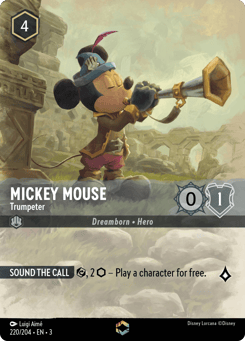 |
Mickey Mouse #220/204 Into the Inklands (2024) |
$205.38 | $1,655 | 8.1× |
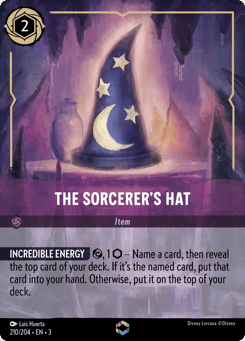 |
The Sorcerer's Hat #210/204 Into the Inklands (2024) |
$73.15 | $500.39 | 6.8× |
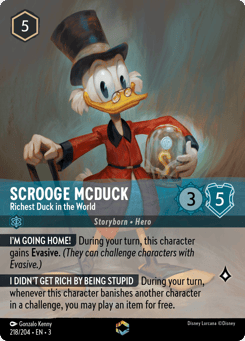 |
Scrooge McDuck #218/204 Into the Inklands (2024) |
$92.25 | $493.54 | 5.4× |
 |
The Sorcerer's Hat #65/204 Into the Inklands (2024) |
$0.17 | $439.15 | 2583.2× |
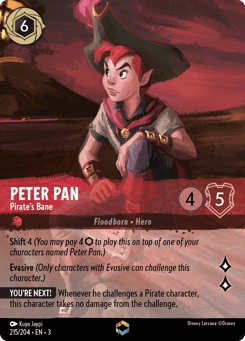 |
Peter Pan #215/204 Into the Inklands (2024) |
$55.21 | $320.45 | 5.8× |
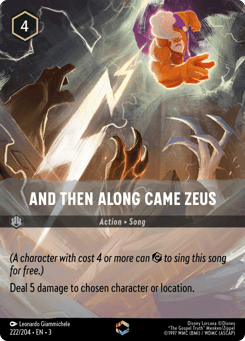 |
And Then Along Came Zeus #222/204 Into the Inklands (2024) |
$69.93 | $318.60 | 4.6× |
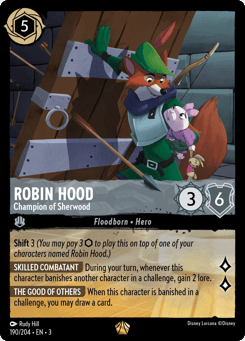 |
Robin Hood #190/204 Into the Inklands (2024) |
$2.15 | $317.49 | 147.7× |
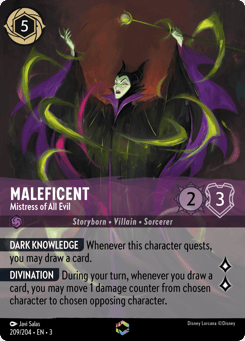 |
Maleficent #209/204 Into the Inklands (2024) |
$67.49 | $313.58 | 4.7× |
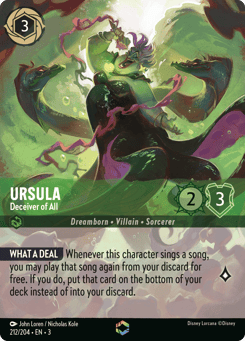 |
Ursula #212/204 Into the Inklands (2024) |
$110.42 | $310.63 | 2.8× |
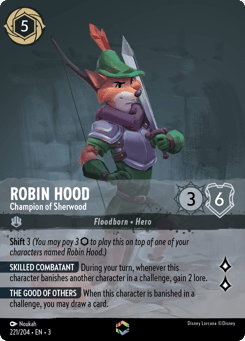 |
Robin Hood #221/204 Into the Inklands (2024) |
$105.14 | $295.96 | 2.8× |
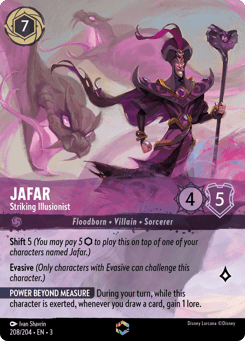 |
Jafar #208/204 Into the Inklands (2024) |
$65.29 | $258.64 | 4× |
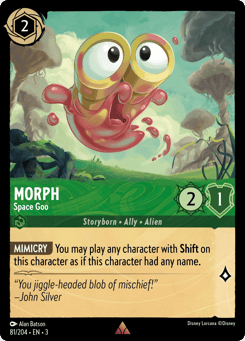 |
Morph #81/204 Into the Inklands (2024) |
$0.31 | $250.82 | 809.1× |
Look up any card's current raw and graded value in Midpoint — and get an estimated grade before you pay to submit.
Table of Contents
- Section 1: Into the Inklands Lorcana Cards Value at a Glance
- Section 2: The Most Valuable Into the Inklands Cards
- Section 3: Into the Inklands Price Guide by Rarity
- Section 4: What Moves a Card's Price: Finish, Condition, Language, Edition
- Section 5: Into the Inklands PSA 10 Value and the Gem-Premium Gap
- Section 6: Into the Inklands Cards Worth Grading
- Section 7: Complete Set Value, Volatility, and Estimated vs Sold Prices
- Conclusion
- FAQ
Section 1: Into the Inklands Lorcana Cards Value at a Glance
If you want to know what your Into the Inklands Lorcana cards are worth, start with one fact: the set's value is top-heavy. A few Enchanted cards carry most of the money. Everything else is priced by rarity, finish, and condition.
This guide covers the full Into the Inklands price guide: the most valuable cards, rarity tiers, graded versus raw pricing, and which cards justify a grading fee. All figures in the data table below are from Midpoint's database and are dated as of 2026-10-28.
Set size and what is in it
Into the Inklands is the third main Lorcana set and released in 2024. The base set has 204 cards. On top of that, the set includes Enchanted cards and other variant printings, which are the chase pieces collectors hunt.
- Base cards: 204 across Common, Uncommon, Rare, Super Rare, and Legendary.
- Enchanted: the rarest tier, with full-art treatment and a distinct finish.
- Foil variants: foil versions of base cards, priced differently from standard.
How to read the value numbers
Every card has two kinds of price. Raw is the ungraded price, and graded is the price in a slab, usually PSA, BGS, CGC, or TAG. The distance between them tells you how much a high grade adds.
Use the data table that follows this section as your reference. I won't repeat every row in prose. Instead, the next sections explain what the numbers mean and how to act on them.
One caution before you start
Price pages show market estimates, not guaranteed offers. A card "worth" a number on a tracker may sell for less or more depending on condition, timing, and buyer demand. Treat every figure as a starting point and confirm with recent sales.
Section 2: The Most Valuable Into the Inklands Cards
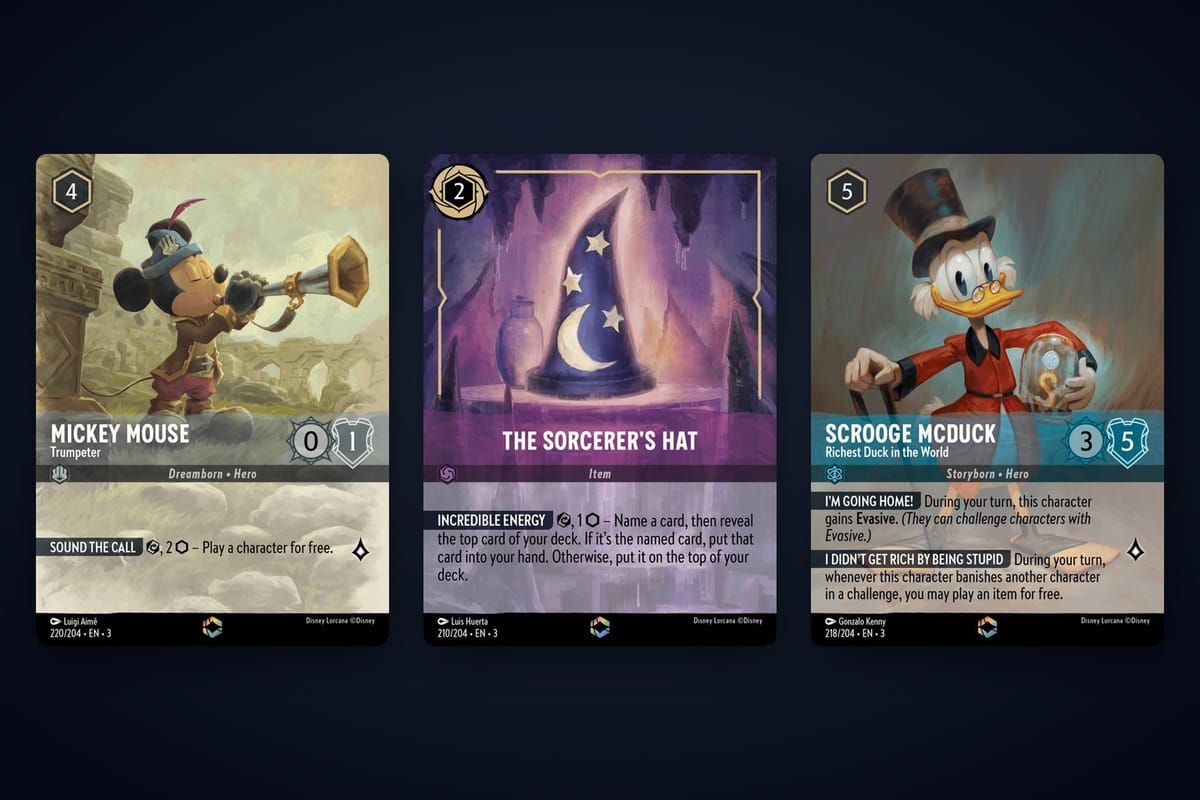
The most valuable Into the Inklands cards are almost all Enchanted. According to Midpoint's data, the set's top chase card is Mickey Mouse - Trumpeter Enchanted #220. Check the current rankings on TCGplayer and Cardmarket to confirm, since order can change.
Check the table above for its exact raw and graded figures as of 2026-10-28.
The Enchanted chase list
Beyond Mickey, these Enchanted cards are often mentioned in value discussions. Confirm each one, and its exact set, against the data table before relying on it:
- Robin Hood (Enchanted): a popular character with strong collector demand.
- Ursula (Enchanted): a villain favorite that holds attention in the secondary market.
- Scrooge McDuck (Enchanted): appeals to both Lorcana players and Disney collectors.
- The Sorcerer's Hat (Enchanted): an iconic item card with broad recognition.
- And Then Along Came Zeus (Enchanted): a sought-after action card.
Their relative order can shift. Character popularity, tournament play, and supply all push prices around, so use the table for the ranking as of the date shown.
Why Enchanted cards dominate
Three things stack up. Enchanted pulls are rare, the art is full-bleed and highly collectible, and the finish is hard to keep flawless. That last point matters for grading: a clean, well-centered Enchanted copy is genuinely scarcer than a clean base card.
Beyond Enchanted
Legendary and some Super Rare cards can carry real value, especially in foil. They generally sit below the top Enchanted tier, but a strong foil Legendary may outpace some lower-end Enchanted copies at a given time. Always check the line for the specific card rather than assuming rarity alone predicts price.
Section 3: Into the Inklands Price Guide by Rarity
A practical Into the Inklands price guide works by tier. Rarity sets the ceiling for what a card can be worth, and finish and condition decide where inside that range it lands.
Common and Uncommon
These make up the bulk of the 204 cards and are priced as bulk. Standard copies are rarely worth grading, because the fee is higher than the card. The exceptions are playable staples that spike when a deck archetype gets popular. Even then, the value is in the raw copy, not the slab.
- Sell or trade in lots.
- Keep sleeved and sorted for set completion.
- Grade only if a specific copy is flawless and the card has a clear premium.
Rare and Super Rare
Rares and Super Rares are the middle of the price ladder. Most are modest in standard and become more interesting in foil. Playability drives the spread here: a strong competitive card holds value; a card that is just pretty does not.
Legendary
Legendaries are the top non-Enchanted rarity. They are more expensive than lower tiers and often have noticeable foil premiums. They are the first place to look for a secondary grading candidate after the Enchanteds.
Enchanted
Enchanted is its own market. Average price in this tier sits well above everything else in the set, and the spread inside the tier is wide, from solid mid-priced cards up to Mickey Mouse - Trumpeter Enchanted #220 at the top.
Rule of thumb: the lower the rarity, the more the card is valued as a playable or set-filler; the higher the rarity, the more it is valued as a collectible whose condition matters.
Section 4: What Moves a Card's Price: Finish, Condition, Language, Edition
Two copies of the same card can sell for very different amounts. Here is what accounts for the gap.
Print finish: standard, foil, Enchanted
Standard, foil, and Enchanted printings of related cards are priced separately. Foils carry a premium over standard, and Enchanted sits on a different level again. When you look up a card, confirm you are reading the line for your exact finish. Mixing them up is a common valuation mistake.
Condition and centering
Raw prices usually assume Near Mint. Anything with whitening, dents, scratches, or print lines trades below that. Centering, the balance of borders left to right and top to bottom, is especially important on full-art Enchanteds because off-center borders are obvious.
For a deeper explanation, see how centering impacts card value.
- Centering: grading companies publish tolerances for a top grade, and Lorcana's borders make misalignment easy to see.
- Corners and edges: pack-fresh does not mean flawless.
- Surface: foil and Enchanted finishes show scratches and print lines readily.
Language and edition
Language matters. English cards generally trade on the main English markets such as TCGplayer, while Cardmarket reflects European demand and different pricing. Other-language copies can price very differently, so don't compare across languages. Likewise, make sure you are looking at Into the Inklands and not a reprint or promo that shares the character name.
Source matters too
TCGplayer and Cardmarket can show different numbers for the same card because of region, currency, and seller mix. Check both and note which one a figure came from.
Section 5: Into the Inklands PSA 10 Value and the Gem-Premium Gap
The Into the Inklands PSA 10 value of a card is what a gem-mint copy sells for in a PSA slab. The key number isn't the PSA 10 price alone. It is the gem-premium gap: PSA 10 price minus raw price.
That gap is what you are paying grading fees to capture. The data table shows raw and graded values side by side so you can read each gap directly.
Ungraded versus graded
Graded cards generally sell for more than ungraded copies, but not always by enough to matter. Three things shape the gap:
- Card value: the more the raw card is worth, the more a high grade tends to add in absolute terms.
- Grade tier: PSA 9 and PSA 10 are priced very differently. A PSA 9 usually captures only part of the premium.
- Population: fewer high-grade copies in circulation keeps the premium intact. For more, see card grading for low population cards.
PSA 9 versus PSA 10
The step from 9 to 10 is where most of the money tends to sit. A card that comes back a 9 may be worth only a little more than raw, which means a submission that misses the 10 can lose money after fees. That is why your odds of hitting a 10 matter as much as the price.
Other graders
BGS, CGC, and TAG use different scales and carry different market premiums. A "10" does not mean the same thing at every company. Read grading scale differences by company before choosing where to submit.
PSA 10 is the most widely used benchmark for graded pricing, so that is the benchmark used in this guide.
Section 6: Into the Inklands Cards Worth Grading
Which Into the Inklands cards are worth grading? Use a simple break-even test instead of gut feeling.
The break-even formula
Grading pays when this is true:
(Chance of PSA 10 × PSA 10 value) + (Chance of PSA 9 × PSA 9 value) > raw value + grading fee + shipping
Grading fees commonly start around $30 or more per card once you account for tier, and that is before shipping and insurance. Check current fees with your grader. A card whose gem-premium gap is smaller than your total cost is a pass.
Best candidates
- Enchanted cards with large raw-to-PSA 10 gaps, especially Mickey Mouse - Trumpeter Enchanted #220 and the other top Enchanteds listed earlier.
- Foil Legendaries where the table shows a meaningful premium.
- Any card that measures well on centering and shows clean corners, edges, and surface.
Weak candidates
- Commons, Uncommons, and most standard Rares.
- Cards with visible whitening or noticeably off-center borders.
- Copies where the PSA 10 premium barely exceeds the fee.
Pre-grade before you pay
Your odds are the unknown in the formula, and you can estimate them for free. Measure centering, then check corners, edges, and surface under good light. Our guide to how to pre-grade your card walks through it.
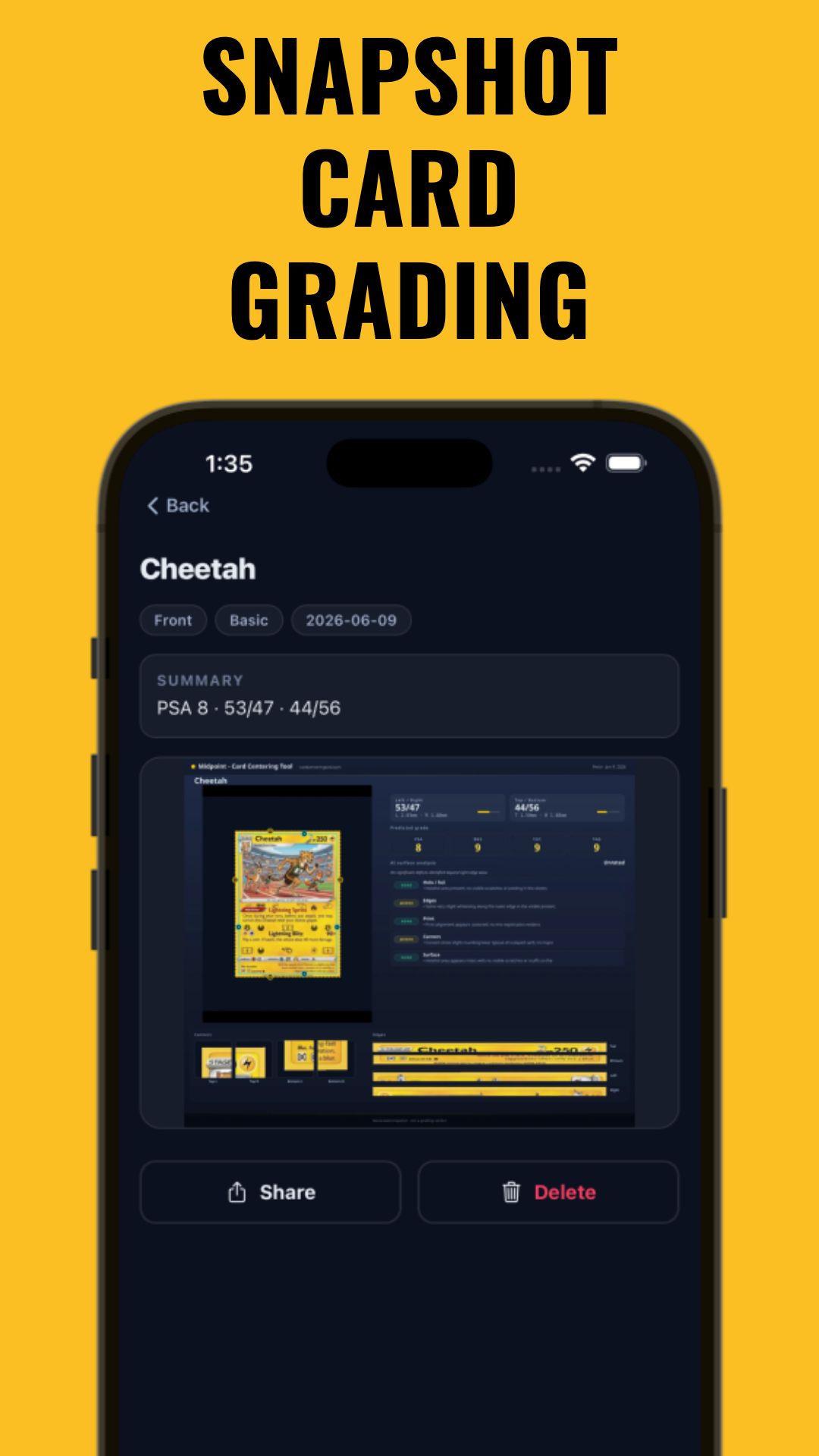
The Midpoint app does this on your phone: it measures centering to the millimeter and gives an estimated PSA, BGS, CGC, and TAG grade before you submit. That makes the break-even formula far more reliable.
Section 7: Complete Set Value, Volatility, and Estimated vs Sold Prices
Many collectors ask what a complete Into the Inklands set is worth. There are two different answers, and they are worth keeping apart.
Raw set value versus building the set
The paper value of a complete raw set is the sum of every card's market price, including the Enchanted tier. Most of that total comes from a small group of Enchanted cards, so the commons and uncommons add little.
The practical cost of assembling it is different:
- You pay market price for each missing card, plus shipping from multiple sellers.
- Enchanted cards are the bottleneck, since buying them singly costs far more than the bulk portion.
- Buying the set in pieces can cost more than the summed estimate, and selling it whole rarely recovers the full sum.
If you just want to play or complete the base 204, that is far cheaper than chasing every Enchanted.
Volatility and trends
Lorcana prices move. New set releases, tournament results, reprints, and hype cycles change demand. Enchanted cards can be especially sensitive because supply is thin. Don't assume today's number holds next month.
Estimated values versus actual sales
Market price on a tracker is an estimate built from listings and recent sales. Actual sold prices depend on condition, language, and timing. Before buying or selling:
- Check recent sold listings for your exact card, finish, and grade.
- Compare TCGplayer and Cardmarket.
- Ignore asking prices with no sales behind them.
Track and protect what you have
Track your collection so you can see its value over time, and store top cards properly. See how to store valuable cards to keep gem-quality condition intact.
Conclusion
Into the Inklands Lorcana cards value comes down to a few clear ideas. The set's money sits in the Enchanted tier, with Mickey Mouse - Trumpeter Enchanted #220 at the top, followed by names like Robin Hood, Ursula, Scrooge McDuck, The Sorcerer's Hat, and And Then Along Came Zeus (confirm exact rankings in the table). Lower rarities are mostly bulk. Finish, condition, centering, language, and edition decide where a specific copy lands.
Grading only makes sense where the gem-premium gap is bigger than your fees and your realistic odds of a PSA 10 are good. Check the table for the current gap, confirm with recent sales, and pre-grade before you submit. A free pre-grade in Midpoint can save you from sending in a card that was never going to pay off.
FAQ
Q: What is the most valuable card in Disney Lorcana Into the Inklands?
A: Per Midpoint's data, Mickey Mouse - Trumpeter Enchanted #220 is the set's top chase card. Other high-value cards are mostly Enchanted, and names often mentioned include Robin Hood, Ursula, Scrooge McDuck, The Sorcerer's Hat, and And Then Along Came Zeus. See the data table for exact figures as of 2026-10-28.
Q: How much is a complete Into the Inklands Lorcana set worth?
A: Add up each card's market price for the paper value. Most of the total comes from a handful of Enchanted cards. Actual cost to assemble the set is usually higher because of shipping and buying singles, and it is rarely recovered in full when selling.
Q: Which Into the Inklands cards are worth money?
A: The Enchanted cards first, then foil Legendaries and some foil Super Rares. Commons and Uncommons are mostly bulk unless a specific playable spikes in demand.
Q: How much is Mickey Mouse - Trumpeter Enchanted worth?
A: It is the most valuable card in the set per Midpoint's data. Its raw and graded values, including PSA 10, are in the data table as of 2026-10-28. Confirm against recent sold listings, since Enchanted prices can move quickly.
Q: Are Into the Inklands Enchanted cards valuable?
A: Yes. The Enchanted tier carries most of the set's value because of low pull rates and strong collector demand. Prices vary widely within the tier, so check each card individually.
Q: Do graded Into the Inklands cards sell for more than ungraded copies?
A: Generally yes, especially at PSA 10 on higher-value cards. But the premium varies by card and grade, and a PSA 9 may add little. Compare the raw-to-graded gap against grading fees before you submit.
Free to start
Try the Midpoint app
Grade any card from a photo, see its raw and PSA 10 value, and track what your collection is worth — free.
Get it on iPhoneGet it on Android