Legacy of the Master One Piece Cards Value: Raw vs PSA 10
Legacy of the Master One Piece cards value explained: chase cards, SP and manga variants, raw vs PSA 10 gaps, and which cards are worth grading.

Estimated reading time: 11 min
Key Takeaways
- Legacy of the Master One Piece cards value is top-heavy: a handful of gold, silver, manga and SP chase cards carry most of the set's worth, while ordinary commons and uncommons sit near bulk prices.
- The most valuable Legacy of the Master cards are led by the Marshall.D.Teach OP09-093 gold and silver SP variants, followed by alternate-art hits like Jewelry Bonney, Zoro-Juurou SP and Portgas.D.Ace SP.
- The Legacy of the Master PSA 10 value gap (the "gem premium") is only worth chasing on chase-tier cards. On cheap cards, grading fees usually exceed the premium.
- Always separate recent sold prices from asking prices and modeled market-cap estimates before trusting any number.
- Measure centering before you submit. Poor centering is a common reason a promising raw card misses a 10.
Card values — live data from Midpoint's card database, as of 2026-11-06. Prices move; Midpoint refreshes these daily.
| Card | Raw | PSA 10 | Gem premium | |
|---|---|---|---|---|
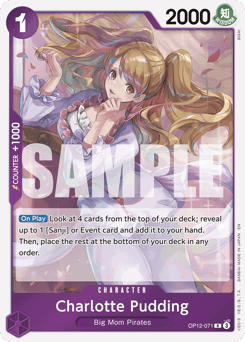 |
Charlotte Pudding #OP12-071 Legacy of the Master (2025) |
$0.82 | $1,275 | 1554.9× |
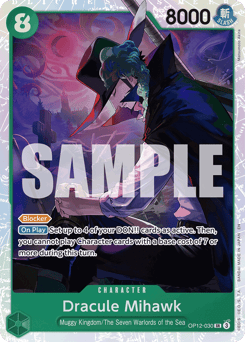 |
Dracule Mihawk #OP12-030 Legacy of the Master (2025) |
$128.99 | $234.79 | 1.8× |
 |
Morley #OP12-093 Legacy of the Master (2025) |
$2.10 | $149.98 | 71.4× |
 |
Boeuf Burst #OP12-060 Legacy of the Master (2025) |
$49.95 | $148.15 | 3× |
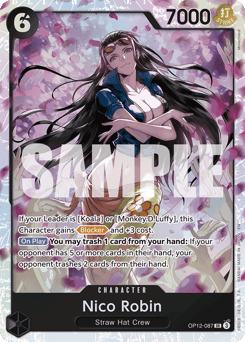 |
Nico Robin #OP12-087 Legacy of the Master (2025) |
$29.22 | $119.15 | 4.1× |
 |
Roronoa Zoro #OP12-020 Legacy of the Master (2025) |
$55.21 | $115.79 | 2.1× |
 |
Roronoa Zoro #OP12-113 Legacy of the Master (2025) |
$0.13 | $94.49 | 726.9× |
 |
Tashigi #OP12-031 Legacy of the Master (2025) |
$21.14 | $84.77 | 4× |
 |
Donquixote Rosinante #OP12-108 Legacy of the Master (2025) |
$25.15 | $80.43 | 3.2× |
 |
Kouzuki Hiyori #OP12-028 Legacy of the Master (2025) |
$5.04 | $69.57 | 13.8× |
 |
Silvers Rayleigh #OP12-001 Legacy of the Master (2025) |
$28.56 | $66.39 | 2.3× |
 |
Baby 5 #OP12-112 Legacy of the Master (2025) |
$28.79 | $64.92 | 2.3× |
Look up any card's current raw and graded value in Midpoint — and get an estimated grade before you pay to submit.
Table of Contents
- Section 1: Legacy of the Master One Piece Cards Value at a Glance
- Section 2: The Most Valuable Legacy of the Master Cards
- Section 3: How Gold, Silver, Manga, SP and Parallel Versions Change Value
- Section 4: A Practical Legacy of the Master Price Guide by Rarity
- Section 5: Raw vs Graded: Legacy of the Master PSA 10 Value and the Gem Premium
- Section 6: Which Legacy of the Master Cards Are Worth Grading
- Section 7: Price Sources, Trends and Whether to Collect or Invest
- Conclusion
- FAQ
Section 1: Legacy of the Master One Piece Cards Value at a Glance
Legacy of the Master One Piece cards value comes down to one structural fact: this is a chase-driven set. Like most modern One Piece Card Game releases, the worth of a full set is dominated by a small number of rare pulls. The rest is volume.
The data table below this section shows the tracked cards from Midpoint's database, with prices cited as of 2026-11-06. Use it as a snapshot, not a promise. Card prices move daily.
What a "complete set value" really measures
When a site quotes a complete-set total, it adds the market price of every priced card in the set. That number is useful for context, but it hides three things:
- Which cards you can realistically pull. You will never open a box and get one of every chase card.
- Which variants are counted. Some totals include parallels and alternate arts; others count base cards only.
- How the total was calculated. Sold-price averages and modeled estimates can differ widely.
English, Japanese and French markets
The same card number can carry very different prices depending on language. English is typically the deepest and most-traded market, Japanese often trades at its own level because of different print runs and collector demand, and French prints are thinner, so prices can swing on a few sales.
Never compare a Japanese raw price to an English PSA 10 price. Match language, variant and condition every time.
Why the headline number misleads
A set total is dragged upward by a few cards and dragged down by hundreds of low-value ones. A better question than "what is the set worth?" is "how much of that value sits in the top three or ten cards?" For Legacy of the Master, the answer is most of it. If you are opening packs, expect the median card to be worth very little and the outcome to hinge on whether you hit a chase.
Section 2: The Most Valuable Legacy of the Master Cards
The most valuable Legacy of the Master cards share a pattern: they are popular characters in scarce variants. Rarity of the pull and fan demand for the character both push prices up.
Marshall.D.Teach OP09-093: the gold and silver SP chase
Marshall.D.Teach OP09-093 leads the chase list in its gold and silver SP variants. Blackbeard is a fan-favorite antagonist, and the special treatments make these the headline hits collectors search for first. The gold and silver versions are separate cards in pricing terms, so always confirm which finish a listing is describing. Because the OP09 prefix normally denotes a different main set, also verify the set, card number and printing before relying on any listing. Check the data table for the as-of 2026-11-06 raw figures.
Jewelry Bonney manga and super alternate art
Jewelry Bonney in manga or super alternate-art form is the other major name in the conversation. Manga-style alternate arts are among the hardest pulls in modern One Piece sets, and they tend to command a premium over standard alternate arts. Because pulls are scarce, there are fewer sales, so a single high or low sale can move the average noticeably.
Zoro-Juurou SP, Portgas.D.Ace SP and the second tier
Zoro-Juurou SP and Portgas.D.Ace SP round out the major alternate-art hits. Both feature characters with huge fan followings, which keeps demand steady even when set hype cools.
- Top tier: Marshall.D.Teach OP09-093 gold and silver SP.
- Upper tier: Jewelry Bonney manga or super alternate art.
- Chase tier: Zoro-Juurou SP, Portgas.D.Ace SP and similar SP or alternate arts.
- Everything else: secret rares, leaders and standard parallels at modest premiums.
If you are trying to rank cards for a collection, rank by character appeal x variant scarcity, then verify against sold data.
Section 3: How Gold, Silver, Manga, SP and Parallel Versions Change Value
The same character can appear as a base card, a parallel, an SP and a manga alternate art, with wildly different prices. Understanding the ladder is the fastest way to read a Legacy of the Master price guide correctly.
The variant ladder, from cheapest to priciest
- Base card: the standard print, usually the cheapest version of any character.
- Foil or standard parallel: a modest bump. Foil alone rarely moves the needle on common cards.
- Alternate art (parallel): new artwork at a lower pull rate. A real premium, especially for popular characters.
- SP versions: special-treatment prints, including the gold and silver SP cards, which are scarcer still.
- Manga alternate art: black-and-white manga-panel styling at the very top of the scarcity curve.
Why finish matters as much as art
Gold and silver finishes create distinct SKUs. Two cards with the same name and number can be priced very differently, so searching by name alone is a classic way to misprice a card. Always check card number, variant label and language together.
Surface and print quality on special finishes
Foil-heavy and textured cards are more prone to surface scratches, print lines and edge whitening than flat base cards. That matters for grading: the very finishes that make a card valuable also make a flawless copy harder to find. A pristine copy of a high-end SP is therefore often worth considerably more than a lightly played one.
Centering also affects special treatments. Full-art and borderless designs make off-center prints obvious, and our guide on how centering impacts card value explains why even small shifts can separate a 9 from a 10.
Section 4: A Practical Legacy of the Master Price Guide by Rarity
A useful Legacy of the Master price guide lists each card with its card number, rarity, variant and market price. The data table in this post follows that format for tracked cards. Here is how to read the rest of the set.
Commons and uncommons: the low-median reality
Most cards in the set are commons and uncommons, and their median value is low. They matter for deck building and play, not for investment. A stack of them adds up to very little compared with a single chase card.
- Do not grade commons or uncommons unless the card has a specific play or sentimental reason.
- Do not count them when estimating what a box or case is worth.
Rares, super rares and leaders
Rares and super rares are where playable value often sits. Prices there depend on competitive demand as much as collectability, so they can move when the meta shifts. Leader cards can hold value if they anchor a popular deck archetype.
Secret rares, SPs and alternate arts
This is where collector value concentrates. When you look at the top three to ten cards by price, you will typically find a large share of the entire set's worth packed into them. That concentration is the single most important feature of the price list.
How to use the list
- Find the card by number (for example OP09-093), not just by name.
- Confirm the variant: base, parallel, SP, gold, silver or manga.
- Match the language of your copy.
- Compare the price to recent sold listings, not asking prices.
Following these four steps prevents the most common pricing mistakes, such as valuing a base card at an alternate-art price.
Section 5: Raw vs Graded: Legacy of the Master PSA 10 Value and the Gem Premium
The gem premium is the price gap between a raw Near Mint card and the same card in a top-grade slab. The Legacy of the Master PSA 10 value is almost always higher than raw, but how much higher depends on the card.
PSA 10 vs BGS 10 vs CGC and TAG
Each company defines its top grade differently. A PSA 10 is a single gem-mint tier, while a BGS 10 (Pristine) is rarer and treated as a separate premium product, distinct from the more common BGS 9.5. CGC and TAG have their own scales and market acceptance. Our breakdown of grading scale differences by company shows how to compare them fairly.
Population reports and scarcity
Population reports show how many copies each company has graded at each grade. For new sets, pops are low and rising. As more gems appear, the gem premium often compresses. On the flip side, a card that is hard to grade at 10 keeps a higher premium for longer. If you are weighing a scarce card, read our guide to grading low population cards first.
Why graded prices can mislead
- Thin sales: few PSA 10 sales means one outlier distorts the average.
- Asking vs sold: sellers list graded cards aspirationally.
- Grade lumping: PSA 9 and PSA 10 prices are not interchangeable.
For exact raw and graded figures on tracked cards, see the table (as of 2026-11-06) and confirm against recent sold comps before you buy or submit.
Section 6: Which Legacy of the Master Cards Are Worth Grading
Legacy of the Master cards worth grading are those where the expected graded value minus total cost beats simply selling raw. Total cost includes the grading fee, shipping, insurance and your time. Fees vary by company and service level, and they add up quickly once shipping and insurance are included, so low-value cards rarely make sense.
A simple grading ROI formula
Estimate your outcome across likely grades:
- Chance of a 10 x PSA 10 price
- Chance of a 9 x PSA 9 price
- Chance of an 8 or lower x that price
- Subtract the raw value you already hold and all grading costs
If the result is not clearly positive, keep the card raw. The ROI is strongest on chase cards where the PSA 10 gap is large relative to the fee.
Pre-grade before you pay
Many disappointing submissions come from flaws you could have spotted yourself: off-center prints, edge whitening, corner dings and surface scratches. Follow a step-by-step pre-grading process, and measure centering first, since it is the flaw you cannot fix.
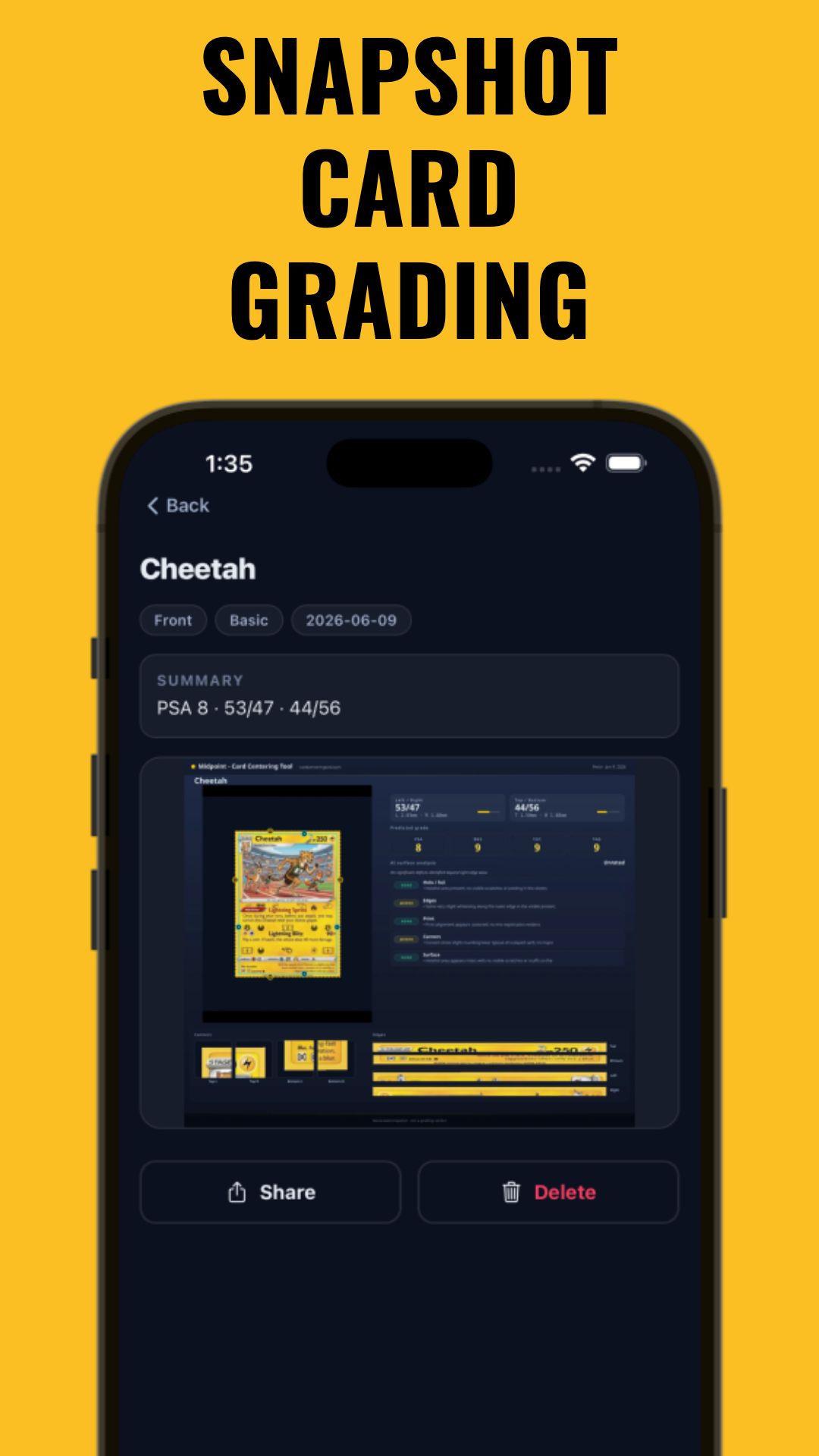
Midpoint measures centering down to the millimeter and gives AI-estimated PSA, BGS, CGC and TAG grades before you submit. You can also try the free centering calculator for a quick ratio check.
Who should grade what
- Grade: chase-tier SPs, gold and silver variants and manga or super alternate arts that look clean under light.
- Maybe grade: mid-tier alternate arts with a strong centering and surface read.
- Don't grade: commons, uncommons and bulk rares, or any card with visible flaws.
The best candidates are expensive raw cards with excellent centering, because the gem premium has the most room to pay off.
Section 7: Price Sources, Trends and Whether to Collect or Invest
Two people can quote different Legacy of the Master One Piece cards value figures and both be "right", because they are using different sources. Know which one you are looking at.
Sold prices, asking prices and modeled estimates
- Recent sold prices: what buyers actually paid. The most reliable signal.
- Seller asking prices: what sellers hope to get. Often higher and slower to reflect drops.
- Modeled market-cap estimates: calculated totals based on assumptions. Good for context, poor for pricing a single card.
The figures in this post's table come from Midpoint's database as of 2026-11-06. Treat any single price as a point in time.
Price trends and daily changes
New-set prices often move fastest in the first weeks after release, as supply floods in and early hype fades or builds. Chase cards can swing day to day, and low-volume variants swing more. Track a card over weeks, not hours, before drawing conclusions.
Collecting vs investing
Collect Legacy of the Master for the characters and art you love. Treat investing as speculative: prices can fall as supply grows, and value is concentrated in a few cards, so one chase card can make or break a position. Sensible habits include:
- Buy the specific variants you want, not sealed hope.
- Protect condition from day one with good sleeves and holders. Our guide on how to store valuable cards covers the basics.
- Track your collection's value over time in a portfolio tool such as Midpoint.
This is not financial advice. Only spend what you are comfortable holding through volatility.
Conclusion
Legacy of the Master One Piece cards value is concentrated at the top. The Marshall.D.Teach OP09-093 gold and silver SP variants lead the chase list, with Jewelry Bonney manga or super alternate art, Zoro-Juurou SP and Portgas.D.Ace SP behind them. Everything below that is mostly bulk.
For graded cards, the gem premium decides everything. Compare raw and PSA 10 prices using recent sold data, check population reports, factor in the full grading cost, and only submit cards with clean centering and surface. Before you pay, pre-grade with Midpoint to see an estimated grade and centering ratio, then decide if the card is truly worth grading.
FAQ
Q: What is the most expensive Legacy of the Master One Piece card?
A: The top of the chase list is led by the Marshall.D.Teach OP09-093 gold and silver SP variants. Check the table in this post for the as-of 2026-11-06 price, since chase prices change often.
Q: How much is the Marshall.D.Teach SP gold card worth?
A: It is one of the highest-valued cards in the set, but the exact figure depends on condition, language and recent sales. Use sold listings and the data table as of 2026-11-06, and compare raw against graded.
Q: What are the chase cards in Legacy of the Master?
A: The main chases are the Marshall.D.Teach OP09-093 gold and silver SPs, Jewelry Bonney manga or super alternate art, Zoro-Juurou SP and Portgas.D.Ace SP, along with other SP and alternate-art hits.
Q: How much is the complete Legacy of the Master card set worth?
A: A complete-set total adds every priced card, but most of that value sits in a few chase cards. It also varies by English, Japanese and French markets and by which variants are counted. Always check the source method.
Q: Are Legacy of the Master One Piece cards worth collecting or investing in?
A: They are worth collecting if you like the characters and art. As an investment they are speculative, since value is concentrated in a few cards and prices can shift as supply grows.
Q: How much are Legacy of the Master cards worth graded PSA 10?
A: PSA 10 prices are higher than raw for chase cards, but the gap varies by card and by population. Compare recent PSA 10 sold prices to raw Near Mint prices and subtract grading costs before submitting.
Free to start
Try the Midpoint app
Grade any card from a photo, see its raw and PSA 10 value, and track what your collection is worth — free.
Get it on iPhoneGet it on Android