
Lorcana Card Prices Rising November 2026: Buy or Sell?
Lorcana card prices rising in November 2026: how to read the 30-day movers, raw vs PSA 10 gaps, and decide whether to buy, hold, sell or grade.


Estimated reading time: 9 min
Key Takeaways
- Lorcana card prices rising in November 2026 is a card-by-card story. A few cards moving up does not mean the whole market is rising.
- The 30-day movers table in this post shows raw and PSA 10 values as of 2026-11-15. Use it as a starting list, not a buy signal.
- Rankings change with the timeframe. A card that leads on 30 days can be flat on 90 days, or already falling this week.
- Always confirm the exact printing, foil type, card number and near-mint condition before you trust a price.
- Compare the raw vs PSA 10 gap against grading costs and your card's centering before you submit anything.
Lorcana card prices rising in November 2026 is the headline many collectors are searching for, and it is easy to get wrong. A single spike can make the whole Lorcana card market look hotter than it is. This guide walks through ten checks for trending Lorcana cards and Lorcana cards going up in value, so you can decide whether to buy, hold, sell or grade.
The data table in this post lists the 30-day risers, with raw and PSA 10 values as of 2026-11-15. I only quote figures that appear in that table. Anything not in it, such as exact percentages for a given card, you should check live before acting.
30-day price movers — live data from Midpoint's card database, as of 2026-11-15. Prices move; Midpoint refreshes these daily.
| Card | Raw | PSA 10 | 30-day | |
|---|---|---|---|---|
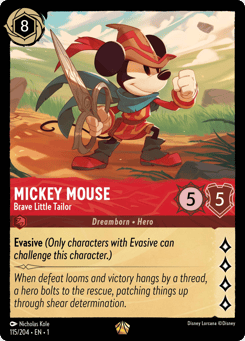 |
Mickey Mouse #115/204 The First Chapter (2023) |
$13.14 | $553.11 | +140.2% |
 |
Invited to the Ball #6/C1 Challenge Promos (2024) |
$1,850 | $14,364 | +82.3% |
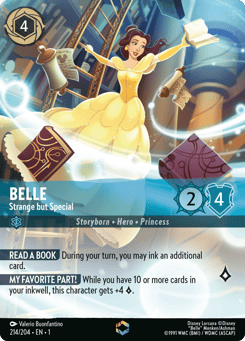 |
Belle #214/204 The First Chapter (2023) |
$198.09 | $920.78 | +9.6% |
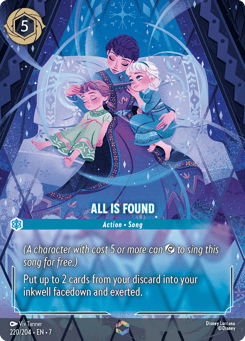 |
All Is Found #220/204 Archazia's Island (2025) |
$293.67 | $2,292 | +6.3% |
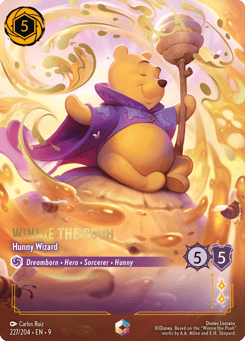 |
Winnie the Pooh #227/204 Fabled (2025) |
$1,459 | $4,187 | +4.4% |
 |
Mickey Mouse #242/204 Fabled (2025) |
$3,875 | $12,605 | +1.4% |
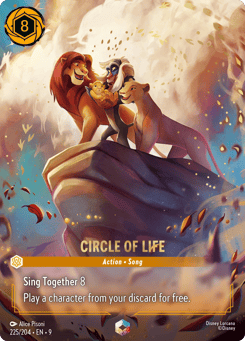 |
Circle of Life #225/204 Fabled (2025) |
$576.69 | $1,908 | +1.2% |
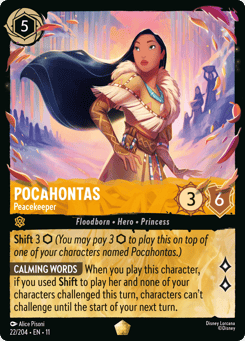 |
Pocahontas #22/204 Winterspell (2026) |
$20.37 | $2,316 | +0.3% |
 |
Scrooge McDuck - Reformed Ebenezer #235 Lorcana Winterspell |
$183.89 | $830.00 | 0% |
 |
Pocahontas & Meeko - Adventurous Friends #227 Lorcana Attack of the Vine |
$95.26 | $500.00 | 0% |
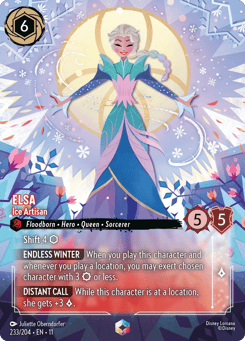 |
Elsa #233/204 Winterspell (2026) |
$714.00 | $2,160 | 0% |
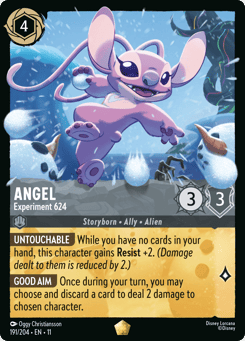 |
Angel #191/204 Winterspell (2026) |
$40.29 | $2,333 | 0% |
Look up any card's current raw and graded value in Midpoint — and get an estimated grade before you pay to submit.
1. Start With the 30-Day Movers Table
Open the table in this post first. It shows which Disney Lorcana cards moved up the most over the last 30 days, with raw and PSA 10 values as of 2026-11-15. That window is long enough to filter out one-day noise and short enough to show what is actually trending now.
For each card in the table, ask three questions:
- Is the raw price rising, the PSA 10 price rising, or both?
- Is the card low-priced, where a few sales can swing the number, or already expensive?
- Is there an obvious reason, such as a tournament deck, a new set or a reprint rumor?
A big percentage gain on a cheap card can reflect a handful of sales. A smaller gain on an expensive card often says more about real demand. Read both the percentage and the dollar change.
2. Check Whether Enchanted and Iconic Cards Are Driving the Gains
In many Lorcana price rallies, the headline gains come from the rarest tiers: Enchanted and Iconic cards. They tend to have low supply relative to demand, and collectors often chase them regardless of how the card plays.
When you scan the table, count how many risers are Enchanted or Iconic. If most of them are, the move is a collector-demand story. That tends to be driven by a few popular characters and can reverse as quickly as it started.
- Check the character's popularity. Fan-favorite Disney characters often hold demand longer.
- Check the set. Older, out-of-print sets have less new supply.
- Compare with the card's own 90-day history to see if this is a new high or a recovery.
3. Look at Promo and Cold Foil Cards Separately
Promo and Cold Foil cards behave differently from standard set cards. Promos often have limited, event-based distribution, so supply is hard to estimate. Cold Foil cards are a distinct foil treatment with their own pricing, often well above the regular foil of the same card.
If a Promo or Cold Foil card shows up in the movers list, make sure you are looking at that exact version. Many price mix-ups happen when someone sees a high number and assumes it applies to the cheaper printing of the same card.
- Match the name and the printing before comparing prices.
- Treat thin-supply Promos as high-volatility. A single listing can move the price.
- Do not confuse a Cold Foil price with a standard foil price.
4. Separate Playable Cards From Pure Chase Cards
There are two engines behind rising Lorcana prices. Chase cards rise because collectors want them. Playable cards rise because decks need them. The second kind is often steadier but can drop fast after a rotation, errata or ban.
For each riser, decide which engine is at work:
- Playable: usually a common to rare card showing up in winning lists. Demand is repeatable, but it follows the meta.
- Chase: usually a high-rarity or alt-art card. Demand is emotional, and supply is the main lever.
- Both: the strongest case, because players and collectors compete for the same copies.
A playable that spiked on the back of one tournament result is a different trade from an Enchanted that has climbed steadily for months.
5. Compare Performance by Set: Fabled, Hyperia City, Archazia's Island and More
Set-level trends often explain individual moves. Newer releases pull attention and money away from older ones, while sold-out sets can sometimes quietly appreciate. When you review the table, group the risers by set and see whether one set shows up repeatedly.
Check recent releases, including Fabled, Hyperia City and Archazia's Island, alongside older sets. If many risers come from one set, that set may be getting a demand boost. If risers are scattered, individual card factors matter more.
- Don't assume a set "is up" because its top card is. Look at the spread across several cards.
- Watch for new-set effects: when a set launches, cards from the previous set can soften as collectors rotate their money.
- Sealed product and singles don't always move together. Sealed can rise while singles cool, or the reverse.
6. Understand TCGplayer vs Cardmarket Pricing
The same card can show different prices depending on the source. TCGplayer is US-centric and priced in USD. Cardmarket is Europe-centric and priced in EUR. The two markets have different supply, different buyer pools and different fee structures.
Price methodology matters too. Some figures are market prices based on recent sales, some are lowest listings, and some are averages. A "price" built from last sold data will react differently from one built from listings.
- Never compare a USD figure with a EUR figure without converting.
- Check whether the number is a market price, a lowest listing or a sold average.
- A card that is rising on one marketplace but flat on the other may be a regional story, not a global one.
7. Verify Near-Mint Condition, Foil Variant and Card Number
Before you trust any price, confirm what the price actually refers to. Market prices are usually quoted for near-mint copies. A card with whitening, scratches or poor centering will sell for less.
Identify the card precisely:
- Card number and set: the same character appears in multiple sets and rarities.
- Foil or non-foil: foil versions can carry a large premium.
- Special treatment: Enchanted, Iconic, Promo and Cold Foil are all separate listings.
Centering is one of the easiest condition factors to check yourself. Our guide on how centering impacts card value explains why it can separate a top grade from an also-ran.
8. Compare the Raw vs PSA 10 Gap Before You Grade
The table shows both raw and PSA 10 values as of 2026-11-15. The gap between them is the first number to look at if you're thinking about grading. A wide gap means a high-grade copy could be worth much more than a raw one. A narrow gap means grading may not pay for itself.
Then be realistic about the odds. A PSA 10 price is only relevant if your card can actually earn a 10. Subtract grading fees, shipping and the chance of a lower grade. Our step-by-step pre-grading guide shows how to inspect corners, edges, surface and centering first.
- Wide raw-to-PSA 10 gap plus strong centering: grading may be worth considering.
- Narrow gap or visible flaws: keep it raw and sell or hold.
- Remember each company scores differently. See grading scale differences by company.
With Midpoint, you can measure centering and get an estimated PSA, BGS, CGC and TAG grade before you pay to submit. It's free on iOS and Android.
9. Read Price History: Daily, Weekly, 30-Day and 90-Day
Rankings change with the window you pick. A daily mover list rewards one-off spikes. A weekly list shows short bursts. The 30-day view, which this post's table uses, shows sustained interest. A 90-day view shows whether a card is in a real trend or just bouncing back from a dip.
A simple read of a price chart:
- Rising on 30 days and 90 days: a trend with some staying power.
- Rising on 30 days, flat or down on 90: likely a recovery or a short-term pop.
- Up this week only: treat as noise until it holds.
Don't forget the other side. Biggest drops matter too. If many cards are falling while a few rise, the wider market may be flat or down even though the risers grab the attention. Count both lists before drawing conclusions.
Tracking your own collection makes this easier. Midpoint's portfolio tracking shows your collection's value over time, so you can see how these moves affect you.
10. Decide: Buy, Hold, Sell or Monitor
Rising prices create pressure to act. A simple decision framework helps you avoid chasing the top.
- Buy: only if you want the card long term, the price has held across 30 and 90 days, and you've verified the exact printing and condition.
- Hold: if you already own it, the trend is intact and you have no need to sell.
- Sell: if the spike is days old on thin sales, or the card has reached a price you'd be happy with. Selling into a sudden spike is often easier than buying one.
- Monitor: if the move looks like hype. Add the card to a watchlist and check back after a week or two.
Protect what you hold. A rising card is only worth the premium if it stays near-mint, so see our guide on how to store valuable cards. None of this is financial advice. Card prices can fall as quickly as they rise.
Conclusion
Lorcana card prices rising in November 2026 is best read as a set of individual stories: Enchanted and Iconic chase cards, Promos and Cold Foils, playables, and set-level shifts. Use the 30-day table in this post for the as-of-2026-11-15 raw and PSA 10 values, then verify the printing, condition and price source before you act. Compare against the 90-day history and the drop list, and decide whether to buy, hold, sell, monitor or grade.
If you're considering grading a riser, check its centering first. Try Midpoint to get an estimated grade and track your collection's value over time.
FAQ
Q: Which Lorcana cards are going up in price in November 2026?
A: The data table in this post lists the Lorcana cards that moved up the most over the last 30 days, with raw and PSA 10 values as of 2026-11-15. Check which are Enchanted, Iconic, Promo or Cold Foil, and confirm the exact printing before relying on a price.
Q: What is the biggest Lorcana card price increase this week?
A: The answer depends on the timeframe. Weekly and daily lists reward short spikes, while the 30-day table here shows more sustained movers. Check a card's weekly chart on a live price source and compare it with its 30-day and 90-day trend.
Q: Why are Lorcana card prices rising right now?
A: Common drivers include scarcity of high-rarity cards, collector demand for Enchanted and Iconic chase cards, playable cards gaining meta relevance, and new-set effects that shift attention and money. Each riser usually has its own mix of these factors.
Q: Are Lorcana cards increasing in value or falling overall in November 2026?
A: A list of risers doesn't show the whole market. Look at both the biggest gainers and the biggest drops, across singles and sealed product, and over 30 and 90 days, before deciding whether the broader market is up or down.
Q: Which Lorcana set has increased the most in value?
A: Group the risers in the table by set, including recent releases like Fabled, Hyperia City and Archazia's Island, and see which set appears most often. A single top card isn't enough to call a whole set up. Look at the spread across many cards.
Q: Should I buy or sell rising Lorcana cards in November 2026?
A: It depends on your goals. Buy only cards you want long term and whose trend holds across 30 and 90 days. Consider selling fresh spikes on thin sales. Monitor anything that looks like hype. Also compare the raw vs PSA 10 gap against grading costs before submitting. This is not financial advice.
Free to start
Try the Midpoint app
Grade any card from a photo, see its raw and PSA 10 value, and track what your collection is worth — free.
Get it on iPhoneGet it on Android


