MTG Card Prices Rising November 2026: 10 Cards to Watch
MTG card prices rising November 2026: the cards, drivers and risks behind the latest spikes, plus how to verify prices and decide to buy, hold, sell or grade.

Estimated reading time: 9 min
Key Takeaways
- MTG card prices rising in November 2026 appear to come from three main drivers: new competitive decklists, Commander demand, and Star Trek release speculation.
- Low supply can spike a price in days. Sustained demand is what keeps it there.
- Foils and special treatments of The One Ring, Ms. Bumbleflower and Y'shtola are the cards to track for month-over-month strength.
- Always verify a spike with TCGplayer Market Price, recent sales counts, condition, printing and foil treatment before you buy.
- Price figures in this post's data table are as of 2026-11-11. We don't quote numbers in the prose, so check the table and re-verify before acting.
If you're tracking MTG card prices rising in November 2026, the useful question isn't just what went up. It's why it went up and whether the move will last. The MTG card market in November 2026 is a mix of real demand, speculation and thin supply.
Below are the trending MTG cards and the forces behind them. These are the cards going up in value that matter for your buy, hold, sell or grade decisions. The data table in this post shows raw and PSA 10 values as of 2026-11-11. Here we focus on how to read it.
30-day price movers — live data from Midpoint's card database, as of 2026-11-11. Prices move; Midpoint refreshes these daily.
| Card | Raw | PSA 10 | 30-day | |
|---|---|---|---|---|
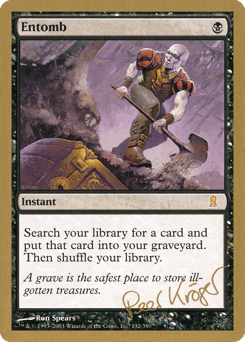 |
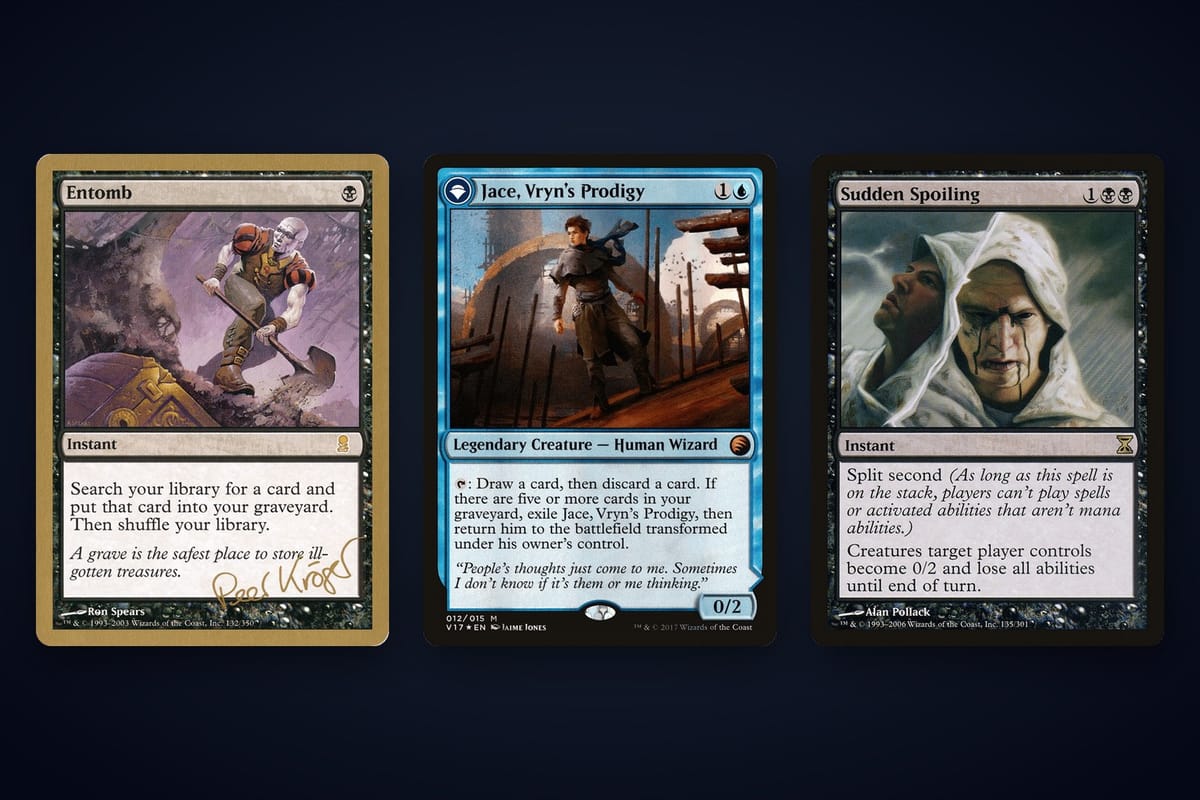
Entomb #pk132 World Championship Decks 2003 (2003) |
$11.29 | — | +73.2% |
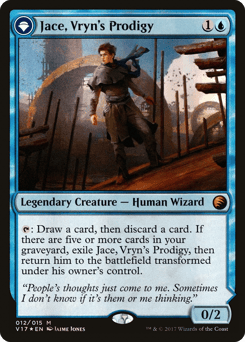 |
Jace, Vryn's Prodigy // Jace, Telepath Unbound #12 From the Vault: Transform (2017) |
$10.88 | — | +60% |
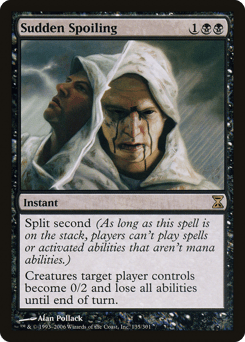 |
Sudden Spoiling #135 Time Spiral (2006) |
$32.50 | — | +47.7% |
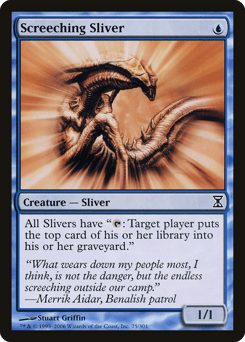 |
Screeching Sliver #75 Time Spiral (2006) |
$10.10 | — | +46.2% |
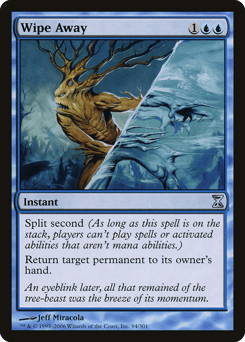 |
Wipe Away #94 Time Spiral (2006) |
$25.96 | — | +45.5% |
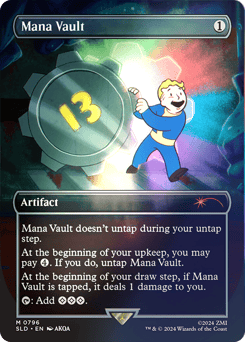 |
Mana Vault #796★ Secret Lair Drop (2019) |
$4,500 | — | +44.3% |
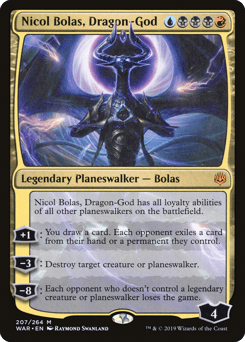 |
Nicol Bolas, Dragon-God #207 War of the Spark (2019) |
$14.74 | — | +42.7% |
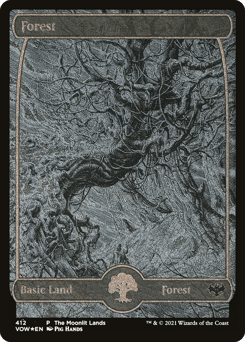 |
Forest #412 Innistrad: Crimson Vow (2021) |
$25.82 | — | +38.6% |
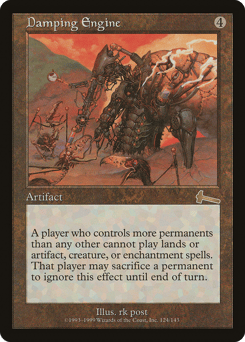 |
Damping Engine #124 Urza's Legacy (1999) |
$22.99 | — | +32.6% |
 |
Evolutionary Leap #362 Time Spiral Remastered (2021) |
$13.81 | — | +25.4% |
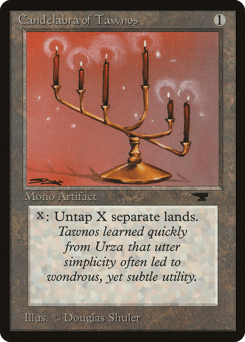 |
Candelabra of Tawnos #43 Antiquities (1994) |
$2,750 | — | +25% |
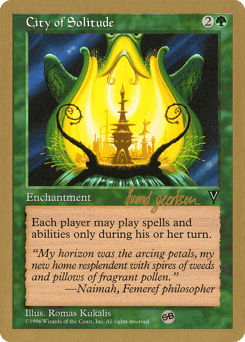 |
City of Solitude #sg102sb World Championship Decks 1997 (1997) |
$11.86 | — | +23.5% |
Look up any card's current raw and graded value in Midpoint — and get an estimated grade before you pay to submit.
1. Biggest Weekly and Monthly Movers: How to Read the List
The largest percentage gains usually come from cheap cards. A bulk-level rare can double on a handful of sales. A staple that's already expensive moves far less in percentage terms, but a small percentage on a pricey card can still mean real money.
Sort the table two ways before you do anything else:
- Weekly movers: these show what the market is reacting to right now, such as a tournament result, a spoiler or a content creator.
- Monthly movers: these filter out one-day noise and show where demand is building.
Cards that appear on both lists are the strongest candidates. A card that's up on the week but flat on the month may just be a blip.
2. The Top Five Price Increases Under $50
For most collectors, the sweet spot is cards that gained sharply but still sit under the $50 mark based on recent Near Mint sales. They're affordable enough to buy a playset, and they're usually liquid enough to sell if the thesis fails.
When you review the under-$50 movers in the table, check three things for each one:
- Is the gain tied to a specific deck, set or format?
- Are there multiple recent sales, or just one or two?
- Is there a reprint risk, such as a precon, a Secret Lair or a new set?
If you can answer yes, yes, no, the card has a better chance of holding its gain.
3. The One Ring (Foil and Special Treatments)
The One Ring is the kind of card that shows how foil and special-treatment printings can behave differently from regular versions. The standard printing trades on broad demand across Commander and Modern. The scarcer treatments trade on collector demand and tight supply, so their prices tend to move in steadier steps.
That's why it can show steadier month-over-month gains rather than a one-week pop. The thing to watch is the gap between printings. If the foil or special version pulls away from the regular one, collectors may be paying for scarcity, not playability.
- Compare each printing separately. Never use the non-foil price to judge a foil.
- Check the sales count. High-value cards can trade only a few times a week.
4. Ms. Bumbleflower
Ms. Bumbleflower is a good example of a card where finish matters. Special-treatment copies can carry the month-over-month gains while the regular version barely moves.
If you're considering a copy, decide whether you're buying to play or to hold. Players should buy the cheapest Near Mint copy. Holders should favor the scarce treatments and keep them in top condition. Our guide on how to store valuable cards covers sleeves, toploaders and humidity so a gain on paper doesn't evaporate at grading time.
5. Y'shtola
Y'shtola shows up in the November price conversation alongside the other foil and special-treatment cards with consistent monthly gains. This may be a sign of collector demand rather than a single tournament result.
The practical advice is to track it as part of a basket. If several special-treatment cards are rising together, the cause is likely broad collector interest. If only one moves, look for a specific trigger such as a new decklist or a content-creator video.
6. Urza, Chief Artificer and Star Trek Spacecraft Cards
Spacecraft cards appear to be rising on Star Trek release speculation. Buyers may expect Starship-themed and Spacecraft-type cards to gain value once the set arrives. Urza, Chief Artificer may be caught up in that same speculation because it rewards artifact creatures and artifact-heavy builds.
This is a speculative driver, so treat it carefully:
- Speculation can reverse the moment the full spoiler season clarifies what the set actually does.
- Cards bought on hype often fall back if a reprint is announced.
- If you buy, size the position as money you can afford to see go sideways.
The safest approach is to buy only cards that were already useful in Commander before the rumors, so you're not relying on the speculation alone.
7. Reality Fracture Cards in Modern and Competitive Lists
Reality Fracture cards are reportedly gaining from new Modern and other competitive decklists. Tournament results are generally a stronger driver than speculation because a deck that wins can create repeat buyers who need four copies.
To judge whether the gain is durable, look at:
- How many top-finishing lists run the card, and in what quantity.
- Whether the deck is a one-off or a growing archetype.
- Whether the card has a cheaper alternative that players could swap in.
Competitive spikes tend to be sharp. They can fade just as fast if a ban or a counter-deck appears.
8. Commander Demand: Undead Warchief and Uchuulon
Commander is the quiet engine behind many price moves. Undead Warchief and Uchuulon may be affected by Commander demand and precon upgrades. When a precon ships, owners look for upgrades that fit the deck, and those targeted cards can climb quickly.
Commander-driven gains are often steadier than tournament-driven gains because Commander players typically buy one copy each rather than playsets. The flip side is that Commander cards are prone to reprints in new precons, which can erase the gain quickly.
9. Sleeper Cards and Standard Metagame Signals
The best time to buy is before a price moves, and the signals are public. Look at Standard metagame results, tournament play rates and decklists from recent events.
- Rising play rate, flat price: a possible sleeper.
- Falling play rate, rising price: possibly speculation, so be cautious.
- Consistent inclusion across archetypes: more durable demand.
Standard rotates, so cards that are only good in Standard carry a built-in expiry. Cards that also see play in Modern or Commander tend to hold value better.
10. Low Supply, Sales Volume and Liquidity: Real Demand or a Blip?
Not every spike reflects demand. When listings are thin, a few purchases can clear the cheap copies and push the Market Price up. That can look like a trend when it's really a supply problem.
Use this quick test:
- Recent sales count: many sales at the new price suggest real demand.
- Listing depth: if the next-cheapest copies are far above the market price, the spike may be fragile.
- Time: a price that holds for weeks is more trustworthy than one that appeared yesterday.
Liquidity matters when you sell. A card that jumps on three sales may be hard to offload at that price.
11. Cards Losing Value and Reprints That Can Reverse Gains
Every price report has a flip side. Reprints, new variants and ban announcements can wipe out November gains.
- Reprint risk: Commander precons, Secret Lair drops and supplemental sets are the usual culprits.
- Variant dilution: a new treatment can pull demand away from older printings.
- Metagame shifts: a deck that falls out of favor can take its key cards with it.
If a card has risen sharply and is now at risk of a reprint, selling into strength is often smarter than waiting for a higher price.
12. How to Verify MTG Market Prices Before You Act
Never trust a headline price without checking it. Here's a simple verification routine:
- TCGplayer Market Price: use it as the baseline, not the lowest listing.
- Recent sales count: more sales mean a more reliable price.
- Condition: Near Mint is the standard. Lightly played copies sell for less.
- Printing: confirm set, collector number and art version.
- Foil treatment: foil, etched foil and other special foils are separate markets.
If you hold high-value cards, grading can add a premium, but only when the card grades well. Centering is a common reason a card falls short, so read how centering impacts card value and use the pre-grading steps before you pay a fee. The differences between grading scales also matter when you compare raw and PSA 10 values.
To keep track of what you own as prices move, Midpoint lets you look up raw and graded values, estimate a grade from a photo and follow your collection's value over time.

Conclusion
The MTG card market in November 2026 appears to be moving on competitive results, Commander demand and Star Trek speculation. The strongest gains pair real demand with solid sales volume. The weakest are thin-supply spikes and hype that a reprint can undo.
Use the table to find the movers, verify each one with recent sales and condition, and decide whether you're buying to play, hold, sell or grade. Re-check the numbers before you act, since all the figures in the table are as of 2026-11-11.
FAQ
Q: Which MTG cards are going up in price in November 2026?
A: The cards covered here include The One Ring, Ms. Bumbleflower, Y'shtola, Urza, Chief Artificer, Reality Fracture cards, Undead Warchief and Uchuulon, along with Star Trek spacecraft cards. See the data table for raw and PSA 10 values as of 2026-11-11.
Q: Why are MTG spacecraft cards rising in price before the Star Trek release?
A: Buyers appear to be speculating that Star Trek's themes will boost demand for spacecraft cards. Because it's speculation, the gains can reverse if spoilers or reprints don't match expectations.
Q: What caused Urza, Chief Artificer to spike in price?
A: The spike appears to be linked to Star Trek release speculation, since the card fits artifact-heavy builds. Check recent sales to see whether the gain is backed by real buying or a thin supply.
Q: Which MTG cards have increased in price every month?
A: High-value foil and special-treatment cards such as The One Ring, Ms. Bumbleflower and Y'shtola appear to show the most sustained month-over-month gains. Compare each printing separately and confirm in the table.
Q: Are November 2026 MTG price spikes caused by real demand or low supply?
A: Both happen. Check the recent sales count, listing depth and how long the price has held. Many sales at the new price point to real demand, while a spike on a few sales suggests low supply.
Q: Which MTG cards should I buy before their prices rise further?
A: Look for cards with rising tournament play rates, a flat price and low reprint risk. Confirm the price with TCGplayer Market Price, sales counts, condition and foil treatment, and never spend more than you can afford to lose on speculation.
Free to start
Try the Midpoint app
Grade any card from a photo, see its raw and PSA 10 value, and track what your collection is worth — free.
Get it on iPhoneGet it on Android