Two Legends One Piece Cards Value: Chase Cards & PSA 10
Two Legends One Piece cards value guide: most valuable cards, raw vs PSA 10 gaps, version differences, and which cards are worth grading.

Estimated reading time: 11 min
Key Takeaways
- Two Legends one piece cards value is concentrated in a small group of chase cards (leaders, alternate arts, manga rares and promos). Most of the set is bulk.
- The gap between a raw card and a PSA 10 is the number that decides whether grading pays off. Compare both columns in the data table, as of 2026-11-06.
- Identify your version first. A normal and a parallel of the same card can sit in very different price brackets.
- Centering and surface condition decide whether a Two Legends card can realistically reach a gem grade.
- Check several price sources (TCGplayer, eBay sold listings, Cardmarket) before you buy, sell, or submit.
Card values — live data from Midpoint's card database, as of 2026-11-06. Prices move; Midpoint refreshes these daily.
| Card | Raw | PSA 10 | Gem premium | |
|---|---|---|---|---|
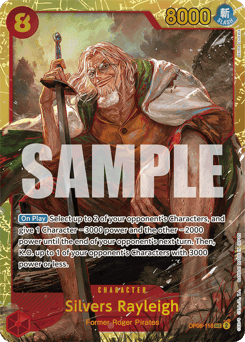 |
Silvers Rayleigh #OP08-118 Two Legends (2024) |
$504.10 | $796.06 | 1.6× |
 |
Portgas.D.Ace #OP08-052 Two Legends (2024) |
$43.86 | $170.56 | 3.9× |
 |
Tony Tony.Chopper #OP08-001 Two Legends (2024) |
$64.35 | $130.50 | 2× |
 |
Charlotte Pudding #OP08-058 Two Legends (2024) |
$76.61 | $100.92 | 1.3× |
 |
Tony Tony.Chopper #OP08-007 Two Legends (2024) |
$24.68 | $97.60 | 4× |
 |
Jewelry Bonney #OP08-105 Two Legends (2024) |
$11.25 | $77.73 | 6.9× |
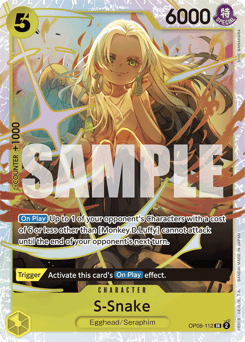 |
S-Snake #OP08-112 Two Legends (2024) |
$7.03 | $76.70 | 10.9× |
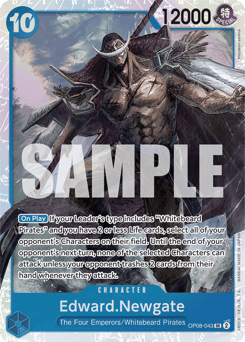 |
Edward.Newgate #OP08-043 Two Legends (2024) |
$3.92 | $66.06 | 16.9× |
 |
Black Maria #OP08-074 Two Legends (2024) |
$8.48 | $62.01 | 7.3× |
 |
Kaido #OP08-079 Two Legends (2024) |
$5.25 | $61.73 | 11.8× |
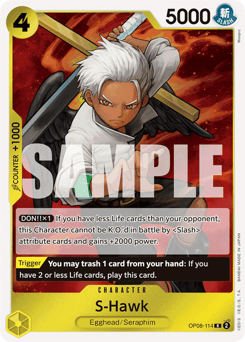 |
S-Hawk #OP08-114 Two Legends (2024) |
$0.14 | $60.92 | 435.1× |
 |
Carrot #OP08-021 Two Legends (2024) |
$16.75 | $51.46 | 3.1× |
Look up any card's current raw and graded value in Midpoint — and get an estimated grade before you pay to submit.
Table of Contents
- Section 1: Two Legends One Piece Cards Value at a Glance
- Section 2: Most Valuable Two Legends Cards and Chase Targets
- Section 3: Normal, Parallel, Alt Art, Manga and Promo Versions
- Section 4: Two Legends PSA 10 Value and the Gem-Premium Gap
- Section 5: Which Two Legends Cards Are Worth Grading
- Section 6: Pre-Grading Two Legends Cards: Centering and Condition
- Section 7: Two Legends Price Guide: Sources, Trends and Sealed Product
- Conclusion
- FAQ
Section 1: Two Legends One Piece Cards Value at a Glance
If you want to know Two Legends one piece cards value, start with one fact: this set is top-heavy. Two Legends (OP08) has a long card list, but a handful of cards carry most of the money. The rest are commons, uncommons and playable rares that rarely justify more than a sleeve.
This guide uses Midpoint's own database figures, as of 2026-11-06. The data table shows the specific entries, raw and graded. Treat any number as a snapshot, because trading card prices move.
How the set's value is structured
Value in a One Piece set tends to stack in layers:
- Top layer: leaders, manga rares (where the set has them), and the strongest alternate arts of popular characters.
- Middle layer: super rares, secret rares, and parallel versions of in-demand cards.
- Base layer: everything else, including most normal-art commons and uncommons.
Character popularity and competitive playability both feed demand. A fan-favorite character in a parallel treatment can outprice a stronger game card in plain art.
Why the numbers can mislead
A single headline price hides a lot. The same card number can exist as a normal print, a parallel, and a promo. Raw and graded prices also differ sharply, and a graded price only applies if your copy actually grades that high.
So read every price with three questions in mind:
- Which version is it?
- Is it raw or graded, and by which company?
- Where did the number come from?
The sections below answer each in turn. If you only want a quick lookup, the data table covers it. If you are deciding what to buy or submit, keep reading.
Section 2: Most Valuable Two Legends Cards and Chase Targets
The most valuable Two Legends cards are not random. They tend to cluster around beloved characters, leader cards, and rare treatments. These names are commonly discussed as the set's top end.
The usual chase cards
These are names that often come up when people discuss the set's top end:
- Tony Tony.Chopper (OP08-001): the set's headline leader, and the card many buyers search for first. Its different versions price very differently, so check which one you are looking at.
- Marco: a recognizable character whose rare treatments can draw collector demand.
- Charlotte Pudding: a popular character often mentioned in the set's chase list.
- Silvers Rayleigh: a fan-favorite legend whose premium versions can attract both players and collectors.
- Nami: a perennial favorite across One Piece sets, and a character with historically strong collector demand.
- Drum Kingdom promos: promotional cards tied to the set, generally valued for scarcity and the way they were distributed.
Look up each by name in the data table for the exact raw and graded figures as of 2026-11-06. I deliberately do not restate prices from memory, because stale numbers do more harm than none.
What makes a card a chase card
Several factors combine:
- Character appeal: Straw Hat crew members and legends tend to outsell obscure characters.
- Rarity and treatment: alternate art, manga art, and special parallel foils tend to push prices up.
- Playability: leaders and staple cards support a floor of demand from players.
- Supply: promos and low-pull-rate cards are simply harder to find.
A card with several of these traits usually tops the price list. A card with only one often does not.
Section 3: Normal, Parallel, Alt Art, Manga and Promo Versions
Before you price anything, identify the version. This is where most mistakes happen, and it is also where the biggest dollar differences hide.
How to identify your version
Use three clues together:
- Card number: the code printed on the card (for example, OP08-001) tells you the set and the base card. Many parallels share the same number as the normal version.
- Artwork: alternate-art cards feature a different illustration, often fuller and more dramatic. Manga rares use black-and-white manga-panel style artwork.
- Foil treatment: parallel foils have a distinct holo pattern compared with the standard print. Compare against an image of a known normal copy under the same light.
If two versions share a card number, artwork and foil are what separate them. A marketplace listing that shows the card number alone is not enough to price it.
Normal vs parallel price differences
The parallel premium is the price difference between a normal card and its parallel or alt-art counterpart. It varies card by card:
- On an in-demand character, the premium can be large.
- On a weak playable, a parallel may add little.
- Manga rares and special parallels usually sit at the top.
Compare the normal and parallel rows of the same card in the data table. That single comparison tells you more than any general rule.
SP and championship promos
SP cards and championship or event promos follow their own logic. Their values depend on distribution: how many were handed out, to whom, and how many survive in good condition. They can be expensive, but they can also be illiquid, meaning few sales and wide price swings. Always check recent sold listings rather than asking prices.
Section 4: Two Legends PSA 10 Value and the Gem-Premium Gap
The phrase Two Legends PSA 10 value really describes a gap: what a card sells for raw versus what the same card sells for in a PSA 10 slab. That difference is the gem premium.
Why the gap exists
A PSA 10 tells buyers the card is essentially flawless: sharp corners, clean edges, clean surface, and centering within PSA's tolerance. Because those copies are rare, buyers pay extra for the certainty. For a deeper look at how companies define top grades, see this breakdown of grading scale differences between PSA, BGS and CGC.
Reading the table
In the data table, compare the raw column with the graded column for each card as of 2026-11-06. Look for three patterns:
- Wide gap: grading may be worthwhile, if your copy can plausibly hit the grade.
- Narrow gap: grading rarely pays, because fees eat the premium.
- Graded price below raw plus fees: do not submit. Sell or keep it raw.
The catch: a PSA 10 is not guaranteed
The graded price is what a PSA 10 sells for, not what your card will be worth after grading. A card that comes back a PSA 9 or lower usually sells for far less than the PSA 10 figure. That is why the premium has to be weighed against the realistic odds of a gem result.
One Piece cards can have variable centering and sometimes print lines or surface marks right out of the pack. Even fresh pulls often miss the top grade. Never assume the best-case column applies to every card you open.
Section 5: Which Two Legends Cards Are Worth Grading
The Two Legends cards worth grading are those where the expected return beats the cost. Do the math before you pay.
A simple grading ROI formula
Use this framework:
- Cost: raw card value + grading fee + shipping + insurance. Grading fees vary widely by company and service level, so check the current fee schedule.
- Outcome: estimate the likelihood of each grade (10, 9, 8 or lower) and the sale price of each.
- Expected value: multiply each outcome's price by its probability and add them up.
- Decision: grade only if expected value comfortably exceeds cost.
Use the raw and graded figures from the data table as your inputs, as of 2026-11-06, and re-check them just before you submit.
Good grading candidates
- Chase cards with a wide gem premium, such as top leaders and premium alternate arts.
- Copies that show well-balanced centering and clean corners.
- Cards you plan to keep long term, where a slab adds protection and verified authenticity.
Poor grading candidates
- Bulk commons and uncommons. The fee exceeds any plausible premium.
- Cards with obvious flaws, such as whitening, dents, or off-center borders.
- Cards with a narrow raw-to-graded gap.
Low-supply cards bring their own considerations. If you are weighing a rare promo, read this guide to grading low-population cards first.
Section 6: Pre-Grading Two Legends Cards: Centering and Condition
The cheapest way to improve grading ROI is to avoid submitting cards that were never going to grade well. That is what pre-grading is for.
Why centering matters so much
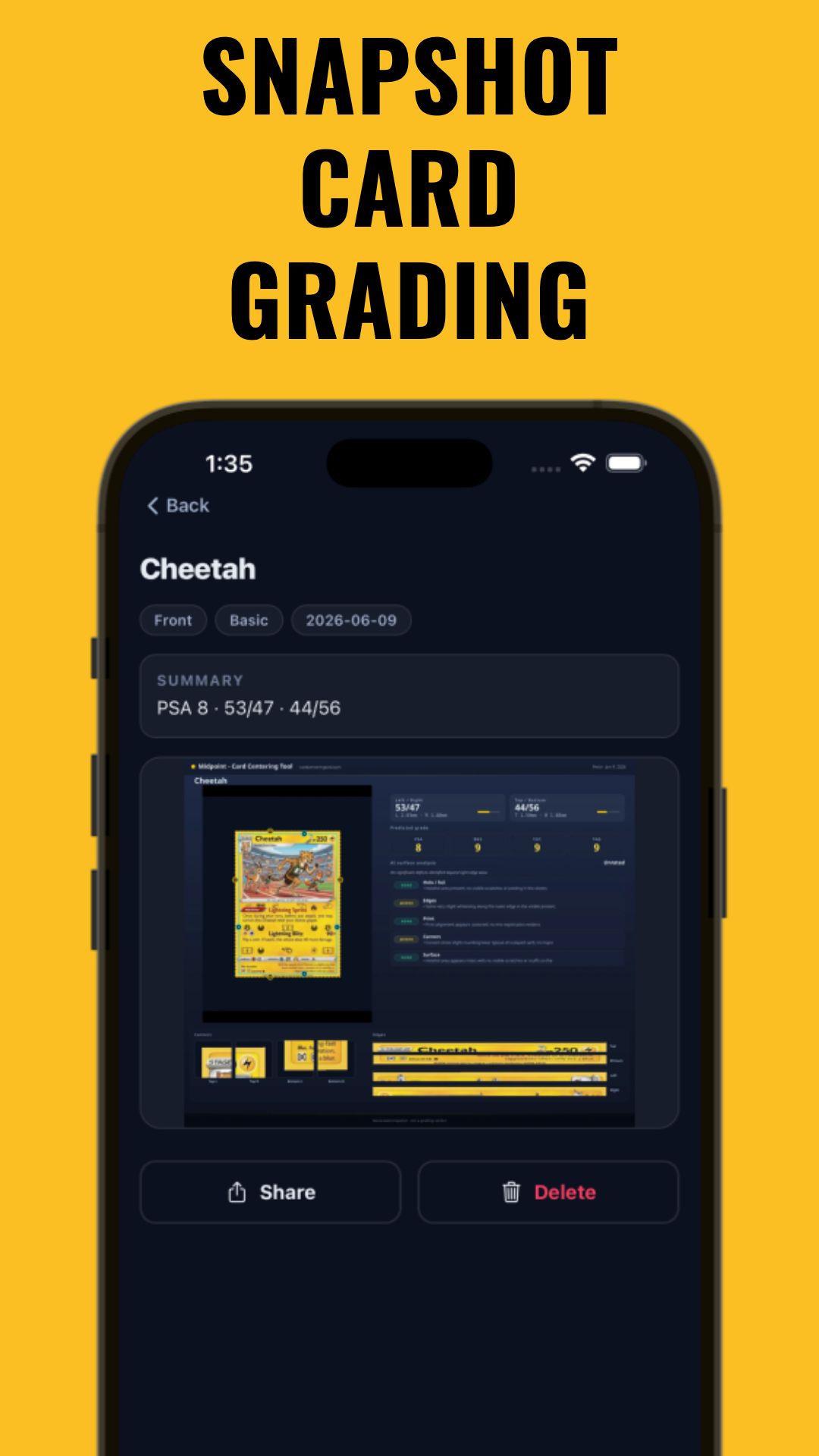
Centering is the balance of the border on each side of the card. Poor centering is one of the most common reasons a card misses a gem grade, and it cannot be fixed. If a Two Legends card is visibly shifted, no amount of careful handling will change that. For the full picture, see how centering impacts card value.
A practical pre-grade workflow
- Look up the card: confirm the version and note the raw versus graded values.
- Measure centering: check front and back ratios. A tool that measures to the millimeter beats eyeballing it.
- Inspect corners and edges: use bright, angled light to spot whitening.
- Check the surface: tilt the card to reveal scratches, print lines, and dimples.
- Decide: compare the estimated grade to your ROI math.
A step-by-step pre-grading guide walks through this in more detail. Midpoint automates much of it: it measures centering, estimates PSA, BGS, CGC and TAG grades from centering, corners, edges and surface, and shows raw versus graded values, all before you spend on submission.
Storage protects what you find
Once you find a gem candidate, protect it. Sleeve and top-load it immediately, and store it flat and dry. This guide on how to store valuable cards covers the details.
Section 7: Two Legends Price Guide: Sources, Trends and Sealed Product
Any useful Two Legends price guide explains where the numbers come from and how much to trust them.
Where prices come from
- TCGplayer: a large US marketplace. Its market price is based on recent sales, which makes it a common reference for raw singles.
- eBay sold listings: good evidence of what buyers actually paid, especially for graded cards and rare promos. Filter for sold, not active listings.
- Cardmarket: a major European marketplace. Prices are in euros and can differ from US prices because of regional demand, supply and fees.
Marketplaces differ, so a card can legitimately show different prices on each. Use more than one source, and favor sold data over asking prices. Midpoint's lookup brings raw and graded values together in one place.
Trends and market concentration
Set values often move in a pattern. New-release hype can inflate prices early, and prices often settle as supply grows, though this is not guaranteed. Value tends to concentrate in the top few cards, while the long tail stays cheap. Because a few cards represent most of a set's total value, a price move in one or two chase cards can shift the whole picture. Track the cards you own so you notice changes early, with portfolio tracking showing your collection's value over time.
Are boxes and sealed product worth it?
Opening boxes is a gamble: the chase cards are rare, so many boxes yield mostly low-value cards. Singles are the efficient way to get a specific card. Sealed product can appeal to long-term collectors, but it carries storage costs and no guaranteed appreciation. Buy sealed because you enjoy it, not because you expect a return. If you want a particular chase card, compare the single's price against the cost of chasing it in packs.
Conclusion
The Two Legends one piece cards value story is simple: a few chase cards carry the set, versions matter enormously, and the gem premium decides what is worth grading. Identify your version, check raw and graded prices as of 2026-11-06 in the table, and compare several marketplaces.
Before you submit anything, pre-grade it. Centering and condition determine whether the premium is realistic or just wishful thinking. Try Midpoint to measure centering, estimate grades, and look up values for free on iOS and Android.
FAQ
Q: What is the most expensive card in the One Piece Two Legends set?
A: The top end is generally made up of chase cards such as Tony Tony.Chopper, Marco, Charlotte Pudding, Silvers Rayleigh, Nami, and Drum Kingdom promos, usually in their rarest versions. Check the data table for exact figures as of 2026-11-06, since the leader changes with the market.
Q: How much is the Tony Tony.Chopper OP08-001 card worth?
A: It depends on the version and condition. Normal, parallel, and graded copies sell at very different prices. Look up OP08-001 in the table for the raw and graded values as of 2026-11-06, and confirm your version first.
Q: What are the top chase cards in Two Legends?
A: Commonly discussed chase cards include Tony Tony.Chopper, Marco, Charlotte Pudding, Silvers Rayleigh, Nami, and the Drum Kingdom promos. Alternate-art, manga rare, and special parallel versions generally carry the biggest premiums.
Q: Is One Piece Two Legends worth collecting or investing in?
A: Collecting is worthwhile if you love the characters, but value is concentrated in a few cards and nothing is guaranteed. Singles are generally more efficient than boxes, and graded gems carry the strongest premium. Treat it as a hobby first and an investment second.
Q: How can I tell whether my Two Legends card is a normal, parallel, alternate-art, or manga version?
A: Combine the card number, the artwork, and the foil treatment. Alternate arts show a different illustration, manga rares use manga-panel art, and parallels have a distinct foil pattern while often sharing the normal card's number. Compare against reference images.
Q: Where can I check accurate current prices for Two Legends cards?
A: Use TCGplayer for raw market prices, eBay sold listings for real transactions (especially graded cards), and Cardmarket for European prices. Midpoint's card lookup also shows raw and graded values in one place.
Free to start
Try the Midpoint app
Grade any card from a photo, see its raw and PSA 10 value, and track what your collection is worth — free.
Get it on iPhoneGet it on Android