
Attack of the Vine! PSA 9 vs PSA 10 Value: The Price Gap
Attack of the Vine! PSA 9 vs PSA 10 value explained: how to read the price gap, where centering decides the grade, and when a PSA 9 is the smarter buy.


Estimated reading time: 9 min
Key Takeaways
- Attack of the Vine! PSA 9 vs PSA 10 value largely comes down to one number: the PSA 10 premium, meaning how much more a 10 costs than a 9 as a percentage.
- Use the PSA 9 and PSA 10 values in this guide's data table (as of 2026-11-15) to calculate that premium for each card. Do not rely on a general rule.
- Bottom line: buy the PSA 9 when the premium is steep and you are collecting. Pay for the PSA 10 when the premium is modest or you want maximum resale liquidity.
- Grade a raw card only if it can realistically earn a 10. Centering is the first thing to check, and you can measure it for free before you pay to submit.
This guide compares PSA 9 and PSA 10 copies of Disney Lorcana Attack of the Vine! cards: the price gap, why it exists, and whether a 9 is worth it. The quick answer is that a PSA 10 is worth more, but how much more varies by card. A 9 is often the smarter buy when the gap is wide. A 10 is the better buy when the gap is narrow and you want the cleanest exit later.
One note on method. Every price figure here comes from the PSA 9 and PSA 10 values in the data table that accompanies this article, dated 2026-11-15. I have not added numbers from anywhere else. Where a decision depends on a price, I give you the formula so you can plug in the figures for your own card.
Card values — live data from Midpoint's card database, as of 2026-11-15. Prices move; Midpoint refreshes these daily.
| Card | Raw | PSA 10 | Gem premium | |
|---|---|---|---|---|
 |
Belle & Beast #245/207 Attack of the Vine! (2026) |
$1,726 | $2,064 | 1.2× |
 |
Lilo & Stitch #244/207 Attack of the Vine! (2026) |
$1,498 | $1,798 | 1.2× |
 |
Winnie the Pooh & Piglet #234/207 Attack of the Vine! (2026) |
$678.50 | $1,290 | 1.9× |
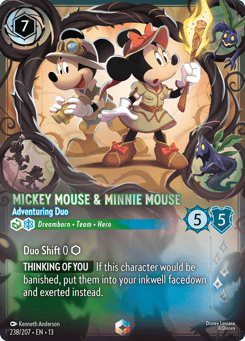 |
Mickey Mouse & Minnie Mouse #238/207 Attack of the Vine! (2026) |
$325.10 | $858.58 | 2.6× |
 |
Woody & Buzz Lightyear #228/207 Attack of the Vine! (2026) |
$293.60 | $831.05 | 2.8× |
 |
Carl Fredricksen & Russell #237/207 Attack of the Vine! (2026) |
$89.28 | $598.37 | 6.7× |
 |
Peter Pan & Tinker Bell #233/207 Attack of the Vine! (2026) |
$146.62 | $582.33 | 4× |
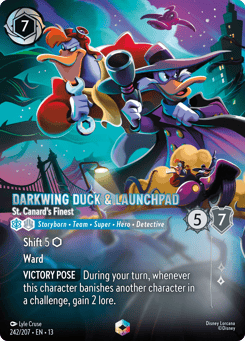 |
Darkwing Duck & Launchpad #242/207 Attack of the Vine! (2026) |
$85.51 | $520.00 | 6.1× |
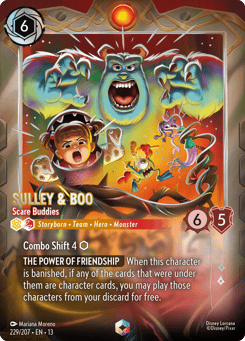 |
Sulley & Boo #229/207 Attack of the Vine! (2026) |
$175.09 | $518.14 | 3× |
 |
Pocahontas & Meeko #227/207 Attack of the Vine! (2026) |
$88.84 | $428.56 | 4.8× |
 |
Mike Wazowski #226/207 Attack of the Vine! (2026) |
$104.35 | $420.62 | 4× |
 |
Tod & Copper #236/207 Attack of the Vine! (2026) |
$106.30 | $414.12 | 3.9× |
Look up any card's current raw and graded value in Midpoint — and get an estimated grade before you pay to submit.
Quick Comparison: PSA 9 vs PSA 10
| Dimension | PSA 9 (Mint) | PSA 10 (Gem Mint) |
|---|---|---|
| What the grade signals | Mint, with one minor flaw allowed | Gem Mint, essentially flawless to the eye |
| Centering (PSA's published guideline, approximate) | Looser tolerance on front and back (roughly 60/40 front) | Tighter tolerance (roughly 55/45 front) |
| Price | The lower entry point | Carries a premium over the 9; see the table for each card |
| Scarcity | Depends on the card's population; check PSA's population report | Depends on the card's population; check PSA's population report |
| Resale liquidity | Fewer buyers may target it specifically | The grade many buyers search for first |
| Downside if you grade a raw card | Still a graded card; may not cover costs if the premium was the plan | The payoff everyone is aiming for |
| Best for | Value-minded collectors, budget builds | Investors, display pieces, chase cards |
The PSA 10 Premium: How to Read the Price Gap
The raw dollar gap between a 9 and a 10 can mislead you. A gap that looks big on an expensive card may be small in percentage terms. The same gap on a cheaper card can be huge.
Use this formula for every card in the table:
- Dollar gap = PSA 10 value minus PSA 9 value
- PSA 10 premium % = (PSA 10 minus PSA 9) divided by PSA 9, times 100
The premium percentage is the number that matters. It tells you what you are paying for the last step in condition.
Here is how to read the result:
- Small premium: the market barely distinguishes 9 from 10. A PSA 10 is usually the better buy because the extra cost is small relative to the liquidity and display appeal.
- Large premium: the market pays heavily for perfection. A PSA 9 gives you most of the look for far less money.
- Very large premium: grading a raw copy becomes a gamble, because the profit depends almost entirely on hitting a 10.
Look at the cards in the data table that you own or want. Compute each one's premium before you decide on either grade. A bigger premium means the market is paying heavily for perfect condition on that card.
Where Centering Decides the 9→10 Jump
The cards with the largest 9→10 premiums are the ones where a single flaw costs the most money. For many modern cards, centering is a common reason a copy misses a 10 while looking fine in hand.
PSA's published standards allow tighter front centering for a 10 than for a 9. A card that looks fine at a glance can still sit just outside the Gem Mint tolerance. That is one reason two copies pulled from the same pack can land one grade apart.
The practical rule: centering is the one factor you can check before you submit. You cannot undo an off-center print. If the borders are visibly uneven, a 10 is unlikely no matter how clean the surface is. Our guide on how centering impacts card value goes deeper on how much that costs you.
Check centering first
- Measure the left/right and top/bottom border ratios on the front.
- Check the back, where tolerances differ from the front.
- If the front is already past the 10 threshold, stop. Grading for a 10 is not realistic.
The free centering calculator gives you those ratios in seconds, so you know where a card stands before it ever goes in a sleeve for shipping.
What Separates a PSA 9 from a PSA 10: Centering, Corners, Edges, Surface
PSA looks at four areas. A 10 needs all four to be clean. A 9 can have a single small issue in any of them.
- Centering: border balance on the front and back. A common reason for a 9.
- Corners: sharp tips with no visible whitening or softness.
- Edges: clean edges. Dark-bordered cards show whitening or chipping easily.
- Surface: no print lines, scratches, dents, or holographic scuffs. Foil and Enchanted-style treatments may show surface flaws more readily.
The 9 to 10 jump is the cost of eliminating that one allowed flaw. This is why the premium can be steep even though the two cards look almost identical in photos.
If you want to see how an estimate is built, the step-by-step pre-grading guide walks through all four areas. Midpoint's AI grading estimates a PSA, BGS, CGC, or TAG grade from exactly these factors.

Is a PSA 9 Worth It? Buying Advice for Collectors and Investors
Is a PSA 9 worth it for Attack of the Vine! cards? It depends on what you want the card to do.
When the PSA 9 is the smarter buy
- The PSA 10 premium is large compared with the 9's price.
- You are building a collection to display, not to flip.
- You want a protected, authenticated card without paying for the last point of perfection.
- The card is cheap enough that the 9 to 10 gap is small in dollars but you still want the slab.
When the PSA 10 is the smarter buy
- The premium is modest, so you pay little extra for the top grade.
- You are buying for resale. Buyers searching for a graded chase card often start with the 10.
- The card has a low PSA 10 population, which can support value. See our guide on grading low population cards.
PSA 9 vs raw
A PSA 9 over a raw copy makes sense when you value certainty. The slab fixes the condition and verifies authenticity, and it is easier to sell without arguments about photos. A raw copy is cheaper but can disappoint when you inspect it, and you cannot be sure it would grade a 9 at all. If the 9's price is close to the raw price, the 9 is usually the better deal. If it is far above raw, you are paying for the slab and the certainty.
Is Grading Profitable? Break-Even Analysis for a Raw Card
Attack of the Vine! grading value depends on whether the expected sale price after grading exceeds what you put in. Grading fees vary by service tier and change over time, so check the grader's current fee schedule. The full cost is higher than the grading fee alone.
Add up every cost:
- Grading fee for your chosen service tier
- Shipping to and from the grader
- Insurance on the package
- Supplies: sleeves, top loaders, a team bag
- Marketplace and payment fees when you sell
Then use this break-even test:
- Total cost = raw card value + grading + shipping + insurance + supplies
- Net PSA 10 proceeds = PSA 10 value minus selling fees
- Net PSA 9 proceeds = PSA 9 value minus selling fees
Grading is worth it when the PSA 9 net proceeds are at least close to total cost, so that the 9 outcome does not lose money and the 10 is a bonus. If you profit only when you hit a 10, you are speculating on a perfect grade.
Use the table's PSA 9 and PSA 10 values (as of 2026-11-15) as your inputs. Prices move, so recheck before you submit. The guide to how grade affects insurance value also helps you decide how much coverage to buy.
Which cards are worth grading?
- Cards where the PSA 9 value alone clears your total cost.
- Cards where your copy has measurable centering inside the 10 range.
- Cards with a wide gap between raw and graded values, where the slab adds real value.
Skip cards where raw and PSA 9 are nearly the same. You would pay fees for almost no gain.
PSA 10 vs CGC 10, SGC 10, BGS 10, and Raw
A PSA 10 is not the same product as a 10 from another company. Each company uses its own scale and its own label, and buyers price them differently. The grading scale differences guide explains how each top grade is defined.
- PSA 10: widely recognized for resale, and the value benchmark in this guide.
- CGC 10: a different top-grade definition. Compare it against recent sold prices for that grade, not against PSA figures.
- SGC 10: its own scale and market. Check completed sales before assuming it matches PSA.
- BGS 10: BGS uses subgrades and separates its top tiers, so a 10 there is not directly equivalent to a PSA 10.
- Raw: the cheapest entry, but with condition risk and a harder sale.
This guide only compares PSA 9 and PSA 10 values, because those are the figures supplied. Do not assume another company's 10 sells for the same amount.
Which Should You Choose?
- You collect for display or play: choose the PSA 9 when the PSA 10 premium is high. You get a protected, authenticated card for less.
- You invest or plan to resell: choose the PSA 10 when the premium is reasonable. It is the grade many buyers look for first.
- You own a raw copy: measure centering, then run the break-even math. Submit only if a 9 still covers your costs.
- You are on a budget: buy a PSA 9 of a card where raw and 9 are close in price, and skip the cards with a large premium.
- You are unsure about condition: pre-grade first. Midpoint measures centering and estimates a PSA grade before you pay grading and submission fees.
Verdict: a PSA 10 is worth more, but the Attack of the Vine! PSA 10 premium varies card by card. Compute it from the table. If it is high, take the 9. If it is low, take the 10. For raw copies, grade only when the 9 outcome still pays.
FAQ
How much is an Attack of the Vine! PSA 9 worth compared with a PSA 10?
It varies by card. Check the PSA 9 and PSA 10 columns in the data table (as of 2026-11-15) and calculate the premium: (PSA 10 minus PSA 9) divided by PSA 9. That percentage shows how much extra the market pays for the 10.
What is the current PSA 10 value of the most valuable Attack of the Vine! cards?
The data table lists PSA 10 values as of 2026-11-15, so sort by that column to find the top cards. Prices change with each completed sale, so recheck before you buy or sell.
Is an Attack of the Vine! PSA 9 worth buying instead of a raw card?
Often yes, if the 9 costs only a little more than raw. You get verified authenticity and condition, and an easier resale. If the 9 is far above raw, you are paying mainly for the slab, so decide whether that matters to you.
How much more does a PSA 10 sell for than a PSA 9 in Disney Lorcana Attack of the Vine!?
The gap differs for each card. Use the dollar gap and the premium percentage from the table. Cards with a large percentage are the ones where the market is paying most heavily for perfect centering, corners, edges, and surface.
Should I grade my Attack of the Vine! card if it might get a PSA 9?
Only if a PSA 9 still covers your total cost: grading, shipping, insurance, supplies, and selling fees. If you profit only with a 10, you are betting on perfection. Measure centering first to see whether a 10 is realistic.
Which Attack of the Vine! cards are worth grading?
Look for cards where the PSA 9 value alone clears your costs and where your copy has strong centering. Skip cards where raw and PSA 9 values are nearly the same, because fees would eat the gain.
Free to start
Try the Midpoint app
Grade any card from a photo, see its raw and PSA 10 value, and track what your collection is worth — free.
Get it on iPhoneGet it on Android


