Rise of the Floodborn PSA 9 vs PSA 10 Value: Gap Explained
Rise of the Floodborn PSA 9 vs PSA 10 value: how to measure the PSA 10 premium, which cards jump most, and when a PSA 9 is the smarter buy.

Estimated reading time: 8 min
Key Takeaways
- Bottom line: For Rise of the Floodborn, a PSA 10 almost always sells for more than a PSA 9, but the size of the gap depends on the card. Chase rarities (Enchanted, Legendary, popular foils) tend to have the widest spread. Bulk-level standard cards often barely justify grading at all.
- Measure the premium two ways: the dollar difference (PSA 10 minus PSA 9) and the multiplier (PSA 10 divided by PSA 9). Use only recent completed sales, never asking prices.
- A PSA 9 is the smarter buy for most collectors and for anyone who values a low entry price. Chasing a PSA 10 only makes sense when the card's premium clearly beats grading fees, shipping and selling costs.
- Centering is a common reason a clean-looking card misses a 10, so pre-grading with a measurement tool is an inexpensive way to protect your grading budget.
If you are weighing Rise of the Floodborn PSA 9 vs PSA 10 value, the real question is not just "how much more is a 10 worth?" It is whether that extra amount is large enough, on this specific card, to justify the risk of grading, the fees, and the chance of landing a 9 instead. The quick answer: the gap tends to be widest on high-demand chase cards and narrowest on common and uncommon cards, and a PSA 9 is often the better value play.
One note on figures: this guide gives you the method and the decision framework rather than quoting stale prices. Graded Lorcana prices move constantly, and thinly traded slabs can swing with a single sale. Check current numbers for any card before you act.
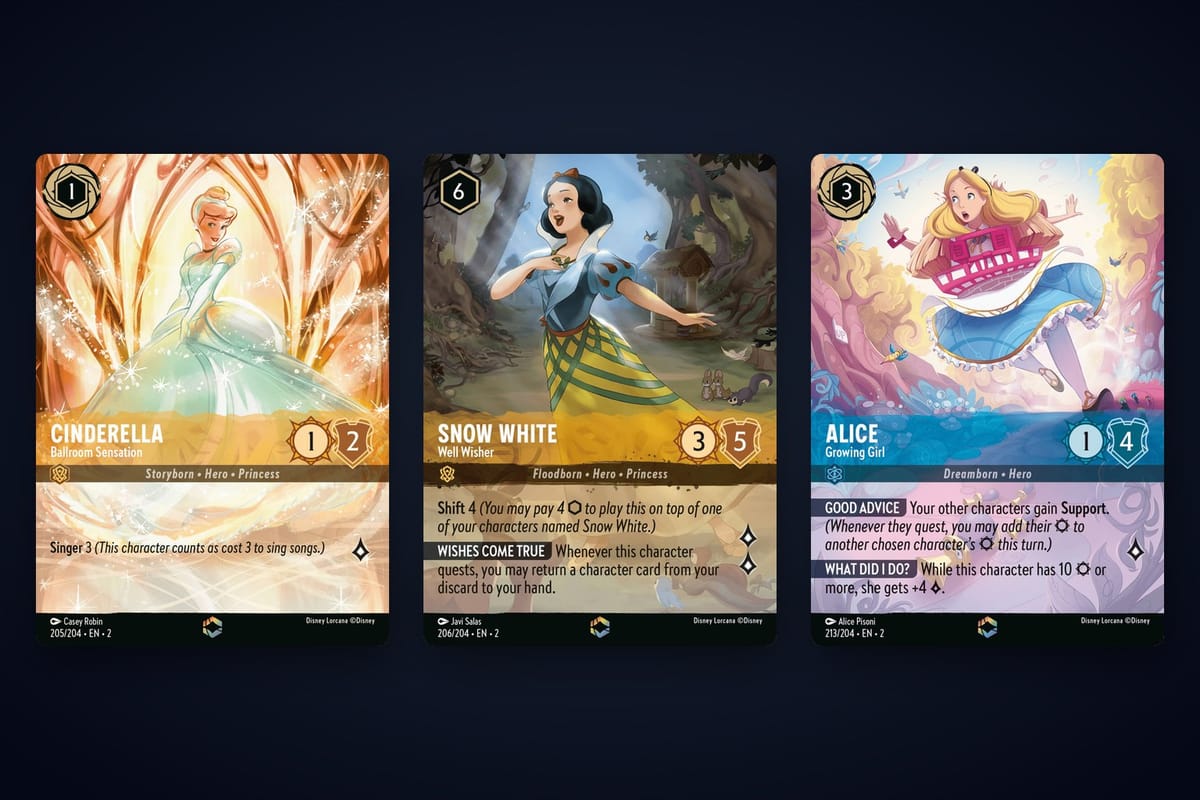
Card values — live data from Midpoint's card database, as of 2026-11-15. Prices move; Midpoint refreshes these daily.
| Card | Raw | PSA 10 | Gem premium | |
|---|---|---|---|---|
 |
Cinderella #205/204 Rise of the Floodborn (2023) |
$260.68 | $694.20 | 2.7× |
 |
Snow White #206/204 Rise of the Floodborn (2023) |
$125.62 | $530.85 | 4.2× |
 |
Alice #213/204 Rise of the Floodborn (2023) |
$160.87 | $434.68 | 2.7× |
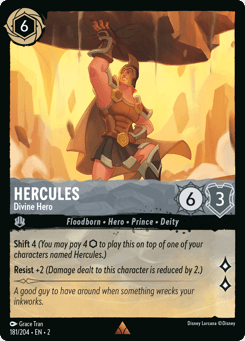 |
Hercules #181/204 Rise of the Floodborn (2023) |
$0.28 | $434.54 | 1551.9× |
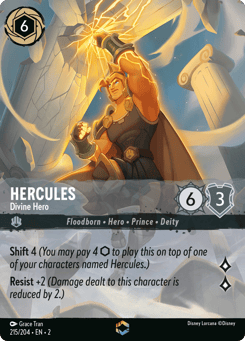 |
Hercules #215/204 Rise of the Floodborn (2023) |
$59.74 | $319.01 | 5.3× |
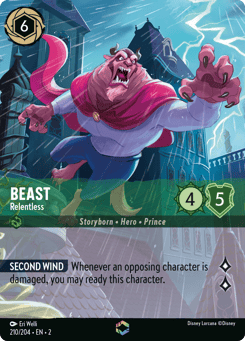 |
Beast #210/204 Rise of the Floodborn (2023) |
$69.44 | $271.16 | 3.9× |
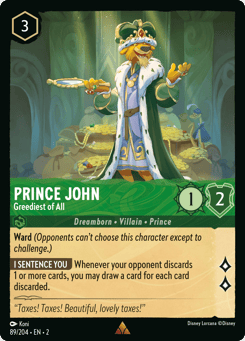 |
Prince John #89/204 Rise of the Floodborn (2023) |
$4.03 | $246.46 | 61.2× |
 |
Shere Khan #212/204 Rise of the Floodborn (2023) |
$56.33 | $231.35 | 4.1× |
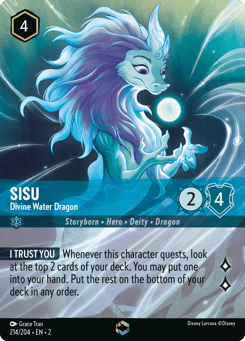 |
Sisu #214/204 Rise of the Floodborn (2023) |
$46.30 | $210.34 | 4.5× |
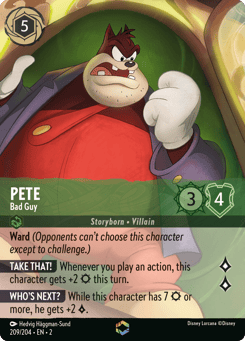 |
Pete #209/204 Rise of the Floodborn (2023) |
$48.11 | $206.26 | 4.3× |
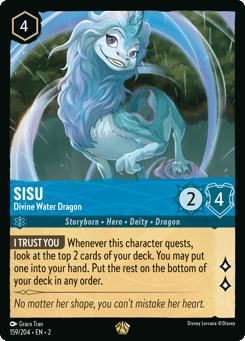 |
Sisu #159/204 Rise of the Floodborn (2023) |
$0.74 | $203.39 | 274.9× |
 |
Shere Khan #126/204 Rise of the Floodborn (2023) |
$0.24 | $200.00 | 833.3× |
Look up any card's current raw and graded value in Midpoint — and get an estimated grade before you pay to submit.
Quick Comparison: PSA 9 vs PSA 10 for Rise of the Floodborn
| Dimension | PSA 9 (Mint) | PSA 10 (Gem Mint) |
|---|---|---|
| Typical price position | Lower entry price, usually well above raw on chase cards | Highest standard price tier, with the widest premium on top rarities |
| Centering tolerance (PSA published) | Up to about 60/40 front, 90/10 back | About 55/45 front, 75/25 back |
| Supply | Generally larger share of graded copies | Often scarcer on hard-to-grade foils; varies by card |
| Liquidity | Usually more sales when a card trades often | Can be sparse, so prices can be unstable |
| Grading-risk exposure | Lower: a fallback outcome that often still pays off | Higher: you pay for the chance, not a guarantee |
| Best for | Collectors, budget buyers, players who want a slab | Investors, set completionists, top-of-registry chasers |
| Premium over raw | Smaller; depends on card | Larger; depends on card |
How to Measure the Rise of the Floodborn PSA 10 Premium
The Rise of the Floodborn PSA 10 premium is simple math, but only if your inputs are clean. For every card, calculate two numbers:
- Dollar difference: average recent PSA 10 sold price minus average recent PSA 9 sold price.
- Multiplier: PSA 10 sold price divided by PSA 9 sold price. A result of 2.0 means a 10 sells for double a 9.
Both matter. A big multiplier on a cheap card may still be only a few dollars, which does not cover grading. A small multiplier on an expensive card can still be a large dollar gap.
Use completed sales, not asking prices
Asking prices are wishes. Completed sales show what buyers actually paid. When comparing PSA 9 to PSA 10, use:
- Several recent sales per grade, not a single data point.
- Sales from the same card version (standard vs foil vs Enchanted), since mixing them wrecks the comparison.
- Sales within a similar time window, so you are not comparing a launch-week price to a quiet-month price.
You can look up raw and graded values for Lorcana cards inside Midpoint, then cross-check them against recent sold listings on the marketplace of your choice.
Price guides vs. real sales
Price guides are a good starting point, but they are only as reliable as the sales behind them. If a guide shows a PSA 10 value built from one or two sales, treat it as a rough hint. Treat the gap between a 9 and a 10 as an estimate with error bars, not a fixed fact.
Which Cards Have the Biggest PSA 9 to PSA 10 Price Difference?
The PSA 9 vs PSA 10 price difference for Rise of the Floodborn is not uniform across the set. Several factors can push the gap wider or narrower.
Rarity and card version
- Enchanted and Legendary cards: When a card is already expensive, even a modest multiplier turns into a large dollar gap. These are where the 9-to-10 decision matters most.
- Foil versions: Foils can be harder to keep pristine. Surface scratches, print lines and edge wear may be more common, so true 10s can be scarcer, and buyers sometimes pay more for them.
- Standard (non-foil) commons and uncommons: Demand is lower and the dollar gap is usually small. A PSA 10 slab rarely changes the economics enough to cover fees.
Character popularity and playability
A fan-favorite character or a card with strong competitive demand attracts more buyers at every grade, and the top grade tends to attract the most competition. A less popular character in a pretty Enchanted treatment can still be pricey, but the premium for a 10 may be steadier or harder to predict.
Where centering decides everything
On cards with bordered or full-art layouts, uneven borders are visible immediately. A card can have perfect corners and a clean surface and still land at a 9 because of off-center borders. PSA's published guidelines allow a tighter centering ratio for a 10 than for a 9, so this is a common place for a 10 to slip away. For a deeper look, see how centering impacts card value.
The practical rule: look for cards where the 9-to-10 jump is large and your copy measures well on centering. That is where grading pays.
Population, Supply and Sales Volume
Price gaps are really supply-and-demand gaps. PSA's population reports show how many copies of a card have received each grade, and they are free to check on PSA's site.
- High PSA 10 population: If a card is easy to grade well, many 10s exist, and the premium over a 9 tends to shrink.
- Low PSA 10 population: If 10s are scarce relative to 9s, the premium tends to widen, though it can also be volatile.
- New submissions: Populations change as more cards are graded, so a gap that is wide today can narrow later.
Why sparse sales make estimates unstable
Some Rise of the Floodborn slabs sell rarely. When only a handful of PSA 10 or PSA 9 copies trade each month, one unusually high or low sale can distort the "average." To stay grounded:
- Look at several months of sales, not just the last few days.
- Discard obvious outliers, such as a sale with a damaged listing or an auction that ended oddly.
- Be cautious when the PSA 9 and PSA 10 are both thinly traded. Your calculated premium may be mostly noise.
Low-supply situations have their own dynamics, which are covered in card grading for low population cards.
Rise of the Floodborn Grading Value: Costs, Fees and Net Profit
Whether grading makes sense comes down to net profit. A simple framework:
- Expected slab value: (probability of a 10 × PSA 10 price) + (probability of a 9 × PSA 9 price) + (probability of lower × lower-grade price).
- Minus the raw value you could have sold the card for today.
- Minus costs: grading fee (varies by service level, so check PSA's current pricing), shipping both ways, insurance, supplies, and marketplace selling fees.
If that result is not clearly positive, keep the card raw or sell it ungraded.
Is a PSA 9 worth it for Rise of the Floodborn?
It depends on the card. For a chase card, a PSA 9 can still sell well above raw, so a 9 outcome may still be profitable. For a low-value card, a 9 might not even cover costs. Run the numbers for the specific card rather than assuming the slab always adds value.
PSA vs. BGS vs. CGC vs. raw
- Raw: Cheapest to hold and easy to sell, but buyers discount for condition uncertainty.
- PSA: The most recognized brand in the hobby, so PSA slabs often command a market premium, especially at the 10 level.
- BGS and CGC: Different scales and subgrade systems, and the market values them differently. A top grade from one company is not automatically equal to a PSA 10 in price. See grading scale differences by company for how the top grades compare.
Compare like with like: look at sold prices for each company's grade of the same card version before deciding where to submit.
PSA 9 vs PSA 10 Condition Standards and Pre-Grading Checks
PSA's published guidance describes a Gem Mint 10 as a virtually perfect card with centering of about 55/45 or better on the front and 75/25 or better on the back. A Mint 9 allows slightly looser centering, about 60/40 on the front and 90/10 on the back, along with minor imperfections.
Before you submit, check these four areas:
- Centering: Measure left/right and top/bottom border ratios on both the front and back. Do not eyeball it.
- Corners: Look for whitening or softness under bright light, especially on dark borders.
- Edges: Check for chipping and roughness along all four sides.
- Surface: Tilt the card under light for scratches, print lines, dents and fingerprints. Foil surfaces show flaws most easily.
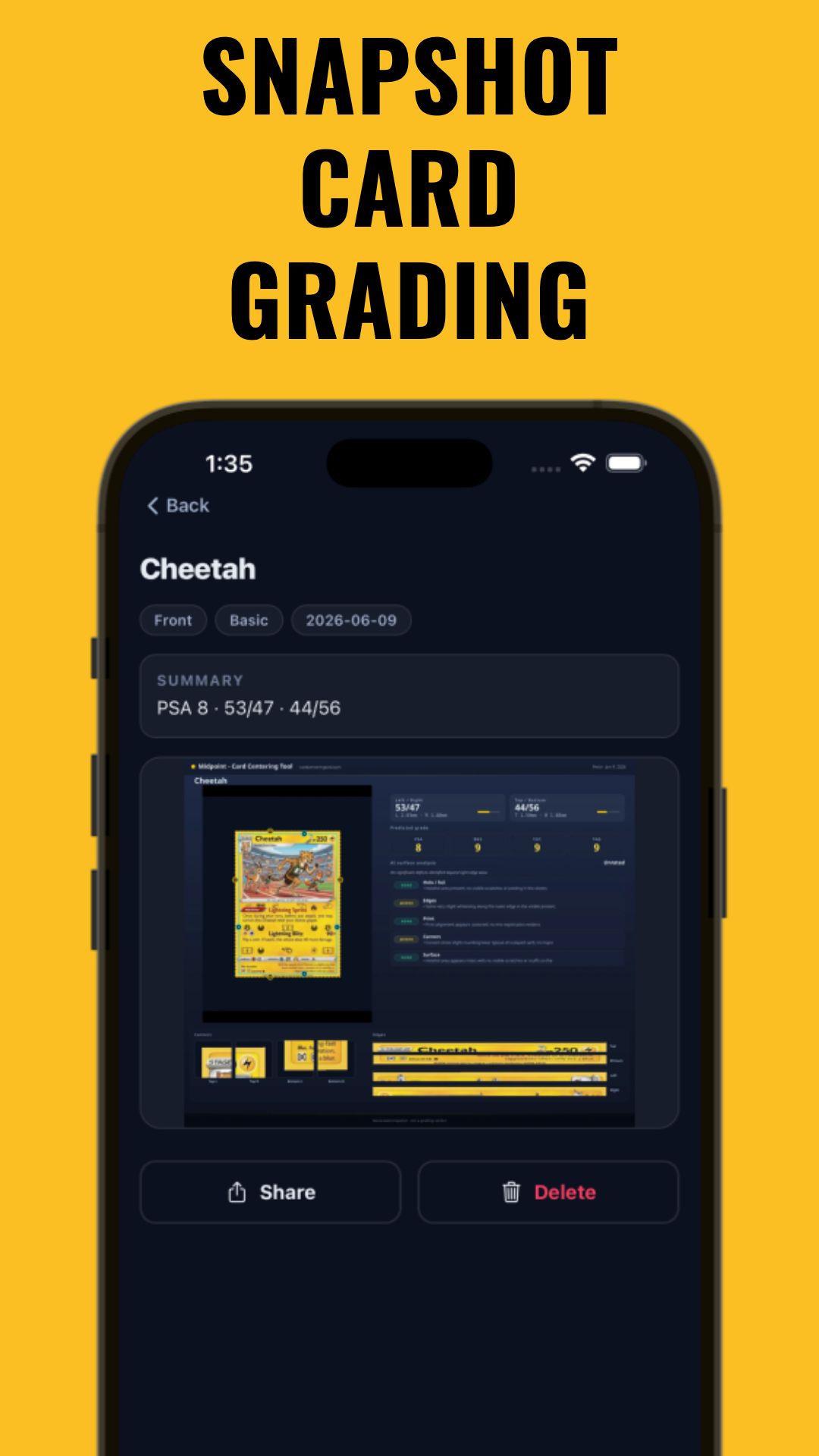
Midpoint measures centering to the millimeter and gives an AI-estimated PSA, BGS, CGC or TAG grade from centering, corners, edges and surface, so you can see whether a card is a real 10 candidate before paying to submit. The free centering calculator is a quick first check, and the guide on how to pre-grade your card walks through the full process.
Which Should You Choose?
Match the grade to your goal:
- You are a collector who wants a protected, displayable card: Buy a PSA 9. You get a professionally graded slab at a lower price than a 10, and the visual difference is often small.
- You are building a set on a budget: Mix PSA 9s for most slots and splurge on a 10 only for your favorite cards.
- You are an investor chasing premiums: Focus on high-demand Enchanted, Legendary and foil cards where the dollar gap is large. Verify the spread with several recent sales and check populations first.
- You own a raw card and are deciding whether to grade: Measure centering and inspect the card first. If it passes pre-grading and the expected net profit is clearly positive, grade it. If not, sell it raw or hold.
- You are buying a PSA 10 as a pure flip: Be careful. Thin sales can overstate the premium, and fees eat into the margin. Only buy when the gap to a 9 is large and well supported.
If you track a collection over time, Midpoint's portfolio tracking shows how your cards' values move, which helps you judge whether a graded copy is earning its premium. Protect whatever you grade with the tips in how to store valuable cards.
FAQ
How much is a Rise of the Floodborn card worth in PSA 9 compared with PSA 10?
It depends on the card. A PSA 10 usually sells for more than a PSA 9, but the gap varies by rarity, foil treatment and character popularity. Calculate the dollar difference and multiplier from several recent completed sales of the same card version rather than relying on a single price.
How much more is a PSA 10 worth than a PSA 9 for Lorcana Rise of the Floodborn cards?
There is no single number for the whole set. Chase cards tend to show larger gaps and common cards smaller ones. Subtract the average PSA 9 sold price from the average PSA 10 sold price for the dollar gap, then divide the PSA 10 by the PSA 9 for the multiplier.
Which Rise of the Floodborn cards have the biggest PSA 9 to PSA 10 price difference?
Generally the high-demand cards: Enchanted and Legendary versions, popular foils and fan-favorite characters. Cards with scarce PSA 10 populations compared with PSA 9s can also show wide spreads. Check recent sales and PSA population data for any specific card.
Is it worth grading Rise of the Floodborn cards if they might get a PSA 9 instead of a PSA 10?
Only if the expected outcome beats your costs. Weigh the probability of a 9 versus a 10, the value of each, the grading fee (which varies by service level), shipping, and selling fees, then compare to the raw value. Pre-grading with a centering measurement helps you avoid submitting cards unlikely to reach a 10.
Where can I find recent sold prices for PSA 9 and PSA 10 Rise of the Floodborn cards?
Use completed or sold listings on major marketplaces and auction results, and cross-check with a price guide. In Midpoint you can look up raw versus graded values for Lorcana cards, then confirm them against recent sales.
Does a PSA 9 Rise of the Floodborn card still have good value compared with an ungraded copy?
Often yes for higher-value cards, since a PSA 9 slab adds authentication, protection and buyer confidence. For low-value cards, the slab may not add enough to cover grading costs. Compare recent PSA 9 sold prices to raw sold prices for the same card before deciding.
Free to start
Try the Midpoint app
Grade any card from a photo, see its raw and PSA 10 value, and track what your collection is worth — free.
Get it on iPhoneGet it on Android