Yugioh Card Prices Rising November 2026: Top Movers
Yugioh card prices rising November 2026: movers like Spright Blue and Nibiru, plus raw vs PSA 10 grading tips and a buy, hold, sell framework.

Estimated reading time: 9 min
Key Takeaways
- Yugioh card prices rising in November 2026 are driven mostly by tournament demand, banlist chatter, new set supply and scarcity.
- Meta engine cards like Tri-Brigade Springans Kitt, Rokket Tracer, Spright Blue and Nibiru, the Primal Being are the names to watch.
- Fair comparisons use Near Mint market prices, a minimum sales volume and a clean October-to-November window.
- Grade only when the PSA 10 premium clearly beats grading fees and the card's centering and surface can realistically earn it.
- A fast spike is not a signal to buy. Check what is driving it and what could reverse it.
If you are tracking yugioh card prices rising November 2026, you want to know which cards moved, why, and whether it is too late to act. This guide covers the Yugioh card market in November 2026: the trending Yugioh cards, what is pushing Yugioh cards up in value, and how to decide whether to buy, hold, sell or grade.
The price figures behind this post come from Midpoint's own database and are dated 2026-11-15. We refer to its entries by name below rather than repeating every number. Always re-check live prices before you trade.
How to judge a price jump. A rise only means something if the comparison is fair:
- Source: use TCGplayer market prices, not a single asking price.
- Condition: compare Near Mint copies only, so a Played listing does not distort the trend.
- Volume: require a minimum number of recent sales, or one odd sale looks like a trend.
- Window: compare October against November, and look at both the 7-day and 30-day changes.
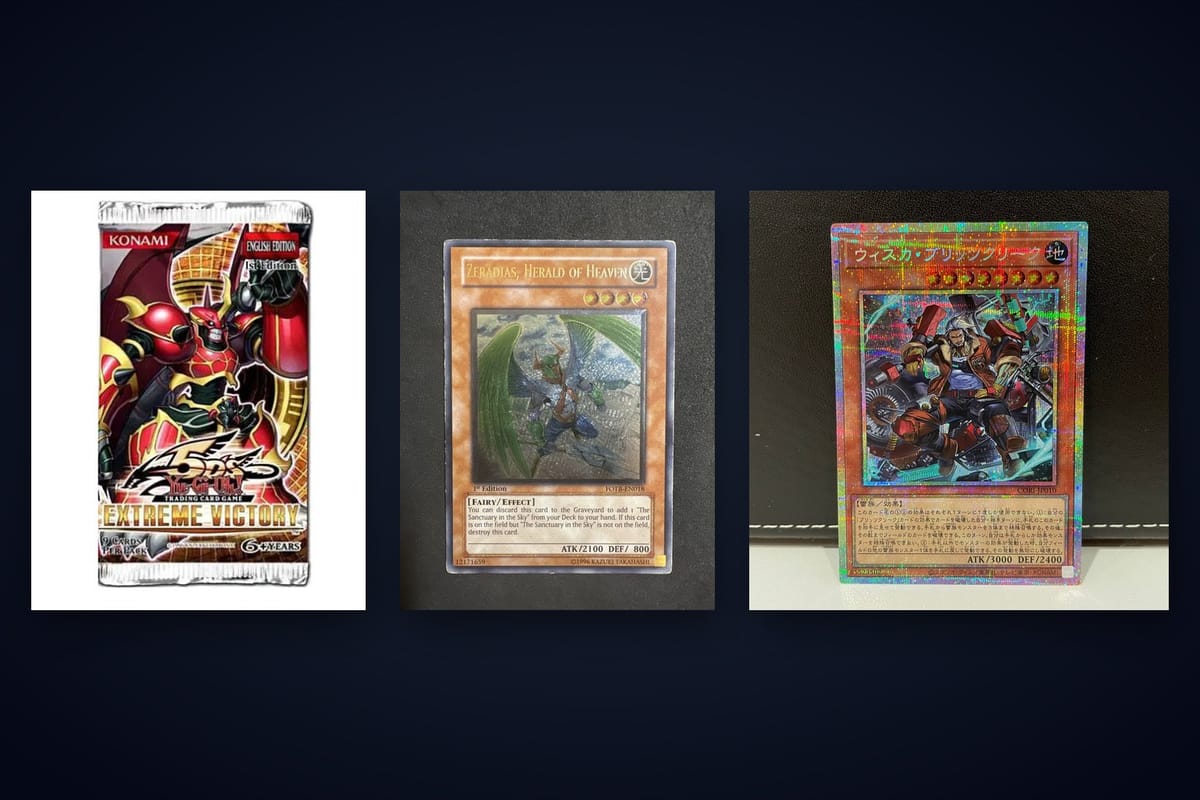
30-day price movers — live data from Midpoint's card database, as of 2026-11-15. Prices move; Midpoint refreshes these daily.
| Card | Raw | PSA 10 | 30-day | |
|---|---|---|---|---|
 |
Booster Pack YuGiOh Extreme Victory |
$63.14 | — | +689.3% |
 |
Zeradias, Herald of Heaven [Ultimate Rare 1st Edition] FOTB-EN018 YuGiOh Force of the Breaker |
$25.47 | $790.00 | +561.1% |
 |
Whisker Blitzclique CORI-JP010 YuGiOh Japanese Chaos Origins |
$12.35 | $114.07 | +439.3% |
 |
Elemental Hero Plasma Vice [1st Edition] GLAS-EN037 YuGiOh Gladiator's Assault |
$70.46 | $1,658 | +401% |
 |
Booster Pack YuGiOh Duelist Pack: Rivals of the Pharaoh |
$88.05 | — | +355% |
 |
Black Luster Soldier - Envoy of the Beginning DR2-EN025 YuGiOh Dark Revelation Volume 2 |
$84.50 | $1,098 | +321.4% |
 |
Sangan HL2-EN003 YuGiOh Hobby League |
$11.50 | $185.00 | +302.2% |
 |
Gladiator Beast Heraklinos [1st Edition] GLAS-EN044 YuGiOh Gladiator's Assault |
$106.62 | $1,500 | +260.2% |
 |
Black Luster Soldier - Envoy Of The Beginning [Secret Rare] 20CP-JPT03 YuGiOh Japanese 20th Secret Rare |
$15.09 | $521.00 | +245.6% |
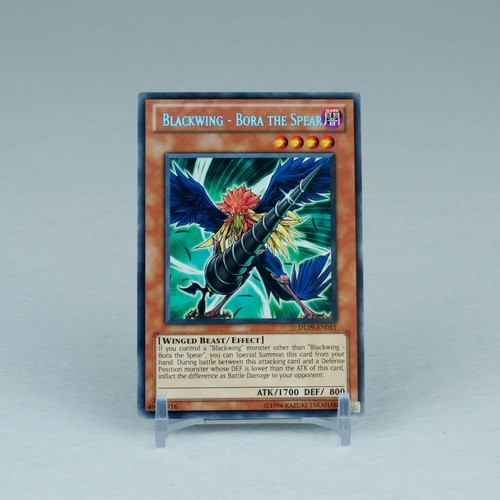 |
Blackwing - Bora the Spear DL09-EN011 YuGiOh Duelist League 2010 (2010) |
$35.44 | $902.91 | +236.6% |
 |
Elemental HERO Shining Flare Wingman EEN-EN036 YuGiOh Elemental Energy |
$10.48 | $480.00 | +220% |
 |
Harpie's Pet Baby Dragon [Ultimate Rare 1st Edition] EOJ-EN013 YuGiOh Enemy of Justice |
$59.99 | $1,712 | +216.1% |
Look up any card's current raw and graded value in Midpoint — and get an estimated grade before you pay to submit.
1. Tri-Brigade Springans Kitt
Tri-Brigade Springans Kitt appears among the movers in Midpoint's data. Archetype engine cards like this can climb when a deck keeps showing up in tournament top cuts, because players need multiple copies.
Check the 7-day figure against the 30-day figure. A card up sharply over 30 days with a flat last week may be cooling. A card accelerating in the last 7 days may still be in the middle of a run.
- Look at how many copies a deck plays. Three-of staples tend to be more price-sensitive.
- Compare the Near Mint price against the cheapest listed copy to gauge supply.
- Note which printing is rising. Reprints in other sets can lag the original.
2. Tri-Brigade Arms Mouser
Tri-Brigade Arms Mouser appears alongside Kitt in the data, and that is useful. When several cards from one archetype rise together, the cause is often deck demand rather than a one-off listing.
Cheaper support pieces can rise by a higher percentage than the main cards. A small dollar gain can still be a big percentage move, so read both numbers.
- Archetype-wide moves can suggest real tournament interest.
- A lone card moving while its siblings stay flat deserves more caution.
3. Rokket Tracer
Rokket Tracer shows how a single engine card can trend. Players adding a Rokket package to other decks can create demand beyond the archetype itself.
Cross-deck cards can be stickier than single-deck cards. If the card fits several strategies, it may keep value when one list falls out of favor.
- Ask how many different decks can play it.
- Check whether the rise is in the 7-day window, the 30-day window, or both.
4. A Bao A Qu
A Bao A Qu is another mover in the data worth watching. Utility cards like it can sell on demand from many decks, so a price jump may reflect a small supply of Near Mint copies rather than one big tournament result.
Low-supply cards can spike quickly and fall just as fast. A few sellers repricing is enough to move the market on a thin listing base.
- Check sales volume, not just the headline price.
- Watch whether listings dry up or new sellers appear after the jump.
5. Spright Blue
Spright Blue is a good example of tournament demand combined with banlist speculation. A card central to a strong engine draws attention each time a list update is rumored.
Speculation cuts both ways. If players fear a restriction, some buy ahead while others sell early. That can make prices jumpy before an announcement.
- Treat banlist rumors as noise until they are confirmed.
- Remember a restriction can drop a card's price, while a release from the list can raise it.
6. Nibiru, the Primal Being
Nibiru, the Primal Being is a long-running tournament staple, and it appears in the November mover data. Cards that punish big summon turns have stayed in demand across many metagames, and they are often mentioned in banlist discussion.
Staples like Nibiru generally have a deeper buyer pool than archetype cards. That can mean steadier prices, but also sensitivity to reprints and format changes.
- Compare the rarity printings. Premium foils often move differently from the base printing.
- Check whether the rise is recent or just a continuation of a longer trend.
7. Tournament Results and Metagame Demand
Results drive many Yugioh cards going up in value. A strong regional or championship showing can push players to copy the list, and the key singles can climb within days.
That pattern also explains the reversal. When a deck stops winning, demand falls and the card can slide.
- Look for: the same deck appearing across multiple events, not a single top-cut finish.
- Be wary of: prices that jumped within hours of a single result.
- Cross-check: whether the cards that rose are the scarce ones or only the popular ones.
8. New November Set Releases and Chase Rarities
New releases can move the market in two directions. Chase cards in the newest set often spike early because supply is thin, then ease as more packs get opened.
At the same time, new cards can pull attention and money away from older staples. A new set can lower some singles while lifting others.
- Early single-card prices are often the least reliable, so avoid chasing day-one spikes.
- Look at rarity: Secret Rare, Ultimate Rare and Starlight Rare versions usually carry the premium.
- Wait a few weeks to see where supply settles.
9. Vintage, First Edition and High-Rarity Scarcity
Not every riser is a meta card. Vintage cards, first editions, Ghost Rares, Starlight Rares, Ultimate Rares and Secret Rares can benefit from scarcity regardless of the tournament scene.
These cards depend on collector demand and the number of Near Mint copies still available. Their prices often move in steps rather than spikes, and they tend to be less exposed to banlist changes.
- Condition matters hugely for older cards, because clean copies are rare.
- Population is key: for low-supply cards, see our guide to grading low population cards.
10. Raw vs PSA 10 Prices: Is Grading Worth It?
When a card rises, the PSA 10 price often rises too, and the gap between raw and graded is what decides whether grading pays. Subtract grading fees, shipping and the chance of a lower grade from that gap.
Centering is a common reason Yugioh cards miss a 10. Borders on many cards are thin, so small shifts show. Our post on how centering impacts card value explains the effect, and you can compare company standards in our grading scale differences guide.
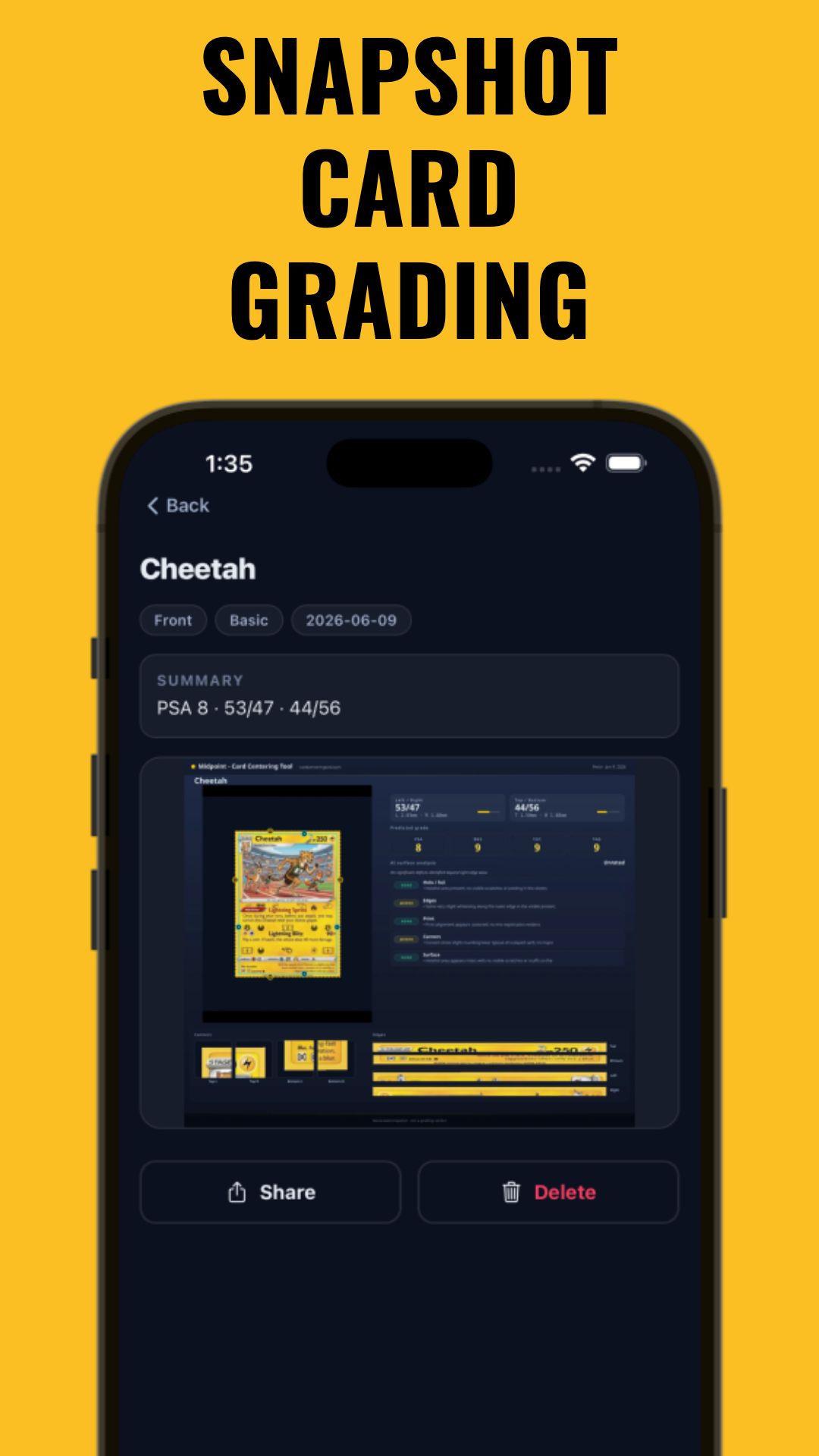
Before you pay to submit, measure first. Midpoint gives an estimated PSA, BGS, CGC and TAG grade from centering, corners, edges and surface, and shows raw vs graded values.
- Grade when the PSA 10 premium is large and the card looks clean.
- Skip grading when the raw price is low and the gap is thin.
- Follow the steps in how to pre-grade your card.
11. Buy, Hold, Sell or Avoid After a Spike
A rapid increase does not make a card a buy. Use the cause of the rise to decide.
- Buy: the cause is lasting (multi-deck demand, true scarcity) and the price has not yet run far.
- Hold: you already own it, demand looks durable, and no reprint is announced.
- Sell: the spike came from one result or hype, and you can take profit on copies you do not need.
- Avoid: thin sales volume, a possible banlist hit, or a likely reprint.
Protect what you keep. Condition drives value, so see our guide on how to store valuable cards.
12. What Could Reverse November Gains
Every rise has risks. Knowing them helps you exit before the market does.
- Reprints: more supply usually pushes singles down.
- Declining tournament usage: if a deck stops placing, demand fades.
- Banlist changes: a restriction can drop a card quickly.
- Market-wide stagnation: when buyers pull back, even rising cards flatten.
Track what you own over time with Midpoint's portfolio tracking so you can see your collection's value change instead of guessing.
Conclusion
The Yugioh card market in November 2026 rewards collectors who check the cause of a rise, not just the percentage. Tri-Brigade Springans Kitt, Tri-Brigade Arms Mouser, Rokket Tracer, A Bao A Qu, Spright Blue and Nibiru, the Primal Being each tell a slightly different story about tournament demand, scarcity and banlist risk.
Use the database figures as a starting point, confirm live prices, and only grade when the raw vs PSA 10 gap justifies it. To check centering and estimate a grade before you submit, try Midpoint, free on iOS and Android.
FAQ
Q: Which Yu-Gi-Oh cards are going up in price in November 2026?
A: Midpoint's data shows movers including Tri-Brigade Springans Kitt, Tri-Brigade Arms Mouser, Rokket Tracer, A Bao A Qu, Spright Blue and Nibiru, the Primal Being. Figures are dated 2026-11-15, so verify live prices before acting.
Q: Why are Yu-Gi-Oh card prices rising in November 2026?
A: The main drivers are tournament results, banlist speculation, new set releases with limited early supply, and scarcity in vintage and high-rarity cards. Often more than one factor is involved.
Q: What are the biggest Yu-Gi-Oh price movers this week?
A: Check the 7-day change in Midpoint's data or on a live price source for the latest weekly movers. Compare it with the 30-day change to see whether a card is still accelerating or has started to cool.
Q: Should I buy, sell, or hold Yu-Gi-Oh cards that are rising in November 2026?
A: It depends on why they are rising. Buy or hold cards with lasting demand and no reprint risk. Consider selling cards that spiked on one result or hype, and avoid thin-volume cards with banlist or reprint risk.
Q: Are Yu-Gi-Oh card prices expected to keep rising after November 2026?
A: No one can promise that. Prices can fall if cards are reprinted, tournament usage declines, the banlist changes, or the wider market stagnates. Cards backed by scarcity and multi-deck demand tend to hold up better.
Q: Is it worth grading Yu-Gi-Oh cards that increased in value?
A: Only if the PSA 10 premium over the raw price exceeds grading costs and your card can realistically earn the grade. Check centering, corners, edges and surface first. Midpoint can estimate a grade before you pay to submit.
Free to start
Try the Midpoint app
Grade any card from a photo, see its raw and PSA 10 value, and track what your collection is worth — free.
Get it on iPhoneGet it on Android