
1969 O-Pee-Chee Hockey Cards Value: Price Guide & Grading
1969 O-Pee-Chee hockey cards value explained: top cards, the PSA 10 gem premium, price guide logic, and which cards are worth grading.

Estimated reading time: 11 min
Key Takeaways
- 1969 O-Pee-Chee hockey cards value is driven by three things: player (Bobby Orr, Gordie Howe and Tony Esposito lead the set), condition, and the grade on the slab.
- The gem-premium gap in this vintage set is steep. A PSA 10 1969 O-Pee-Chee is a different market from a PSA 8, which is why a PSA 10 value is rarely a useful guide for raw cards.
- Most commons are not worth grading. The cards worth grading are Hall of Famers, key rookies and anything with sharp corners and decent centering.
- Centering and rough cuts are common grade killers in this set, and you can measure centering before you pay a grading fee.
- Compare any price guide against recent sold listings, and check the live figures in the data table in this post (as of 2026-11-22).
Card values — live data from Midpoint's card database, as of 2026-11-22. Prices move; Midpoint refreshes these daily.
| Card | Raw | PSA 10 | Gem premium | |
|---|---|---|---|---|
 |
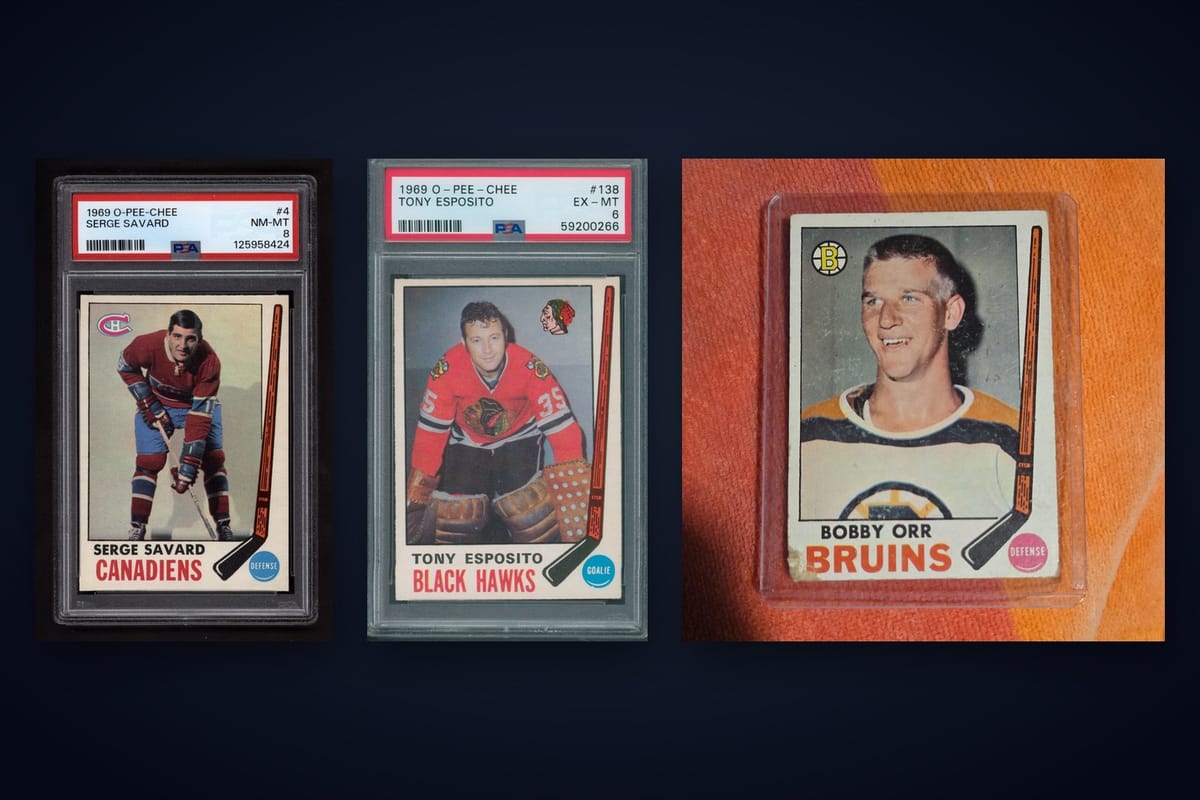
Serge Savard #4 1969 O-Pee-Chee |
$39.41 | $19,000 | 482.1× |
 |
Tony Esposito #138 1969 O-Pee-Chee |
$51.42 | $16,800 | 326.7× |
 |
Bobby Orr #24 1969 O-Pee-Chee |
$78.07 | $13,060 | 167.3× |
 |
Bobby Orr [Norris Trophy] #209 1969 O-Pee-Chee |
$33.52 | $4,535 | 135.3× |
 |
Gordie Howe #61 1969 O-Pee-Chee |
$21.51 | $4,258 | 198× |
 |
Bobby Orr #212 1969 O-Pee-Chee |
$40.67 | $4,240 | 104.3× |
 |
Stan Mikita #76 1969 O-Pee-Chee |
$8.26 | $4,026 | 487.4× |
 |
Gordie Howe [Mr. Hockey, No Number] 1969 O-Pee-Chee |
$29.08 | $3,935 | 135.3× |
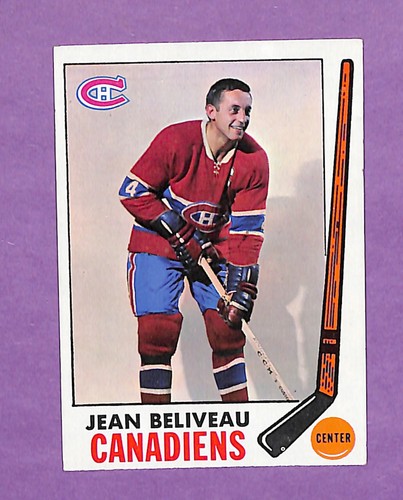 |
Jean Beliveau #10 1969 O-Pee-Chee |
$26.45 | $3,581 | 135.4× |
 |
Gordie Howe #215 1969 O-Pee-Chee |
$21.66 | $3,568 | 164.7× |
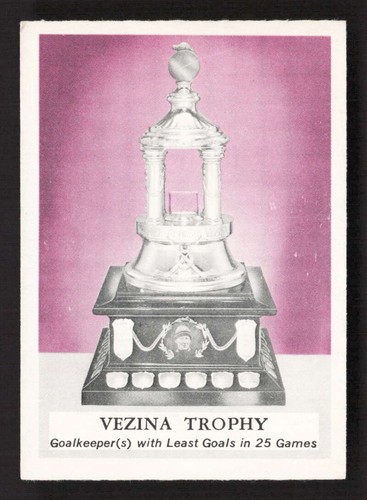 |
Vezina Trophy #226 1969 O-Pee-Chee |
$24.21 | $2,755 | 113.8× |
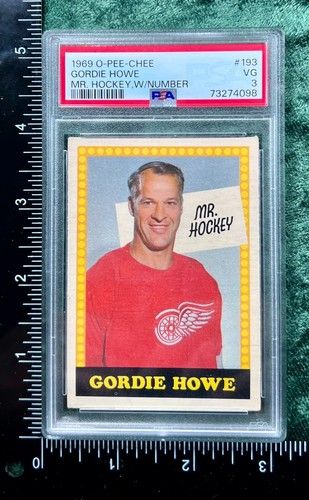 |
Gordie Howe [Mr. Hockey, w/ Number] #193 1969 O-Pee-Chee |
$18.71 | $2,592 | 138.5× |
Look up any card's current raw and graded value in Midpoint — and get an estimated grade before you pay to submit.
Table of Contents
- Section 1: What Drives 1969 O-Pee-Chee Hockey Cards Value
- Section 2: The Most Valuable 1969 O-Pee-Chee Cards
- Section 3: A 1969 O-Pee-Chee Price Guide by Card Tier
- Section 4: 1969 O-Pee-Chee PSA 10 Value and the Gem-Premium Gap
- Section 5: Condition Factors That Move Value
- Section 6: Which 1969 O-Pee-Chee Cards Are Worth Grading
- Section 7: Sets, Lots, Stamps, Authentication and Selling
- Conclusion
- FAQ
Section 1: What Drives 1969 O-Pee-Chee Hockey Cards Value
If you want to understand 1969 O-Pee-Chee hockey cards value, start with the set itself. The 1969-70 O-Pee-Chee (OPC) issue is a 231-card Canadian release, and it sits in the golden era of vintage hockey, just as Bobby Orr was redefining the sport.
OPC was the Canadian counterpart to the Topps hockey issues of the era. Collectors prize the set for its star-heavy checklist, its classic design, and the fact that it was produced in the original six-and-expansion era.
Why this set holds value
- Star power: Orr, Gordie Howe, Bobby Hull, Jean Beliveau, Stan Mikita and Phil Esposito all appear.
- Rookie appeal: Tony Esposito's rookie card is the headline for many collectors.
- Age and survival rates: Cards from 1969 were packed with gum, handled by kids and stored in shoeboxes. Sharp, well-centered survivors are scarce.
- Nostalgia and demand: Hockey vintage has a deep, loyal collector base, especially in Canada.
The four value levers
Every card in this set is priced by the same four levers:
- Player: Hall of Famers carry a big premium over commons.
- Card type: Rookies, key team cards and iconic player shots outsell filler cards.
- Condition: A sharp card can be worth many multiples of a creased one.
- Grading status: Third-party slabs from PSA, SGC, BGS and CGC set a verified benchmark that buyers trust.
A note on method: the data table below this section pulls card values from Midpoint's own database, and every figure is dated as of 2026-11-22. Treat the table as the source for numbers. The rest of this guide explains how to read those numbers, and why raw and graded values diverge so sharply.
Section 2: The Most Valuable 1969 O-Pee-Chee Cards
When collectors ask about the most valuable 1969 O-Pee-Chee cards, the answer comes down to a short list of names. The rest of the checklist generally follows far behind in price, even in strong condition.
The headline cards
- Bobby Orr: Generally regarded as the most important card in the set. Orr was the sport's biggest star, and his OPC cards from this period are a benchmark for vintage hockey demand. Top-grade copies typically command a premium well above the rest of the set.
- Gordie Howe: Mr. Hockey is a perennial favorite. His 1969-70 OPC card is a staple for Hall of Fame collectors, and demand tends to hold up across grades.
- Tony Esposito: His rookie card is a major key. Esposito won the Calder and Vezina in his first full NHL season, and the rookie status keeps demand high.
- Bobby Hull: The Golden Jet was one of the game's biggest draws, so his card sells well in nearly any grade.
The strong second tier
After the headliners come other Hall of Famers: Jean Beliveau, Stan Mikita, Phil Esposito, Jacques Plante, Glenn Hall, Johnny Bower and Terry Sawchuk. Goaltender cards from this era have a devoted following, so these can hold up well for non-rookie cards.
Bernie Parent also belongs in the conversation. As a Hall of Fame goalie with a strong collector following, his cards from the late 1960s draw consistent interest.
How to see the numbers
I am not going to repeat the data table in prose. Look at the table for the current raw and graded values of these specific cards as of 2026-11-22, then compare the spread between a mid-grade copy and a top-grade copy. That spread is the clearest signal of how much the grade matters for each player.
You can also look up any individual card in Midpoint, which shows raw versus graded values across more than 1.5 million cards, so you can check a specific copy before you buy or sell.
Section 3: A 1969 O-Pee-Chee Price Guide by Card Tier
A useful 1969 O-Pee-Chee price guide is organized by tier, not by card number. Cards in the same tier behave similarly, so the tier tells you far more than a flat list.
Tier 1: Superstars and key rookies
Orr, Howe, Hull and Tony Esposito sit here. Price is set by the buyer pool, which includes Hall of Fame collectors, registry builders and investors. Condition sensitivity is extreme: a one-grade jump can change the price dramatically.
Tier 2: Other Hall of Famers
Beliveau, Mikita, Phil Esposito, Plante, Hall, Bower and Sawchuk make up this tier. These cards are the sweet spot for many collectors, because they offer real Hall of Fame content without top-tier prices. Raw copies in decent shape often sell steadily, and slabbed high grades carry a clear premium.
Tier 3: Established stars and solid regulars
Productive non-Hall players, popular team captains and fan favorites live here. Prices are modest, and grading rarely pays off unless the card is exceptionally sharp.
Tier 4: Commons
Most of the 231-card checklist is commons. Raw commons are inexpensive, and a graded common usually sells for less than the cost of grading it unless it is a high-grade example for a registry set.
How to read price guide numbers
- Guide values are estimates. They lag the market and smooth over outliers.
- Sold listings beat asking prices. Filter eBay to sold items and compare the same grade and the same grader.
- Match the slab. A PSA 8 and an SGC 8 do not always sell for the same price. Compare like with like.
- Check dates. Vintage hockey can move fast after a big auction or a market surge.
Use the data table in this post for the dated Midpoint figures, then cross-check against recent sold comps before making a decision.
Section 4: 1969 O-Pee-Chee PSA 10 Value and the Gem-Premium Gap
The phrase 1969 O-Pee-Chee PSA 10 value needs context. A true PSA 10 from this set is extremely hard to find, because 1969 production quality worked against the cards. Rough cuts, off-center printing, and 50-plus years of handling mean most survivors fall well short of a gem.
What the gem-premium gap means
The gem-premium gap is the price difference between a high-grade card and the one-step-lower grade. In scarce vintage sets, that gap can be enormous. When few examples exist at a grade, each sale resets the market, and buyers who need the best copy for a registry set pay up.
- PSA 8: Often the realistic target for sharp, well-kept vintage. Price is strong but accessible.
- PSA 9: A major step up in price. Buyers see it as near-mint with very little to criticize.
- PSA 10: Rare for this set, and priced as a trophy. Sales are infrequent, so there may be few recent comps.
Comparing graders
PSA tends to command the strongest resale prices for vintage hockey. SGC is popular with vintage buyers, and its slabs are trusted in this category. BGS and CGC offer subgrades, which some collectors like for their detail. Each company also scales its grades differently, so read our guide to grading scale differences by company before comparing a BGS 9 with a PSA 9.
Low population effects
When only a handful of copies exist at a given grade, price can swing wildly on a single sale. If you are chasing a top-pop card, review our guide to grading low population cards.
Bottom line: do not price a raw card off a PSA 10 sale. Price it off the grade you realistically expect it to receive.
Section 5: Condition Factors That Move Value
Condition decides where a card lands on the price spectrum. For 1969-70 OPC, these are the factors graders and buyers scrutinize most.
Centering
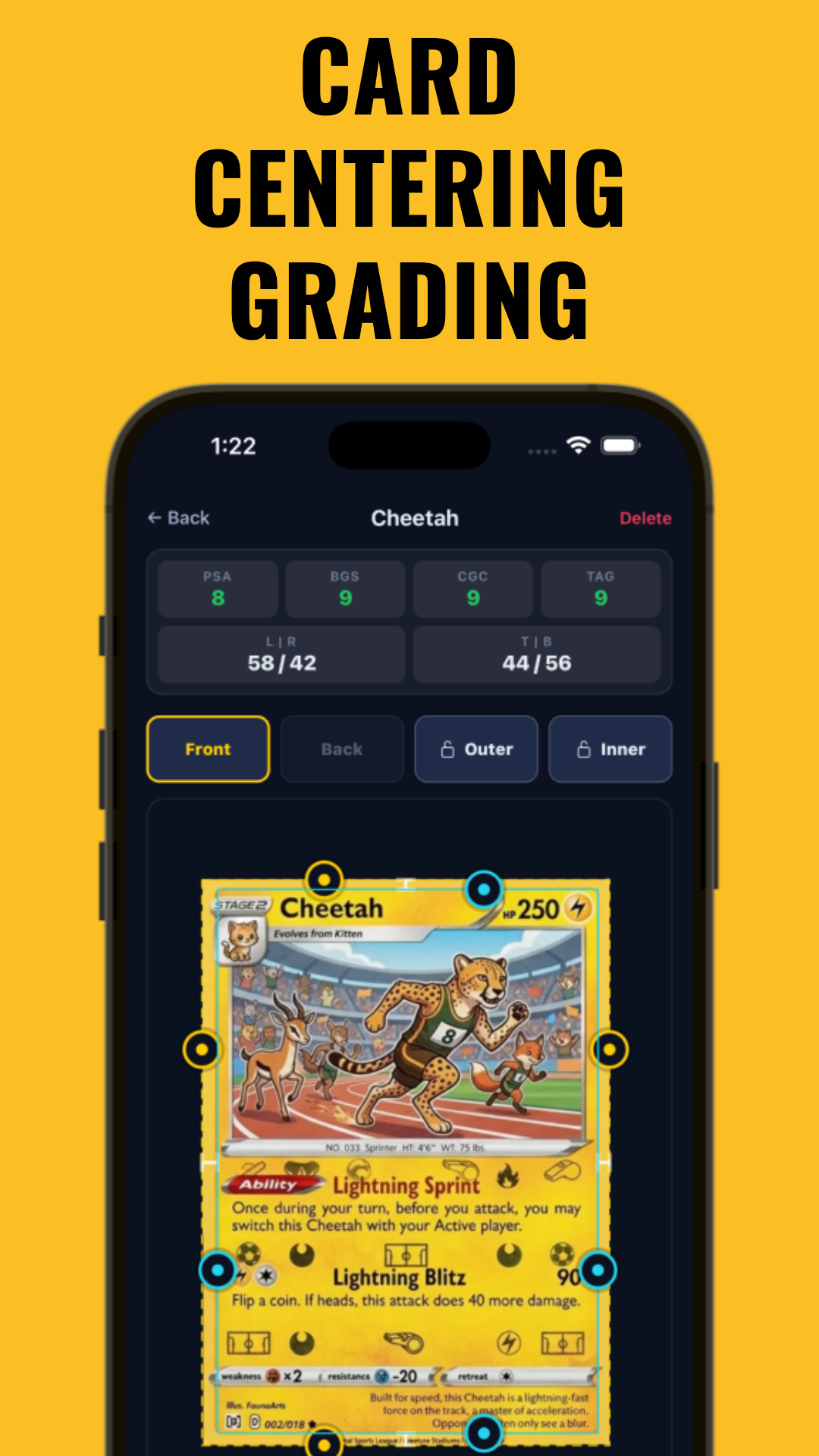
Centering is a common limiter for this set. Borders that are noticeably thicker on one side can hold a card back even when everything else looks sharp. Because the set's design has a clear border and photo frame, off-center printing is easy to spot.
You can measure it before you submit. The free centering calculator gives you left-right and top-bottom ratios, and our post on how centering impacts card value explains how much the ratios matter for the grade.
Corners and edges
- Corners: Look for rounding, fuzzing and dings. Sharp corners are the first thing buyers check.
- Edges: Chipping along the border is common on vintage cards, and it shows quickly on darker borders.
- Rough cuts: Vintage cards were cut from large sheets, so ragged or uneven edges can be factory-made, not damage.
Surface, print defects and gum or wax damage
- Surface: Scratches, scuffs, creases and loss of gloss pull a grade down.
- Print defects: Print dots, missing ink and registration problems are factory issues, but graders still account for them.
- Gum and wax stains: Staining from packaging is common on vintage cards, particularly on the back. Heavy staining can cap the grade.
- Trimming and alteration: This is the biggest value killer. Altered cards are typically rejected by the major graders.
Store cards properly to protect what you have. Our guide to storing valuable cards covers sleeves, top loaders and humidity.
Section 6: Which 1969 O-Pee-Chee Cards Are Worth Grading
Knowing which 1969 O-Pee-Chee cards are worth grading saves you money. Grading fees vary by company and service level, and they often run from roughly $20 to $30 per card at the low end and climb with turnaround speed and declared value, so a card has to clear that cost plus shipping and your time.
Strong grading candidates
- Bobby Orr, Gordie Howe, Bobby Hull and Tony Esposito: Even mid-grade slabs carry a premium over raw, and the authentication adds buyer confidence.
- Other Hall of Famers with sharp corners: If the card looks near-mint, the grade premium can justify the fee.
- Any card with excellent centering and clean surfaces: These have the best shot at the grades where the gem-premium gap pays off.
Cards to skip
- Commons with rounded corners or creases.
- Cards with heavy staining, trimmed edges or obvious surface damage.
- Mid-tier players where the graded premium does not cover the fee.
A simple pre-grading workflow
Before you submit, pre-grade the card yourself. Our step-by-step guide to pre-grading walks through the process.
- Measure centering from a flat, well-lit photo.
- Inspect corners and edges under magnification.
- Tilt the card under light to check surface scratches and gloss.
- Estimate the likely grade, then compare the expected graded value with the raw value in the data table.
Midpoint automates much of this. It gives AI digital grading estimates for PSA, BGS, CGC and TAG from centering, corners, edges and surface, so you can see the likely outcome before paying grading fees. If the estimate lands below the grade where the premium kicks in, keep the card raw.
Section 7: Sets, Lots, Stamps, Authentication and Selling
Complete sets, near sets and lots
A complete 231-card set is worth more than the sum of its parts to many buyers, but only if condition is consistent. A set with one or two stars missing is a near set, and it typically sells at a discount that reflects the cost of filling the gaps.
- Complete high-grade sets: Rare and valued by registry collectors.
- Complete lower-grade sets: Attractive to collectors who want the full checklist without paying for gems.
- Partial sets and lots: Usually priced by the stars they contain. Break them up if the stars are in good shape.
Selling a set as a whole may bring a premium for completeness, while selling singles can bring more for the stars. Run both scenarios with sold comps.
Cards versus 1969 O-Pee-Chee Stamps
Do not confuse the standard cards with the O-Pee-Chee stamp inserts released around the same time. The stamps are a separate, smaller-format product, and they trade as their own category at a different price level. Check the format and the back before you price anything.
Authenticating and appraising
- Compare the card size, stock and print quality against known genuine copies.
- Inspect edges for signs of trimming.
- Look for reprint or fake signs: modern glossy stock, blurry printing, or incorrect backs.
- For high-value cards, submit to PSA, SGC, BGS or CGC for authentication.
For insurance, a slab provides a documented grade. Our guide to how grade impacts insurance value explains why.
Selling tips
- Check sold listings on eBay for the same grade and grader.
- Photograph the card front and back with clear lighting.
- Be upfront about flaws.
- Track what you own over time in Midpoint's portfolio tracker, so you know when values move.
Conclusion
1969 O-Pee-Chee hockey cards value comes down to who is on the card and what shape it is in. Orr, Howe, Hull and Tony Esposito anchor the set, while other Hall of Famers fill a strong second tier. Commons are inexpensive, and the gem-premium gap makes the highest grades scarce and expensive.
Before you grade, measure centering, inspect corners and surface, and compare the likely grade with the raw value. Check the data table in this post (as of 2026-11-22) and recent sold comps for the numbers. To measure centering and get instant PSA, BGS, CGC and TAG estimates before you pay to submit, try Midpoint, free on iOS and Android.
FAQ
Q: What is the value of a 1969-70 O-Pee-Chee hockey card?
A: It depends on the player and the condition. Commons are inexpensive, Hall of Famers carry a clear premium, and Bobby Orr, Gordie Howe, Bobby Hull and Tony Esposito are at the top. See the dated data table in this post (as of 2026-11-22) for current figures and check recent sold listings.
Q: Which 1969-70 O-Pee-Chee hockey cards are worth the most?
A: Bobby Orr leads the set, followed by Gordie Howe, Bobby Hull and Tony Esposito's rookie card. Other Hall of Famers such as Beliveau, Mikita, Plante and Sawchuk form a strong second tier.
Q: How much is a complete 1969-70 O-Pee-Chee hockey set worth?
A: A complete 231-card set is worth more or less depending on overall condition, and the stars drive most of the value. Price a set by checking sold sales of complete sets in similar condition, and compare that with the value of the stars sold individually.
Q: What are the most valuable 1969-70 O-Pee-Chee rookie cards?
A: Tony Esposito's rookie card is the headline rookie for many collectors. Check each card's back and set data to confirm rookie status before you pay a rookie premium.
Q: How much are PSA 8, PSA 9 and PSA 10 1969-70 O-Pee-Chee cards worth?
A: Each step up carries a larger premium, and PSA 10 examples are very rare, so sales are infrequent and prices can swing. Use the data table here for dated figures and compare the same grader and grade in recent sold listings.
Q: How can I tell if my 1969-70 O-Pee-Chee hockey cards are valuable?
A: Identify the player first, since stars and Hall of Famers matter most. Then check centering, corners, edges and surface. Midpoint can estimate a grade and show raw versus graded values so you can decide whether grading is worthwhile.
Free to start
Try the Midpoint app
Grade any card from a photo, see its raw and PSA 10 value, and track what your collection is worth — free.
Get it on iPhoneGet it on Android


