CGC 10 vs PSA 9: Key Grading Differences and Which Is Worth More
Compare PSA 10 vs PSA 9: gem mint vs mint, centering standards, price, population, and when to pay the premium. See how PSA stacks up to BGS and CGC.


Estimated reading time: 13 min
Key Takeaways
- CGC 10 vs PSA 9 vs PSA 10: CGC 10 (Pristine) grading is stricter than PSA 10, while PSA 9 allows minor flaws; these differences greatly affect card value and collectibility.
- PSA 10 (Gem Mint) vs PSA 9 (Mint) differ mainly in centering precision and minor imperfections.
- Both PSA 10 and CGC 10 grades command significant price premiums due to rarity and population scarcity.
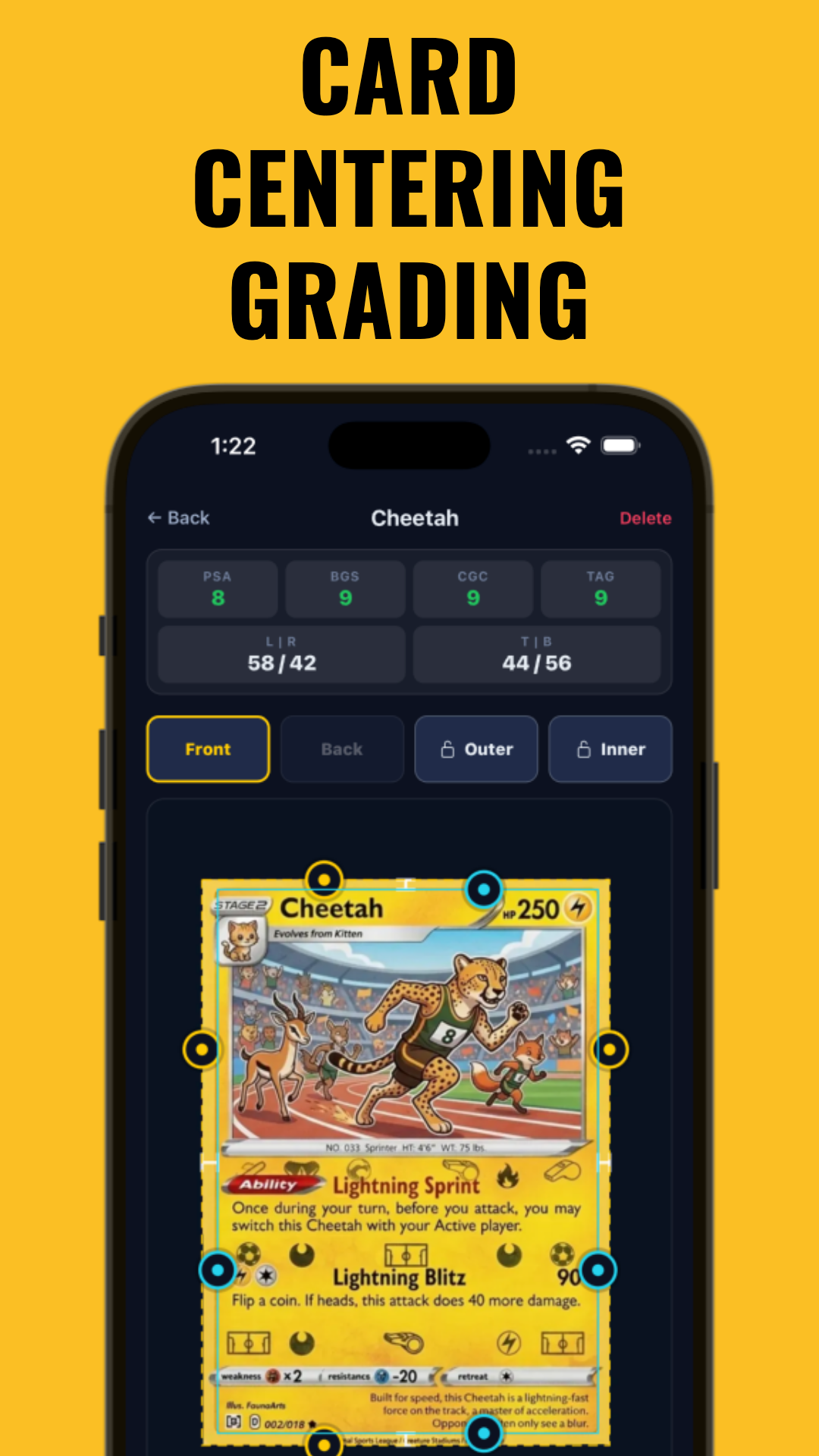
- Centering is a critical factor in grading; tools like Midpoint provide precise centering measurement and AI digital grading before submission.
- Premiums are especially high for modern flagships, rookies, and iconic vintage cards; some PSA 9s offer near-PSA 10 eye appeal.
- Bottom line: For key investments, PSA 10 or CGC 10 grades justify the premium, but well-centered PSA 9s offer strong value for collectors on a budget.
Collectors often compare "CGC 10 vs PSA 9" and "CGC 10 vs PSA 10" when grading or buying trading cards. CGC 10 (Pristine) requires near-perfect centering, corners, edges, and surface condition and is stricter than PSA 10 (Gem Mint). PSA 9 (Mint) permits slight imperfections and less precise centering. Understanding these grading distinctions—especially centering standards and population rarity—is essential for informed purchase or grading decisions. This guide explains grading criteria, value impacts, and how digital tools like Midpoint help you pre-grade cards accurately before submitting them to grading companies.
Quick Comparison
| Feature | CGC 10 (Pristine) | PSA 10 (Gem Mint) | PSA 9 (Mint) |
|---|---|---|---|
| Definition | Virtually flawless; perfect centering, corners, edges, and surface | No visible flaws; sharp corners, edges, nearly perfect surface, 55/45 or better centering | Minor flaws allowed; slight wear, 60/40 or better centering |
| Centering Standard (Front) | 50/50 or better | 55/45 or better | 60/40 or better |
| Corners/Edges | Perfect, no wear | Sharp, no wear | May show tiny touches or slight wear |
| Surface | No flaws, print lines, or marks | Free of print lines or scratches | Minor print lines or subtle marks allowed |
| Population (Typical) | Extremely rare | Often scarcer | More common |
| Price Multiplier | Highest premium, often above PSA 10 | Can be 2x–60x+ compared to PSA 9, depending on card | Much less expensive |
| Eye Appeal | Maximum, flawless | Maximum | Usually high; some look nearly identical to 10s |
| Best Use | Ultra-high-end collecting, showcases | Long-term investment, flagship cards | Display, value-conscious collecting |
Grading Standards: CGC 10 vs PSA 10 vs PSA 9
CGC 10 (Pristine): The highest CGC grade requiring:
- Centering: Perfect 50/50 or better on the front, 60/40 or better on the back.
- Corners/Edges: Flawless with no visible wear or touches.
- Surface: No print lines, scratches, or flaws even under magnification.
PSA 10 (Gem Mint): The top PSA grade requiring:
- Centering: At least 55/45 on the front, 75/25 on the back.
- Corners/Edges: Sharp with no visible wear.
- Surface: Free of scratches, print lines, or visible flaws to the naked eye.
PSA 9 (Mint): A near-perfect card allowing minor imperfections:
- Centering: Up to 60/40 on the front, 90/10 on the back.
- Corners/Edges: Slight touches or minor wear permitted.
- Surface: Minor print lines or subtle marks allowed.
These grading differences can be subtle and sometimes invisible to untrained eyes, especially centering. That's why digital centering tools like Midpoint are essential for accurately measuring centering and estimating grades before costly submissions. For a detailed walkthrough, see How to Measure Card Centering: Step-by-Step Precision Guide.
Centering: The Make-or-Break Subgrade
Centering is often the biggest challenge when aiming for a CGC 10 or PSA 10. Even cards in near-perfect condition can receive a lower grade if borders are uneven.
- CGC 10: Requires perfectly even 50/50 centering on the front; back allows up to 60/40.
- PSA 10: Front centering must be 55/45 or better; back up to 75/25 is acceptable.
- PSA 9: Allows front centering as off as 60/40 and back up to 90/10.
For cards like 1986 Fleer Basketball or vintage Pokémon, even freshly opened packs rarely yield perfect centering. This scarcity drives the high value of CGC 10 and PSA 10 grades. Using a precise centering tool before grading can save money and disappointment. Learn more in How Centering Impacts Card Value: A Detailed Guide and Card Centering by Type: The Complete Guide for Pokemon, Sports, and More. For specific advice on Pokémon cards, check out our Pokemon Card Centering Tips: The Ultimate Guide to Perfectly Centered Pokémon Cards. Also, our Card Centering: The Definitive Guide for Grading and Collectors offers comprehensive insights into centering standards.
Population Reports and Price Premiums
Population reports reveal how many cards have been graded at each level and heavily influence price premiums:
- Cards difficult to center have far fewer CGC 10 and PSA 10 grades compared to PSA 9s.
- Lower population at the highest grades means larger price gaps, especially for rookies, iconic vintage cards, and modern flagships.
For example, a modern Pokémon card with 10,000 PSA 10s will have a smaller premium than a vintage Michael Jordan rookie card, where CGC 10s and PSA 10s are extremely rare. Checking population data is essential for smart investing.
PSA 10 vs PSA 9 vs CGC 10: Price Multipliers by Card Type
The premium for CGC 10 or PSA 10 varies by card type and era:
- Modern Flagship Cards: CGC 10s and PSA 10s often sell for 3x–6x the price of PSA 9s.
- Vintage Grails (pre-1980): Multipliers can exceed 20x–50x due to extreme rarity.
- Pokémon & Sports Rookie Cards: First-edition Charizard or Jordan rookies in CGC 10 or PSA 10 can be worth dramatically more than PSA 9s.
Eye appeal also matters. Some PSA 9 cards have centering and presentation close to PSA 10, making them attractive for collectors prioritizing looks over strict grade.
To maximize value and avoid grading surprises, see How to Pre-Grade Your Card: A Step-by-Step Guide. For a full explanation of grading and value, visit our complete guide to card condition, grading, and value. To better organize and protect your collection, consider using a Card Collection Portfolio: Ultimate Guide to Tracking, Valuing & Protecting Your Cards. For insights on grading platform differences, see our Card Grading App Platform Differences: A Comprehensive Comparison.
PSA vs BGS vs CGC: Which Is Hardest?
Collectors often compare grading difficulty beyond just PSA 9 vs PSA 10:
- BGS 10 (Gold Label): Generally tougher than PSA 10, especially for centering (50/50 standard). BGS Black Label demands perfection in all subgrades.
- CGC Pristine 10: Comparable to BGS 10 with similar strict centering requirements. CGC Gem Mint 10 is slightly less strict.
- Gem Mint vs Pristine: "Gem Mint" grades like PSA 10, BGS 9.5, and CGC 10 are near-perfect; "Pristine" (BGS 10, CGC Pristine 10) grades require flawless condition.
Hardest to get? BGS Black Label and CGC Pristine 10 are the toughest; PSA 10 is more attainable but still rare. AI tools can help estimate grading chances – learn more in How AI Transforms Card Centering Analysis. For grading standards comparisons, see Card Grading Centering Standards: PSA, BGS, CGC, SGC & TAG Compared. For CGC Gem Mint vs Pristine differences, check CGC Gem Mint 10 vs Pristine 10: Key Grading Differences & Collector Tips. For overall grading company comparisons, see Card Grade Comparisons: PSA vs BGS vs CGC vs SGC Explained. For more on card grading basics and when it's worth it, check our detailed guide.
Which Should You Choose?
Your choice between CGC 10, PSA 10, and PSA 9 depends on your collecting goals, budget, and the specific card:
- Ultra-high-end collecting or showcases: CGC 10 (Pristine) is the pinnacle but extremely rare and costly.
- Long-term investment, key rookies, flagship cards: PSA 10 is popular for its balance of rarity and availability with strong premiums.
- Display or value-focused collecting: PSA 9 offers much of the eye appeal at a fraction of the price; look for well-centered, clean PSA 9s.
- If you want the absolute best: Consider BGS Black Label or CGC Pristine 10, but expect ultra-low supply and high prices.
- Submitting raw cards: Use pre-grading tools like Midpoint to estimate PSA, BGS, CGC, and TAG grades and avoid costly grading surprises.
For practical tips before grading, see Estimate Your Card: A Practical Guide Before Grading. If you are interested in collecting strategies, our TCG Card Collecting: The Ultimate Guide for 2026 Collectors and Sports Card Collecting: The Ultimate Guide for Modern & Vintage Collectors offer comprehensive insights.
FAQ
- What is the difference between CGC 10, PSA 10, and PSA 9?
CGC 10 (Pristine) requires perfect centering, corners, and surfaces and is stricter than PSA 10. PSA 10 is "Gem Mint," with no visible flaws and near-perfect centering (55/45 or better). PSA 9 is "Mint," allowing minor flaws and slightly off centering (60/40 or better). - Is CGC 10 or PSA 9 better for value?
CGC 10 generally commands higher premiums due to stricter grading and rarity, but well-centered PSA 9s can offer strong value for collectors on a budget. - How does centering affect CGC 10 vs PSA 9 grades?
Centering standards are tighter for CGC 10 (50/50 front) than PSA 9 (60/40 front), making perfect centering critical for top grades and higher value. - Can I estimate my card's CGC 10 or PSA 9 grade before submission?
Yes, using AI-powered tools like Midpoint helps measure centering and estimate grades to avoid surprises. - Which grading company is hardest to get a 10 from?
BGS Black Label and CGC Pristine 10 are the toughest to achieve, with PSA 10 being slightly more attainable but still rare.